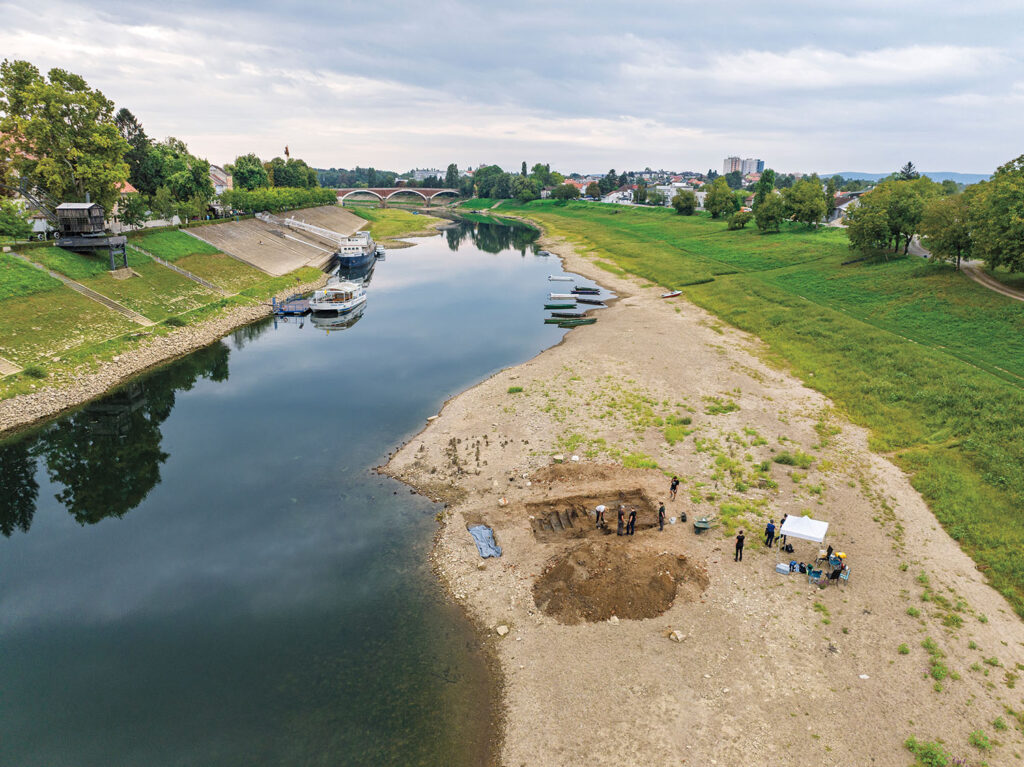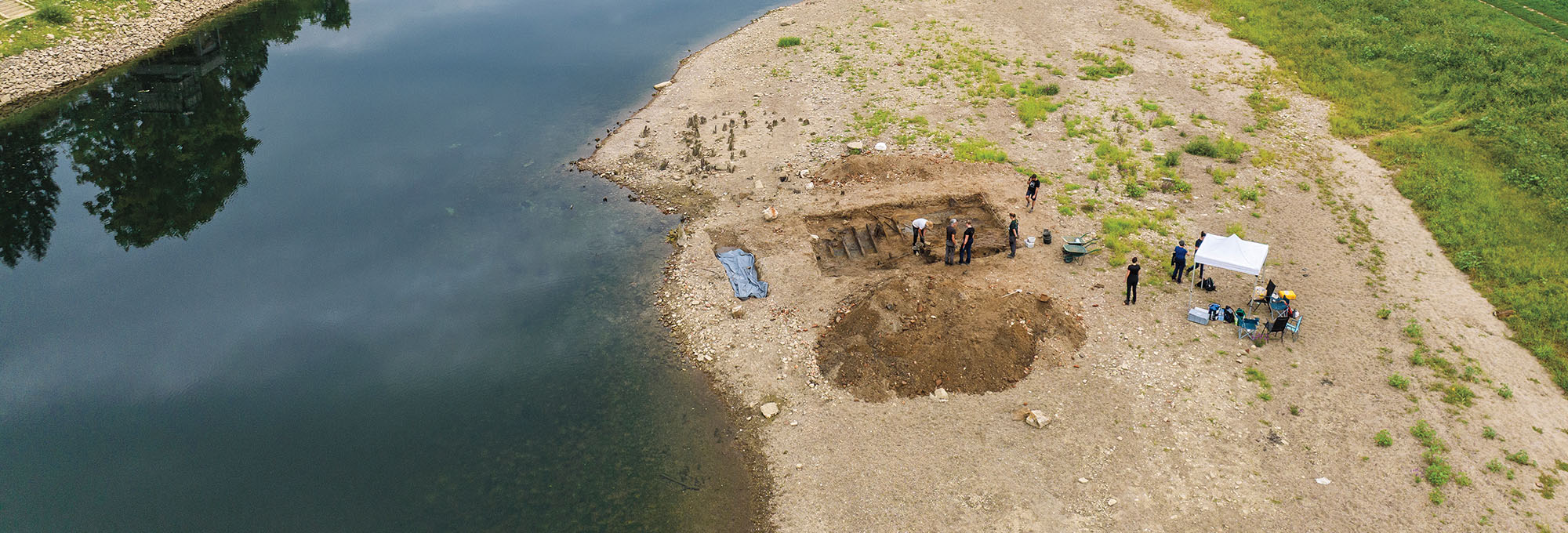
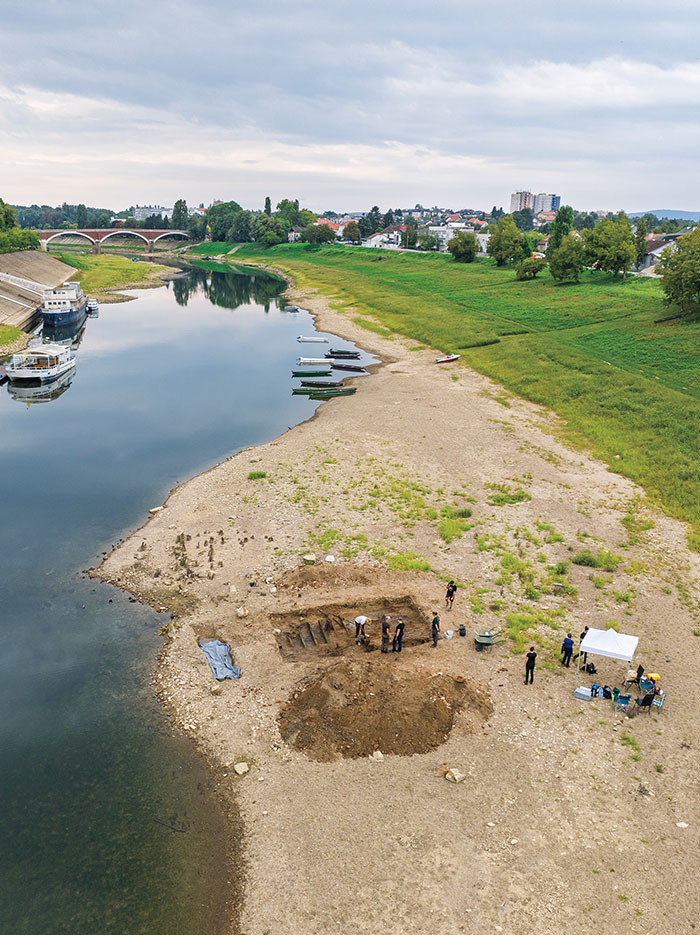
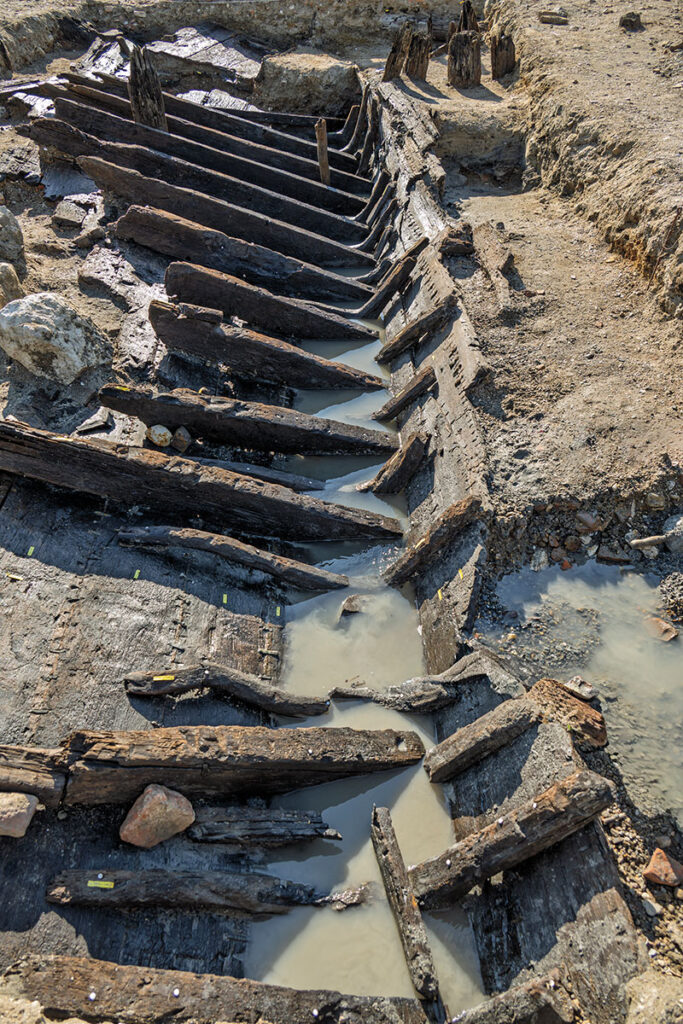
The coast of the Roman province of Dalmatia was plied by ships transporting goods between the eastern and western parts of the empire. Evidence of this trade has been found in copious shipwrecks on the Adriatic seafloor. Yet discoveries of riverboats that ferried these goods inland remain relatively rare. A well-preserved Roman-era oak barge was partially unearthed on the Kupa River near the city of Sisak in central Croatia during a 1985 rescue excavation. A team recently returned to the site and uncovered the rest of the vessel, learning new details about both Roman fluvial navigation and a nearby settlement of local sailors who brought their vast nautical experience back to the area. “We know that during Vespasian’s reign [a.d. 69–79], a newly formed colony called Flavia Siscia [modern Sisak] was settled with veteran sailors as a reward for supporting the emperor,” says archaeologist Anton Divić of NavArchos Maritime Archaeology. “The site was at the confluence of the Kupa and Sava Rivers, and was most likely chosen as the new home for these experienced sailors to strengthen commerce and navigation on the rivers.”
The team is discovering evidence of how these mariners applied nautical expertise gained in their Adriatic homeland and during their service in the Roman navy. For example, Divić explains, most contemporaneous barges were assembled using iron nails to attach the frame to the planking, but the Flavia Siscia boatbuilders used metal clamps, a technique specific to the Adriatic hinterland. They also used wooden treenails, a technique common to Roman maritime ships that is rarely seen in fluvial shipbuilding. “Furthermore,” Divić says, “the use of hewn bilge strakes—the elements that provide the transition between the boat’s flat bottom and vertical sides—seems to indicate evolution from a type of dugout boat well adapted to fluvial navigation and well documented in Sisak since at least the pre-Roman Iron Age.”