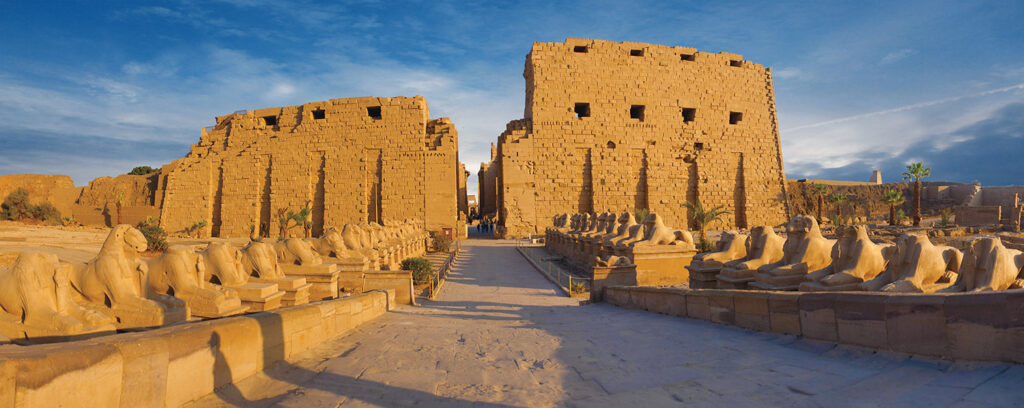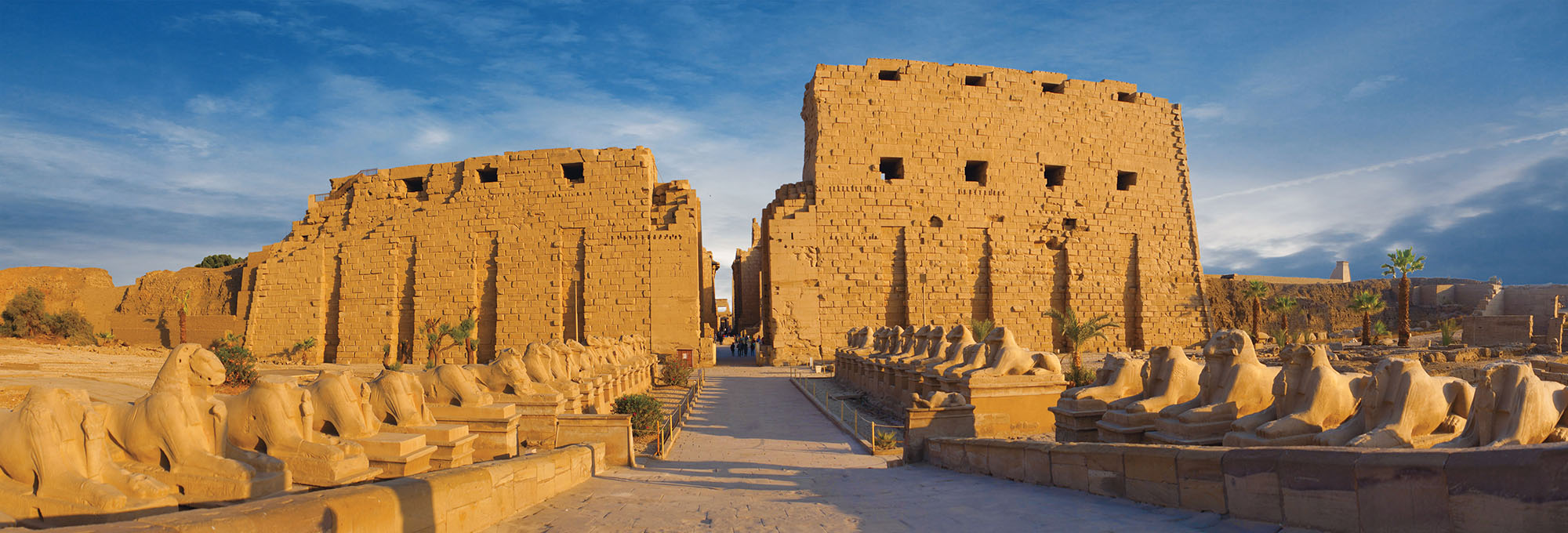
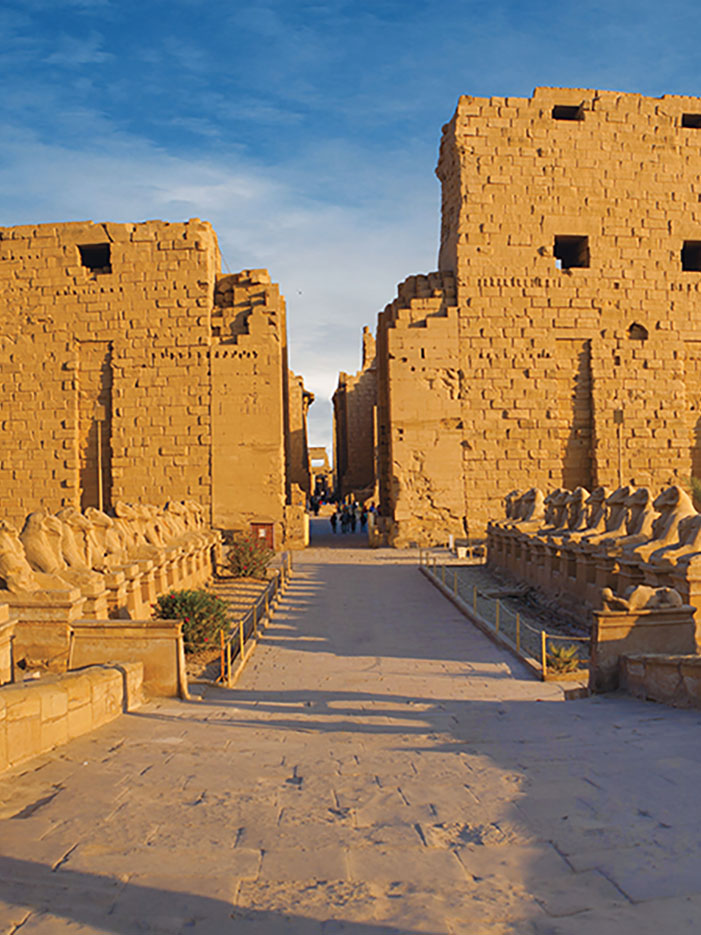
The temple complex of Karnak near the ancient city of Thebes is one of the largest religious structures ever built. Developed over thousands of years, the sprawling sanctuary was dedicated to the worship of several Egyptian deities, in particular Amun-Ra, the sun and creator god. Although archaeologists have investigated Karnak for 150 years, important questions have remained, including when the site was founded. A team of researchers recently conducted the first comprehensive geoarchaeological survey at the temple complex. This has revealed new details about the area’s ancient terrain. “Since previous research programs didn’t make the reconstruction of the paleolandscape their primary aim,” says geoarchaeologist Benjamin Pennington of the University of Southampton, “it’s not surprising that a full understanding of the origins and development of the temple complex had eluded researchers until now.”
Today the Nile is located more than 500 yards west of the complex, but sediment coring indicated that the riverine landscape has transformed over the millennia. The site was originally an island, but coring showed that, prior to 2520 b.c., it regularly flooded. This made the area unsuitable for permanent occupation. The site only became permanently habitable when the river channels began to change course during the Old Kingdom (ca. 2649–2150 b.c.). This coincides with the earliest ceramic evidence found there, which dates to around 2300 b.c. Pennington’s team believes that Karnak may have been chosen as the location for one of Egypt’s most sacred temples due to its resonance with ancient creation myths. These stories tell that the world first emerged as a primordial mound that rose from the Waters of Chaos and was closely associated with Amun-Ra.