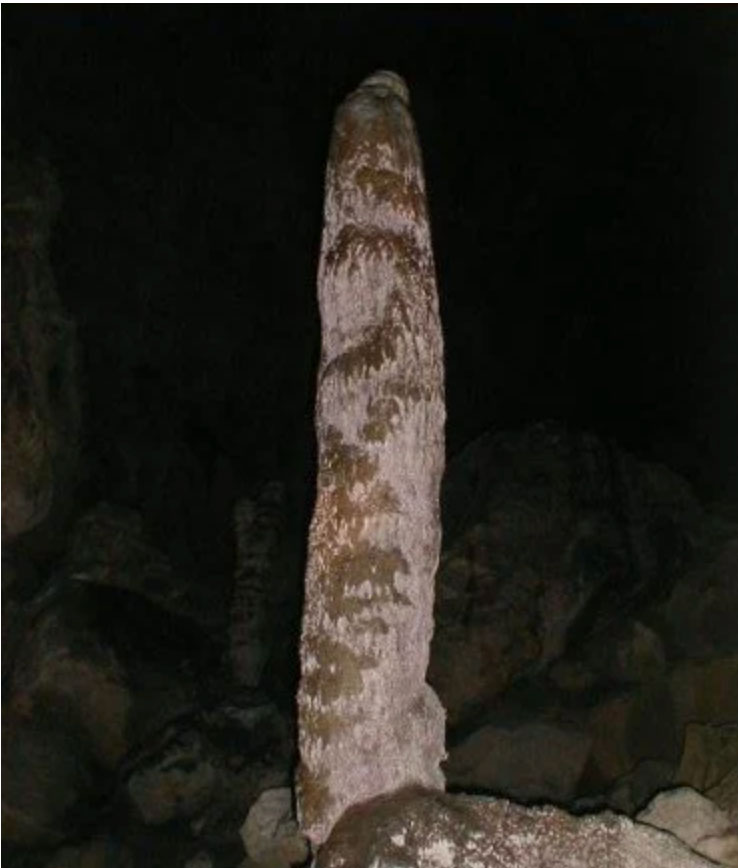
OXFORD, ENGLAND—Around 4,600 years ago, a Neolithic Chinese civilization known as the Shijiahe culture flourished in the Middle Yangtze Valley. The advanced ancient society built palaces, extensive defensive networks, and sophisticated water management systems, as well as thriving pottery and jade industries, before they suddenly disappeared––an event that has long puzzled archaeologists. According to a statement by the University of Oxford, a team of English and Chinese scholars have now seemingly pinpointed the cause. Researchers scrutinized annual rainfall amounts over a 1,000-year period in central China by analyzing stalagmites from the Heshang Cave. They determined that around 4,000 years ago, the region experienced an abnormally high and long-lasting rainfall interval, during which precipitation amounts averaged more than 40 inches per year. This excess rain would have caused lakes within the Middle Yangtze Valley to expand and flood lower-lying settlements and agricultural land. This date also coincides with a sharp decline in archaeological material, suggesting that the Shijiahe population abandoned the area and dispersed into locations at higher elevations. “The data enabled us to demonstrate, for one of the first times, that high rain can cause problems for past societies, as well as drought conditions,” said Oxford environmental scientist Gideon Henderson. Read the original scholarly article about this research in National Science Review. To read about how another ancient society dealt with flooding in the Yangtze Delta, go to "Early Signs of Empire."