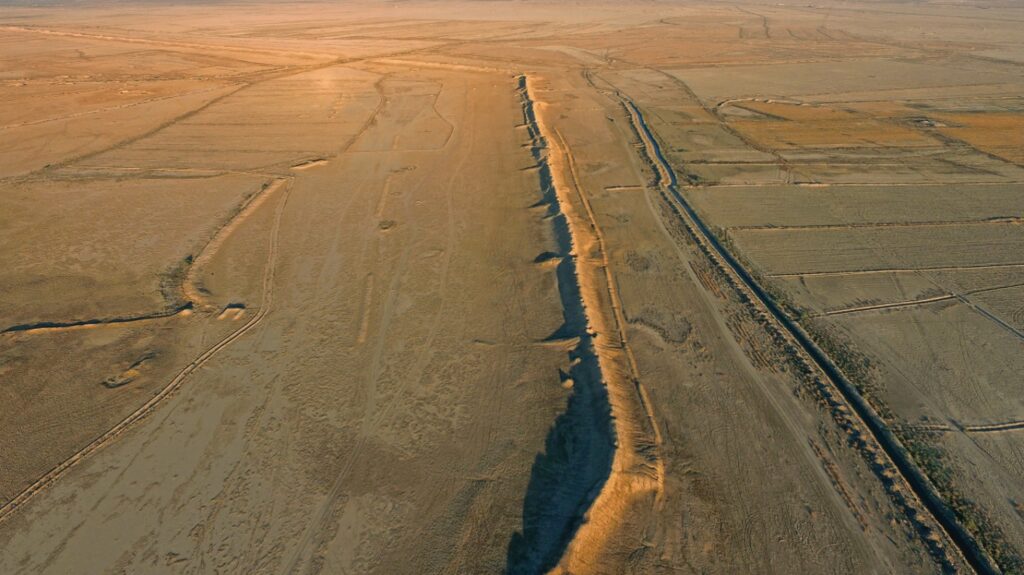
JEBEL KHAYYABER, IRAQ—Ancient written sources record that when Alexander the Great returned to Mesopotamia from the Indus Valley around 324 b.c., he founded a strategic new port in the region, known as Alexandria on the Tigris. Until recent years, however, its exact location remained lost to archaeologists. According to a report by La Brújula Verde, new research has not only helped rediscover the site, but has provided new details about its extensive size and layout. An international team of scholars led by University of Konstanz archaeologist Stefan Hauser relied on aerial photography, drone imagery, and surface surveys to confirm the city’s location at Jebel Khayyaber in present-day Iraq. Geophysical surveys revealed an organized network of streets, walls, canals, and insulae that are among the largest residential blocks found anywhere in the ancient world. Images also detected vast temple complexes and industrial districts. “We then realized that what we had before us was the equivalent of Alexandria on the Nile,” says Hauser. Between 300 b.c and a.d. 300, the city, which was later renamed Charax Spasinou, grew into a major trade center along routes that connected Mesopotamia, India, Afghanistan, and China. By the third century a.d., however, the course of the Tigris River had gradually shifted away from the settlement, inevitably leading to its decline. For more on Alexander's youth and early career, go to "Alexander the Great's Untold Story."