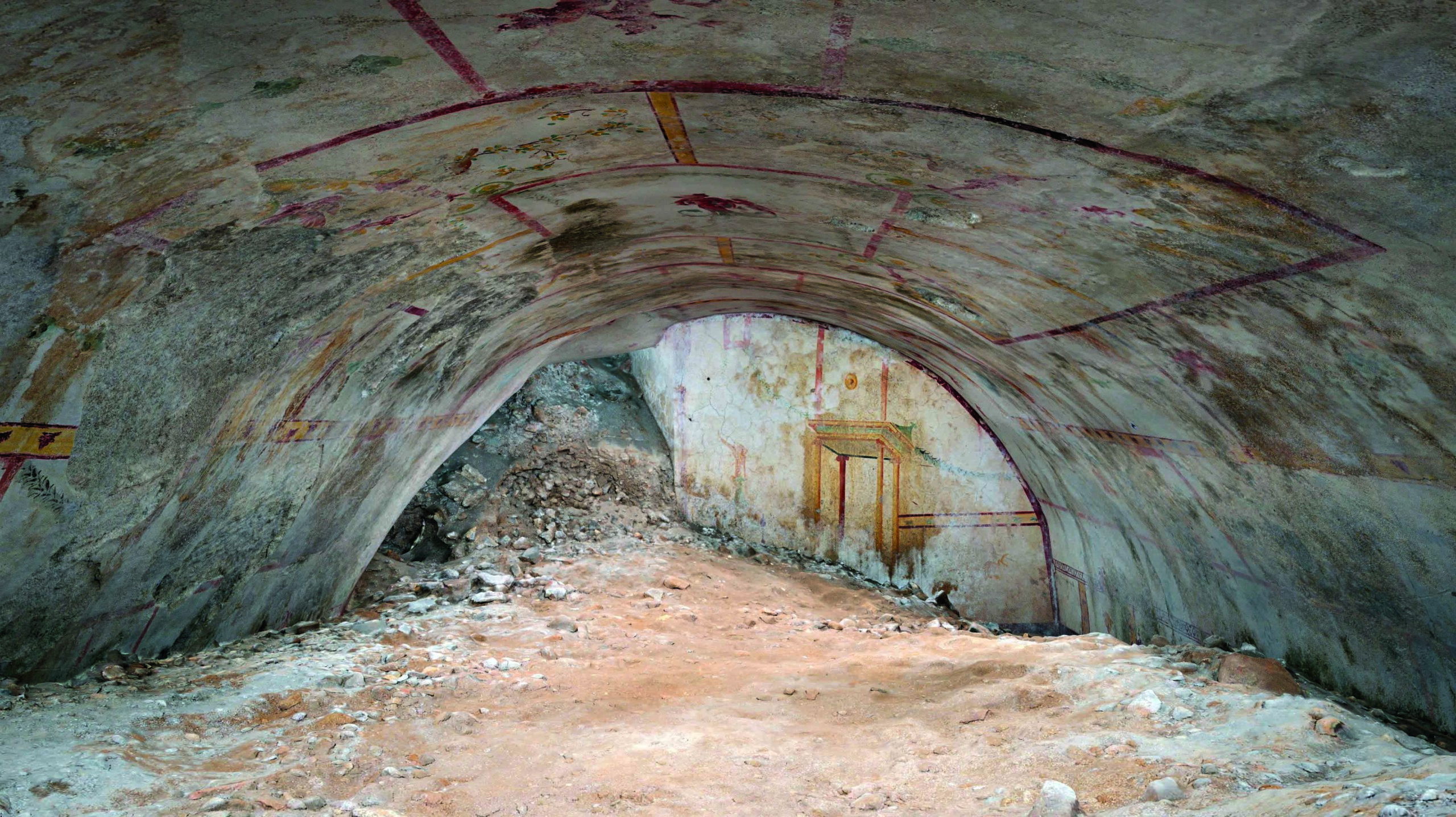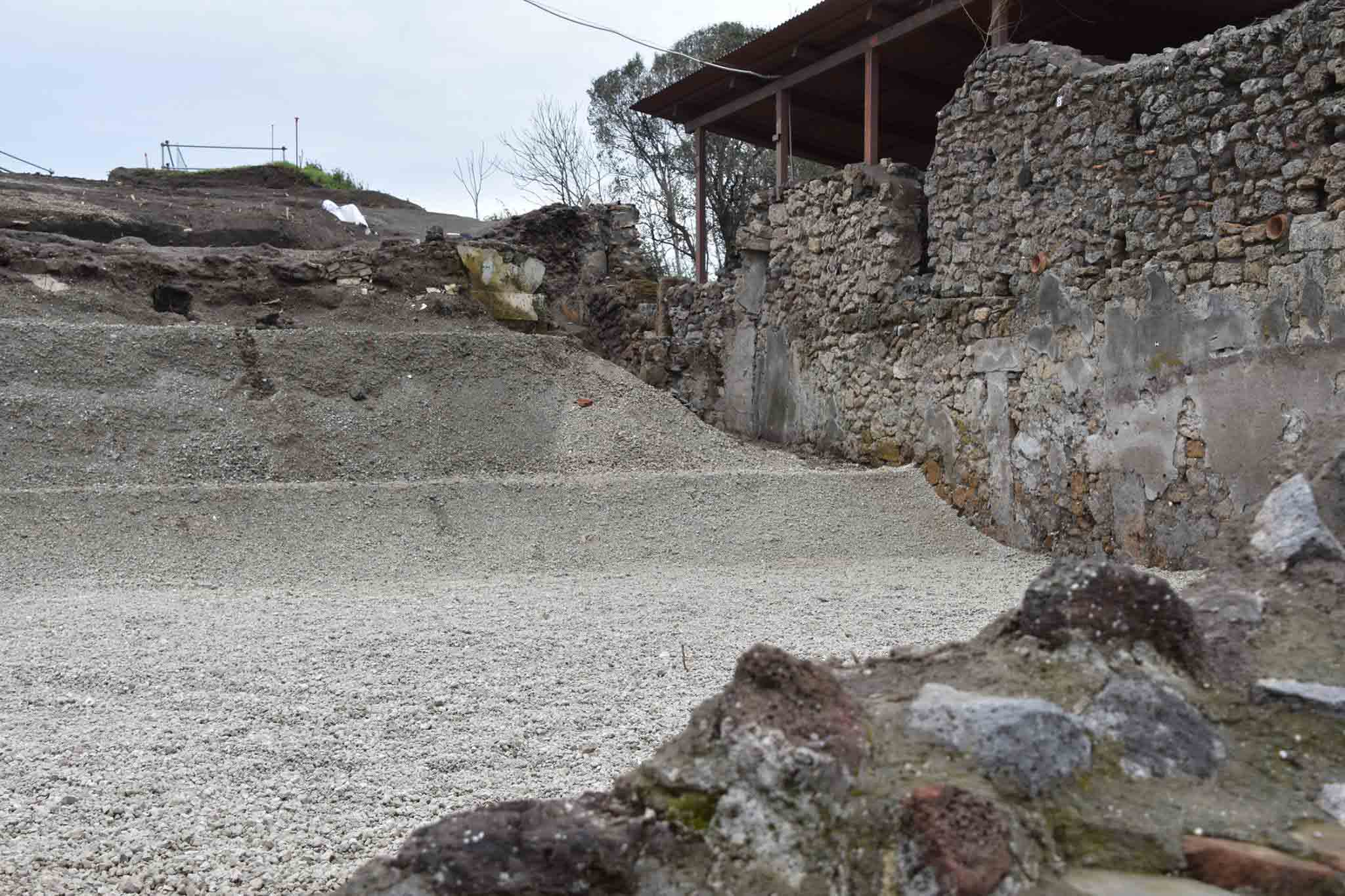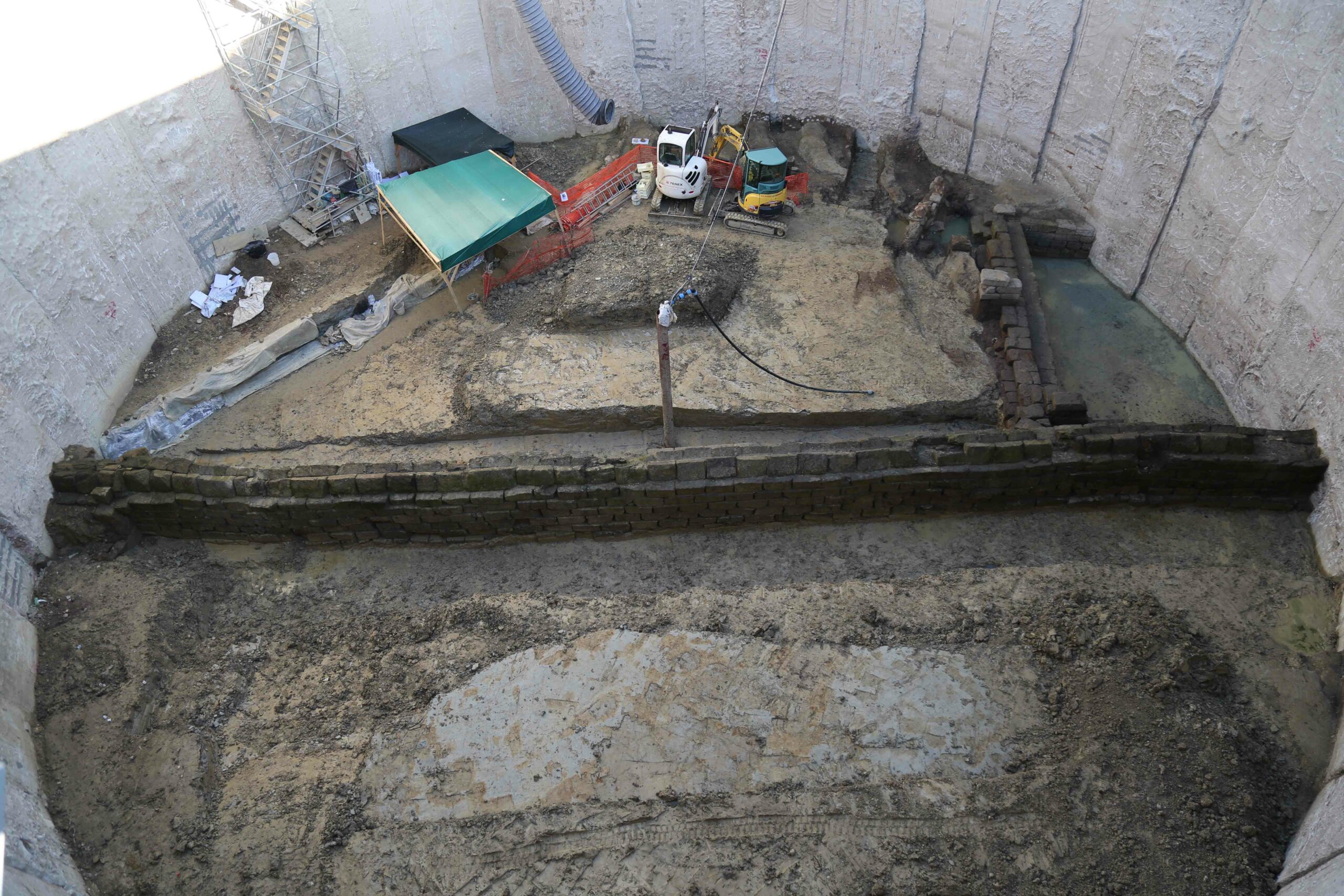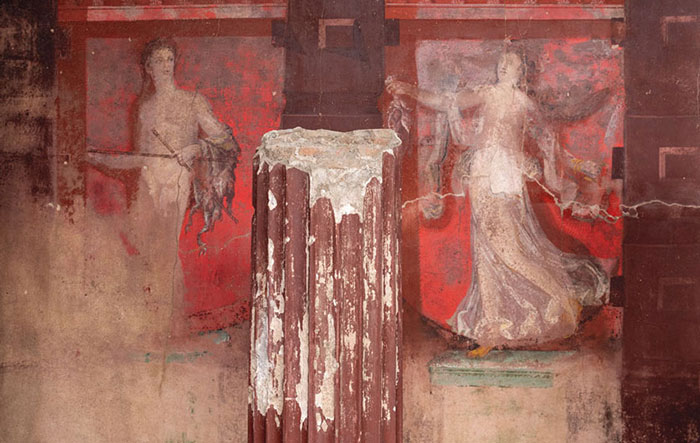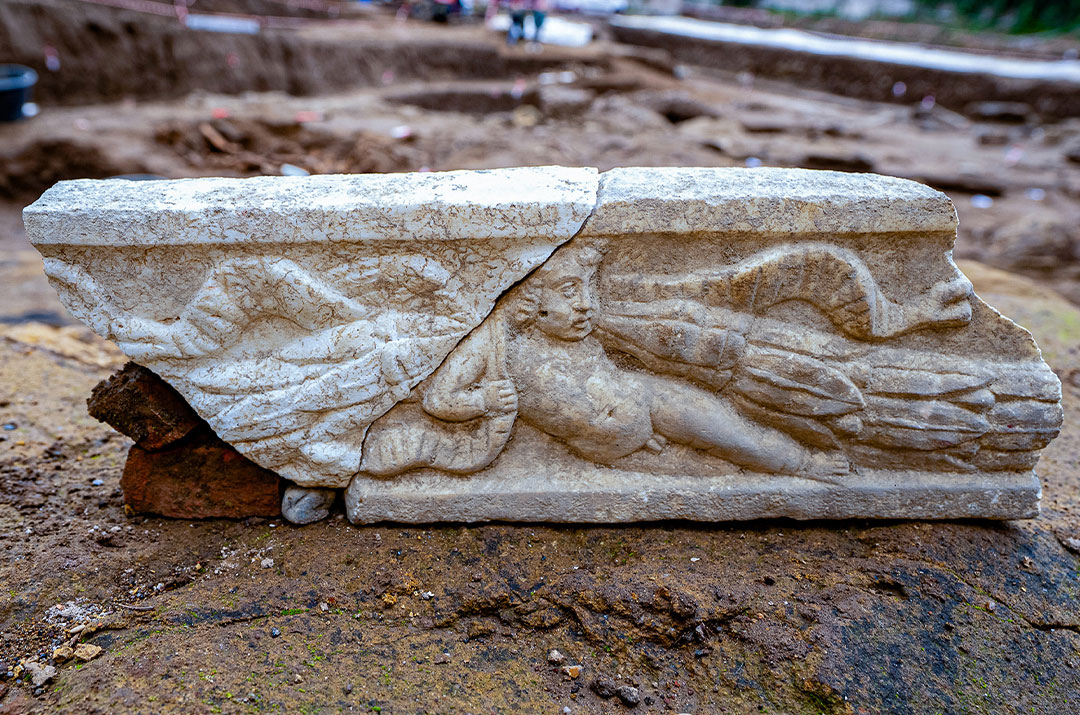
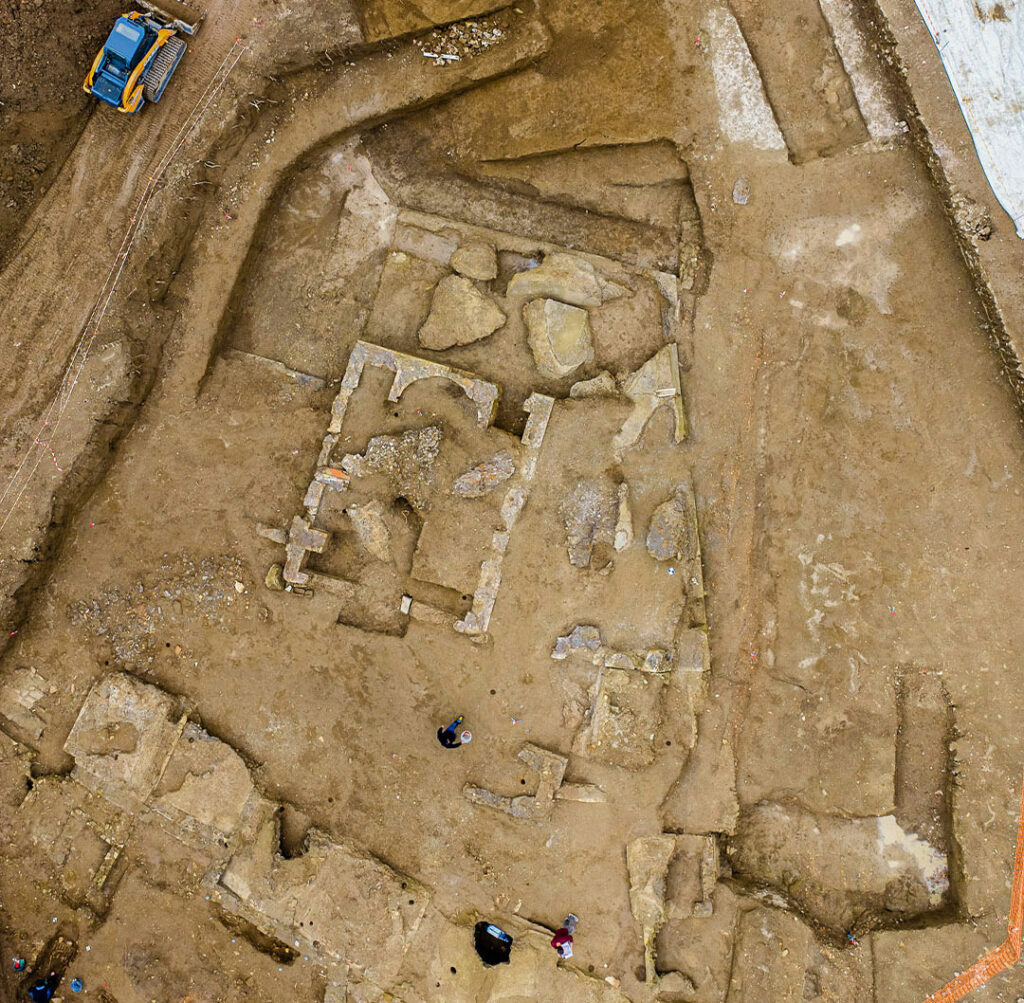
ROME, ITALY—La Brújula Verde reports that an excavation along the Via Ostiense, the ancient road that connected Rome and its river port, Ostia, has uncovered a previously unknown area of the Ostiense Necropolis. Diletta Menghinello of the Special Superintendence for Archaeology, Fine Arts and Landscape of Rome said that five funerary buildings with vaulted roofs from the imperial period have been uncovered. These buildings were aligned northeast-southwest. Two smaller buildings were found in front of them. Another structure, oriented perpendicularly to the main axis, suggests that the funerary buildings may have been placed around a central courtyard or open area. The walls of these buildings were decorated with frescoes featuring colored bands; vegetal motifs; praying female figures known as orantes; and Winged Victories, which are linked to the hope of transcendence and triumph over death, Menghinello explained. She thinks that these funerary structures may have served as columbaria, or chambers with niches for housing cremation urns. Grave goods, inscriptions, and the original flooring may also be preserved at the site, she added. Archaeologists found a later necropolis behind these imperial structures. Burials there were simple pits containing few grave goods, perhaps reflecting changing social and economic conditions. To read about the ancient seaport of Portus near Ostia, go to "Rome's Imperial Port."