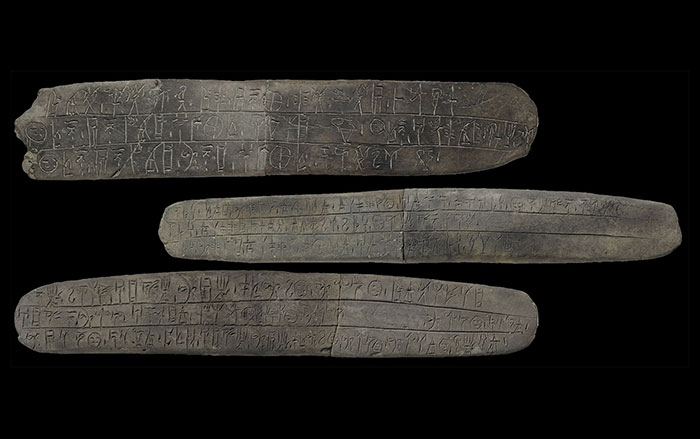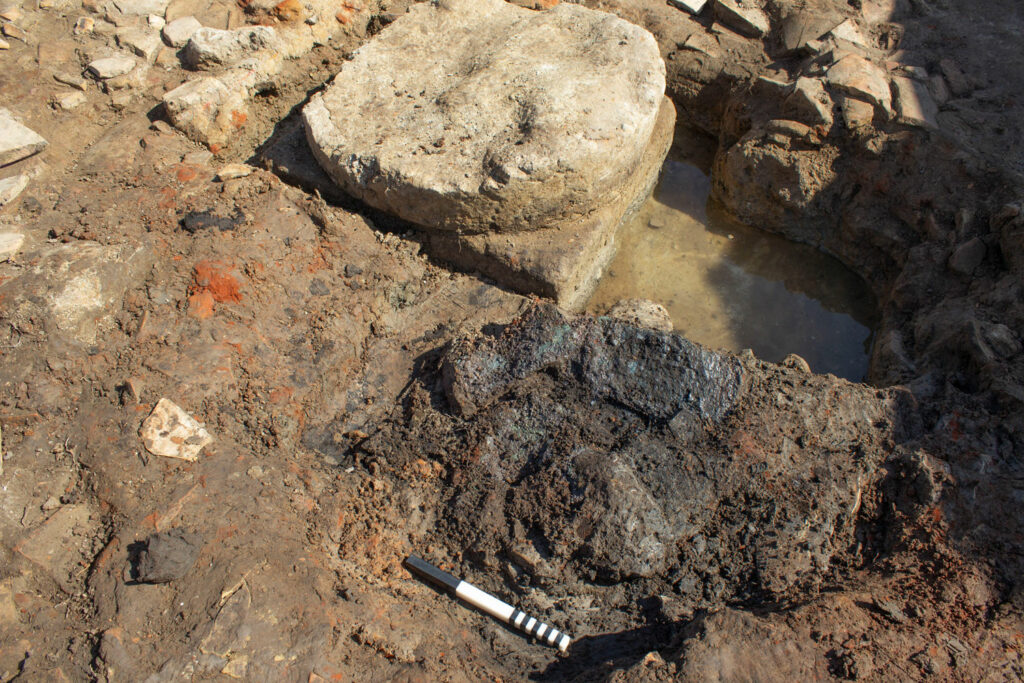
ATHENS, GREECE—According to a Greek Reporter article, official documents may have been held at a temple at the site of Kleidi-Samikon in Greece’s western Peloponnese. Dated to the sixth century B.C., the temple measured about 92 feet long and 31 feet wide. It had two large adjoining halls, each with a central colonnade. Birgitta Eder of the Austrian Archaeological Institute and Erofili-Iris Kollia of the Ephorate of Antiquities of Elis explained that this arrangement of two spaces in one building is unusual and could indicate that the structure served two different purposes. In the northwestern hall, the researchers uncovered a large bronze inscription and a perirrhanterion, or ritual vessel for holding consecrated water. They also discovered evidence that the building had burned in antiquity. Under the collapsed roof, the researchers found corroded bronze sheets that may have been inscribed with public and sacred documents. This part of the building is now thought to have been used as an archive for official or religious records. The excavation team also uncovered fragments of a large, disc-shaped terracotta ornament painted in black and red that once adorned the roof of the structure. To read more about excavations of the temple at Kleidi-Samikon, go to "The Sea God's Sanctuary."