“Correction Fluid” Analyzed in Ancient Egyptian Book of the Dead

News March 12, 2026

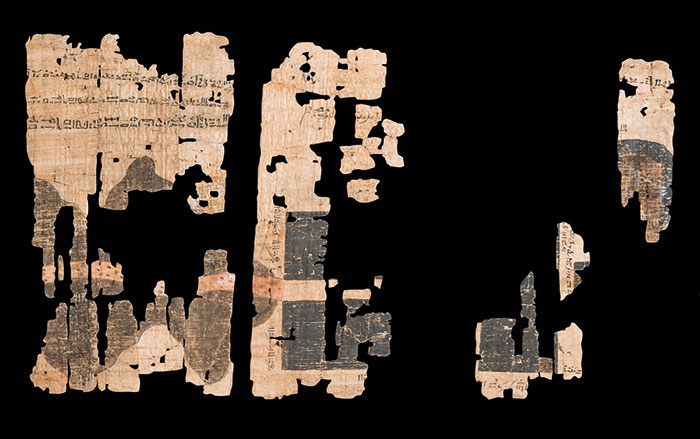
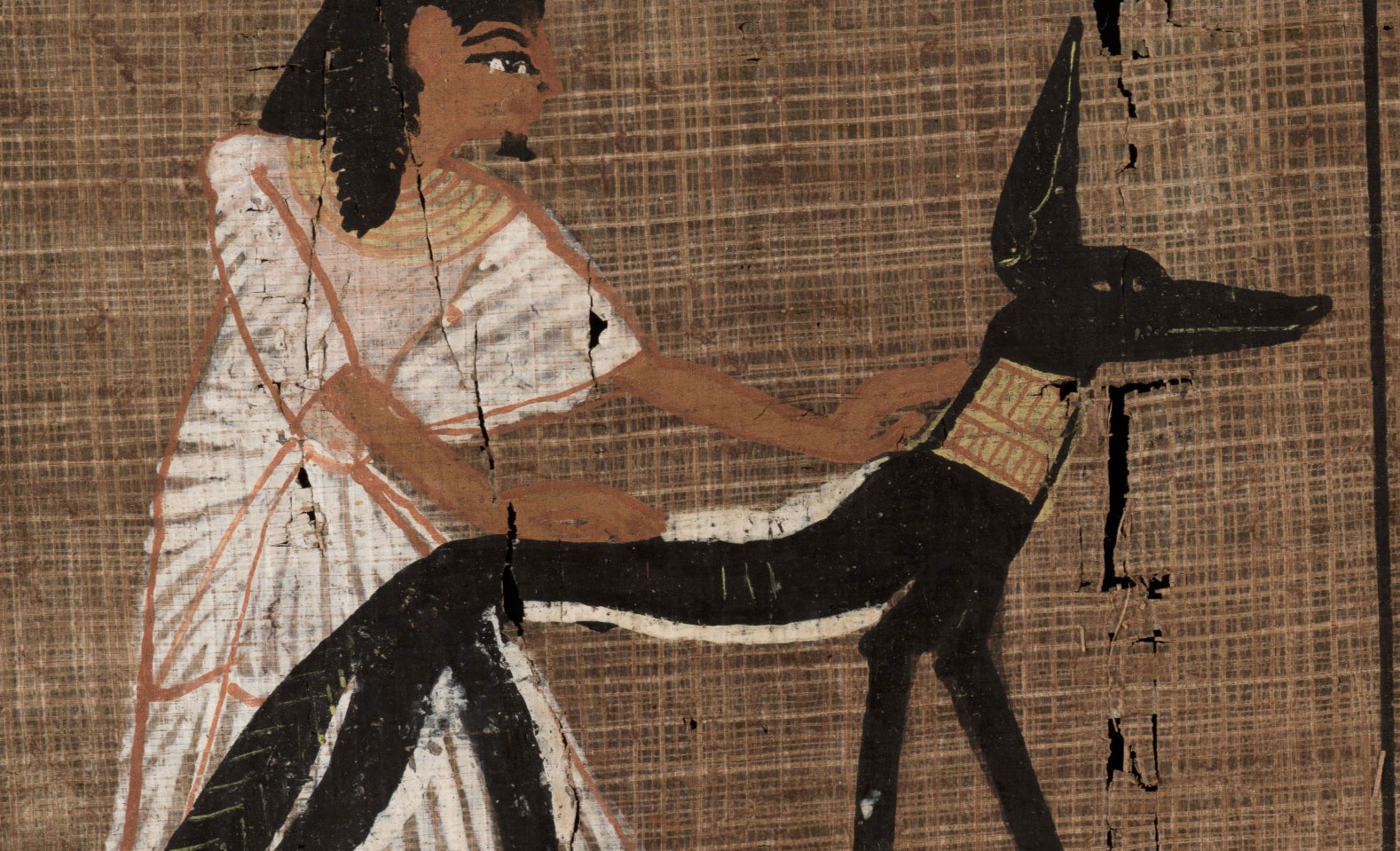
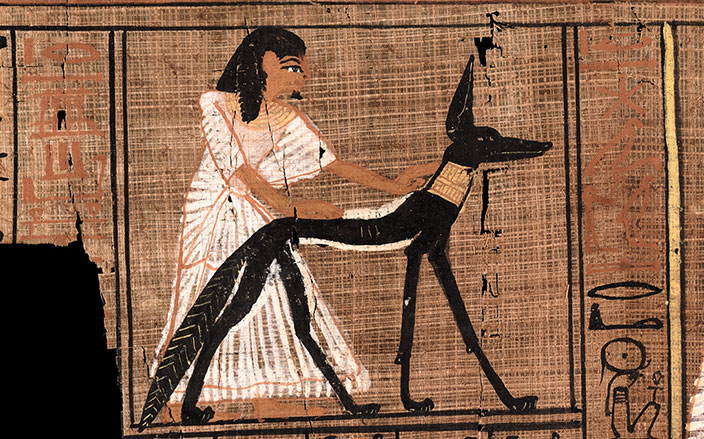
Papyrus from a copy of the Book of the Dead showing a jackal as it would have appeared after correction, when the white lines blended with the original natural color of the papyrus to make the body appear slimmer
The Fitzwilliam Museum, University of Cambridge
SHARE:

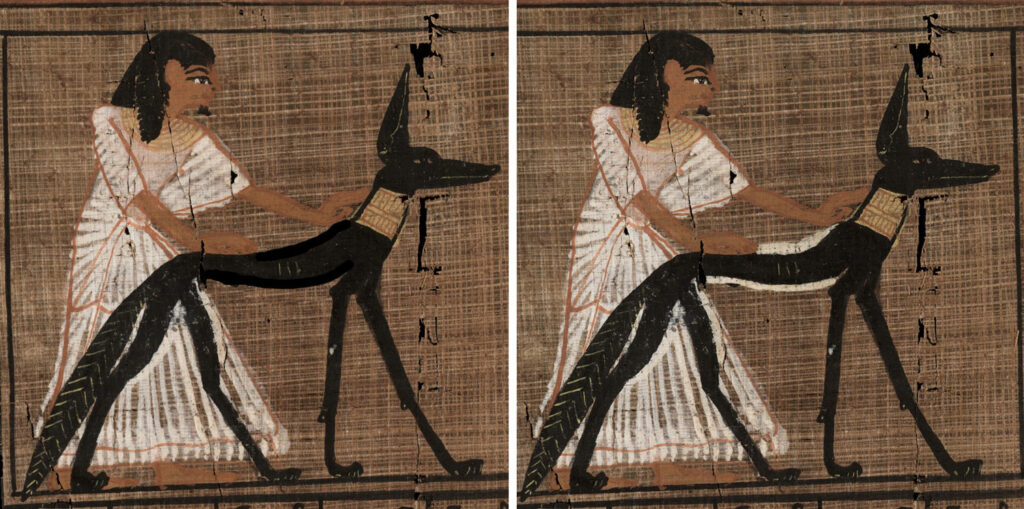
CAMBRIDGE, ENGLAND—Curators at the Fitzwilliam Museum noticed that an image of a jackal on a 3,300-year-old Egyptian papyrus had been modified with white fluid, according to an ArtNet News report. The modified picture was found in a copy of the Book of the Dead made for a royal scribe named Ramose, whose tomb was discovered by William Flinders Petrie in 1922. The image shows Ramose placing his hands on the body of a jackal, identified as Wepwawet, a god of war and hunting. Bold, white lines had been applied to either side of the jackal’s body and the upper halves of its back legs. “It’s as if someone saw the original the way the jackal was painted and said, ‘it’s too fat; make it thinner,’” said Fitzwilliam Museum curator Helen Strudwick. When examined with infrared photography and a 3D digital microscope, Strudwick and her colleagues confirmed that the white lines, a mixture of calcite and huntite, had been painted over the black of the jackal’s figure. Flecks of yellow had been added to the white mixture, presumably to help the correction blend with the color of the papyrus, which would have been much paler 3,300 years ago than it is today.
  • Features March/April 2026

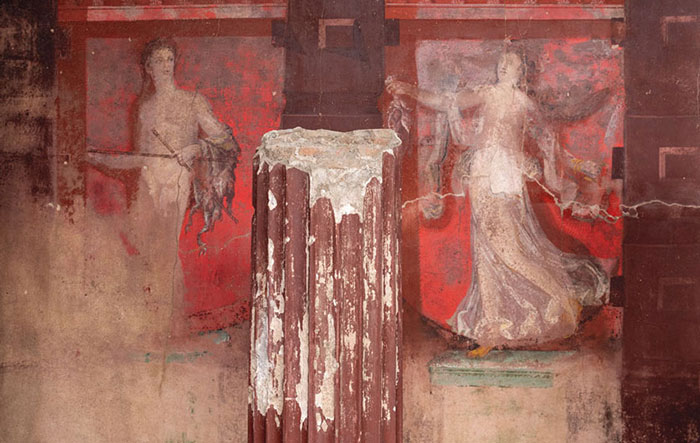
    Pompeii's House of Dionysian Delights

    Vivid frescoes in an opulent dining room celebrate the wild rites of the wine god

    Read Article
    Frescoed panels in the House of the Thiasus portray a satyr (left) and a woman (right)
    Courtesy Archaeological Park of Pompeii
  • Features March/April 2026

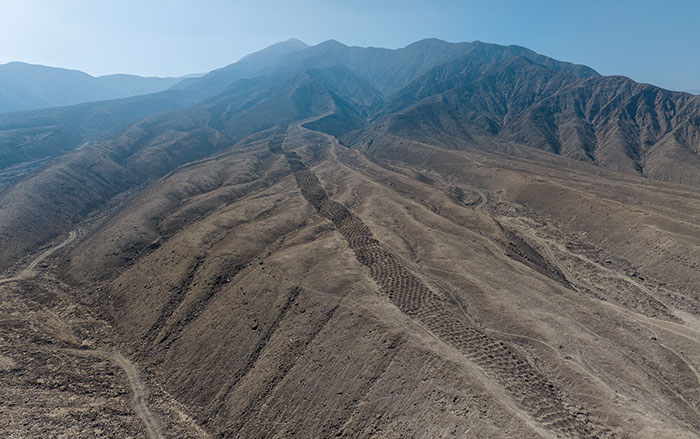
    Return to Serpent Mountain

    Discovering the true origins of an enigmatic mile-long pattern in Peru’s coastal desert

    Read Article
    Courtesy J.L. Bongers
  • Features March/April 2026

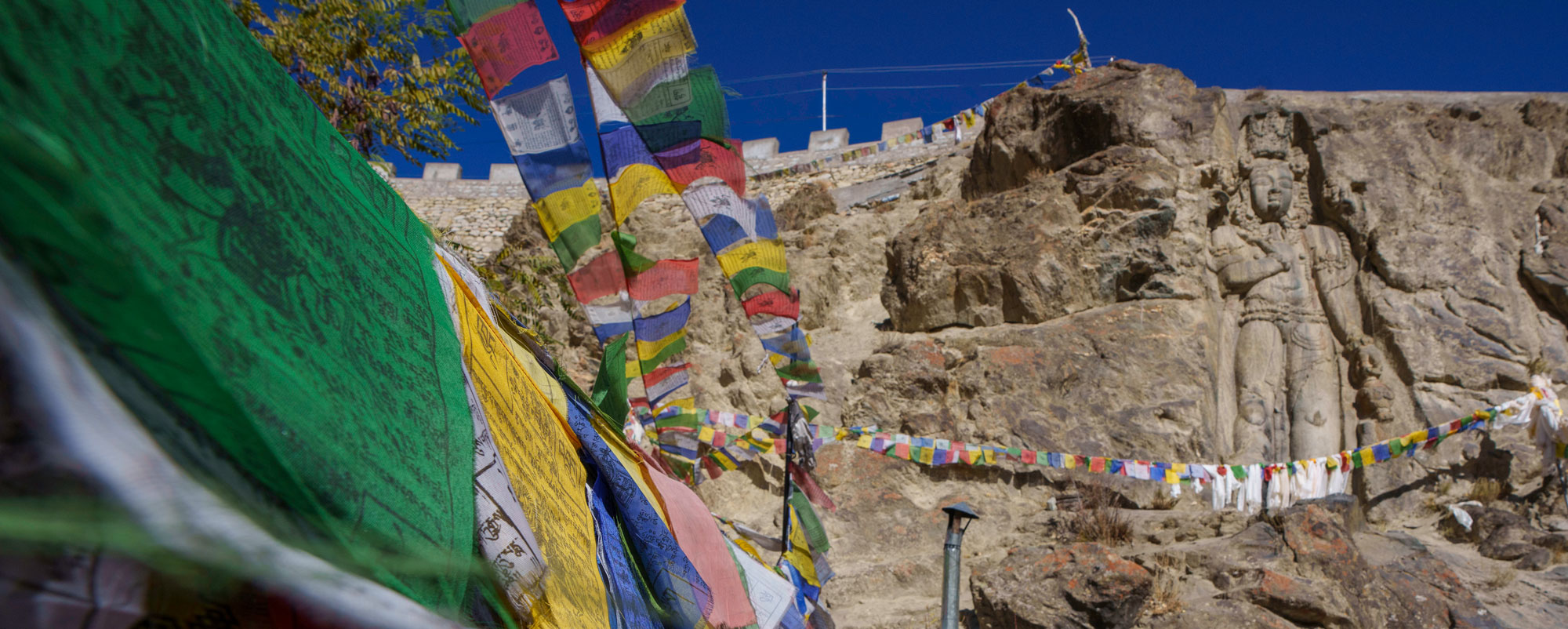
    Himalayan High Art

    In a remote region of India, archaeologists trace 4,000 years of history through a vast collection of petroglyphs

    Read Article
    Matt Stirn
  • Features March/April 2026

    What Happened in Goyet Cave?

    New analysis of Neanderthal remains reveals surprisingly grim secrets

    Read Article
    The Third Cave, one of the galleries in a cave system in central Belgium known as the Goyet Caves
    IRSNB/RBINSL