In a lengthy passage known as the Catalog of Ships in book 2 of the Iliad, Homer lists the towns from which a Greek armada of more than 1,100 warships set sail to fight at Troy under the leadership of the Mycenaean king Agamemnon. Shipwrecks and goods discovered as far from Greece as Egypt are evidence that the Mycenaeans were indeed intrepid seafarers. “The Mycenaeans traveled all over the eastern Mediterranean,” says archaeologist Daniel Pullen of Florida State University. “That means they had to build, maintain, and man ships that could have been used for trade and war. And they had to launch them from somewhere.” Although archaeologists have found harbor sites dating to the Late Bronze Age on Crete, from where some of the vessels listed in the Catalog of Ships hailed, they have identified little evidence of harbors or port facilities from this period in mainland Greece.
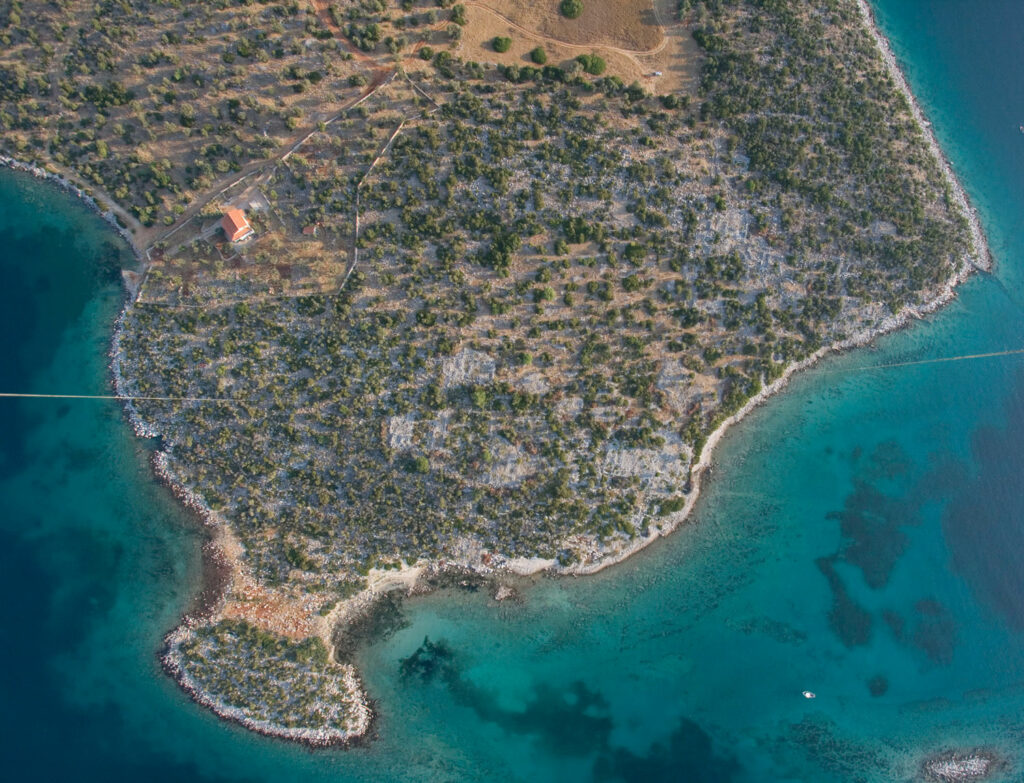
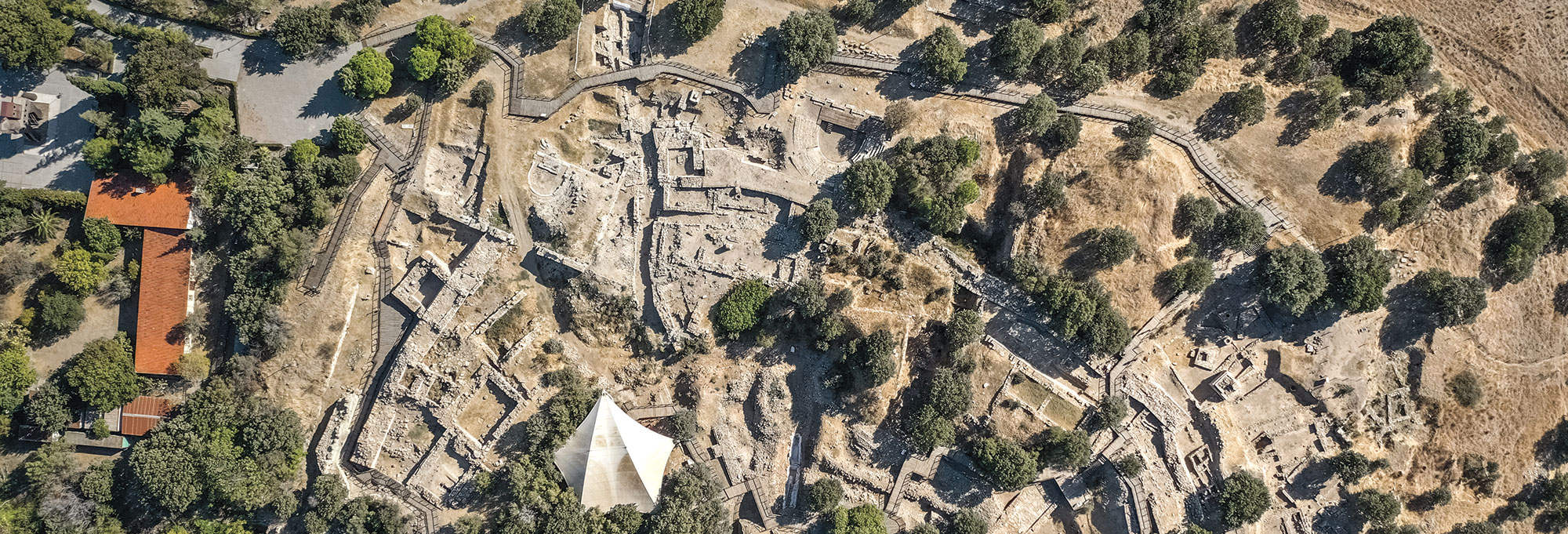
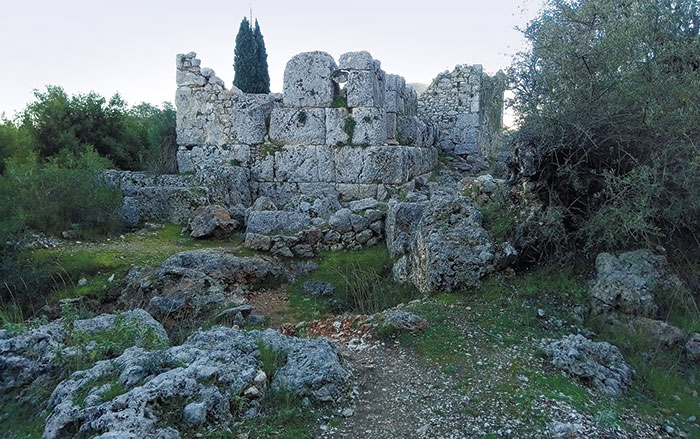
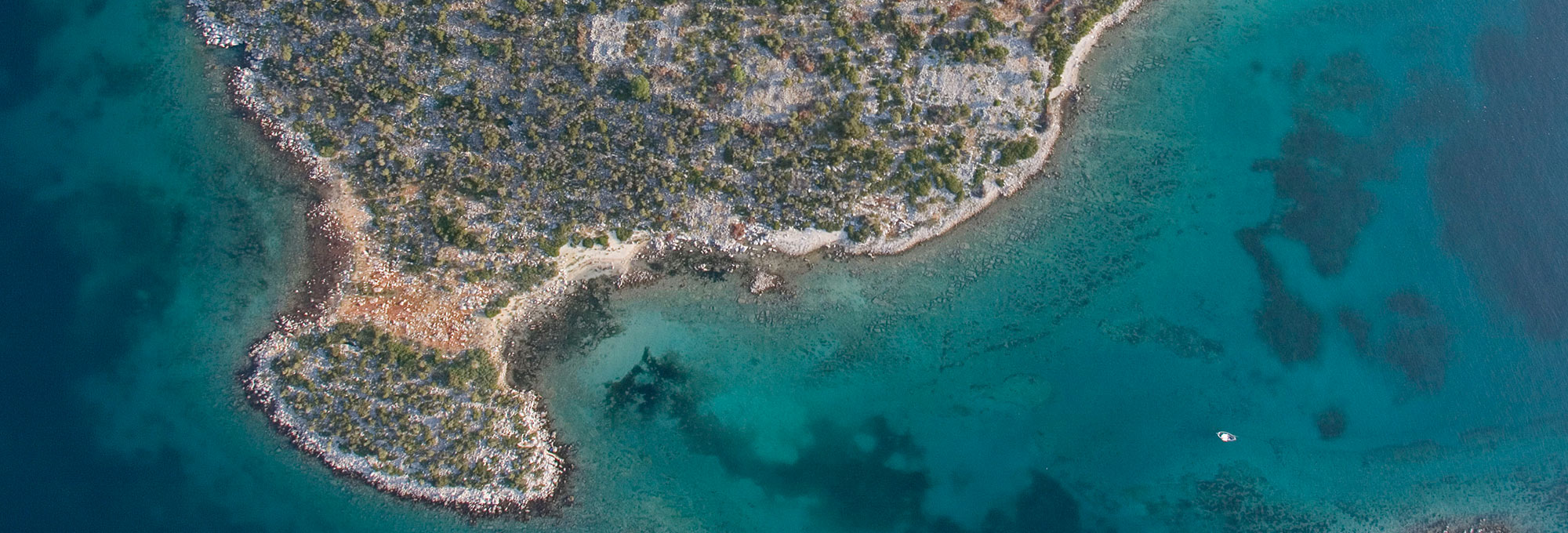
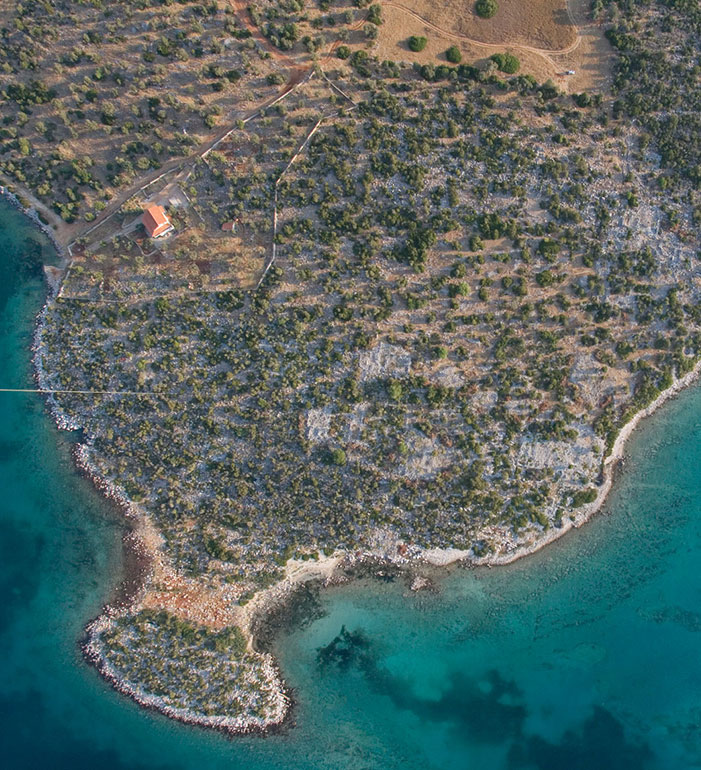
Pullen and archaeologists Thomas Tartaron of the University of Pennsylvania and Richard Rothaus of Central Michigan University developed a geographic information system model to identify possible ancient harbor sites along the Saronic Gulf coast of southern mainland Greece. Their team conducted surveys on land and underwater to investigate several potential anchorages. One of these was at Kalamianos, a walled site on Cape Trelli, or Cape Madness, some 13 miles east of the site of Mycenae. There, the team has documented standing ruins of about 50 buildings on land that date to a period of expansion in the fourteenth century b.c., possibly by the Mycenaeans. Shortly thereafter, rising sea levels began to submerge part of the ancient coastline. In Kalamianos’ two natural harbor basins, the researchers found piles of ballast stones and Late Bronze Age ceramics that indicate spots where ships likely anchored.
Given Kalamianos’ strategic location, Pullen believes that it could be the location of Eiones—the only port town on the Saronic Gulf mentioned in the Catalog of Ships that has yet to be identified. Pullen’s hypothesis is supported by an account of Eiones by the geographer Strabo, who wrote in the first centuries b.c. and a.d. He describes Eiones as “a village, which was depopulated by the Mycenaeans and made into a naval station, but later it disappeared from sight and now is not even a naval station.” Strabo’s narrative of Eiones’ rise and fall matches what Pullen and his team have learned about Kalamianos’ short life as a booming Bronze Age harbor town.