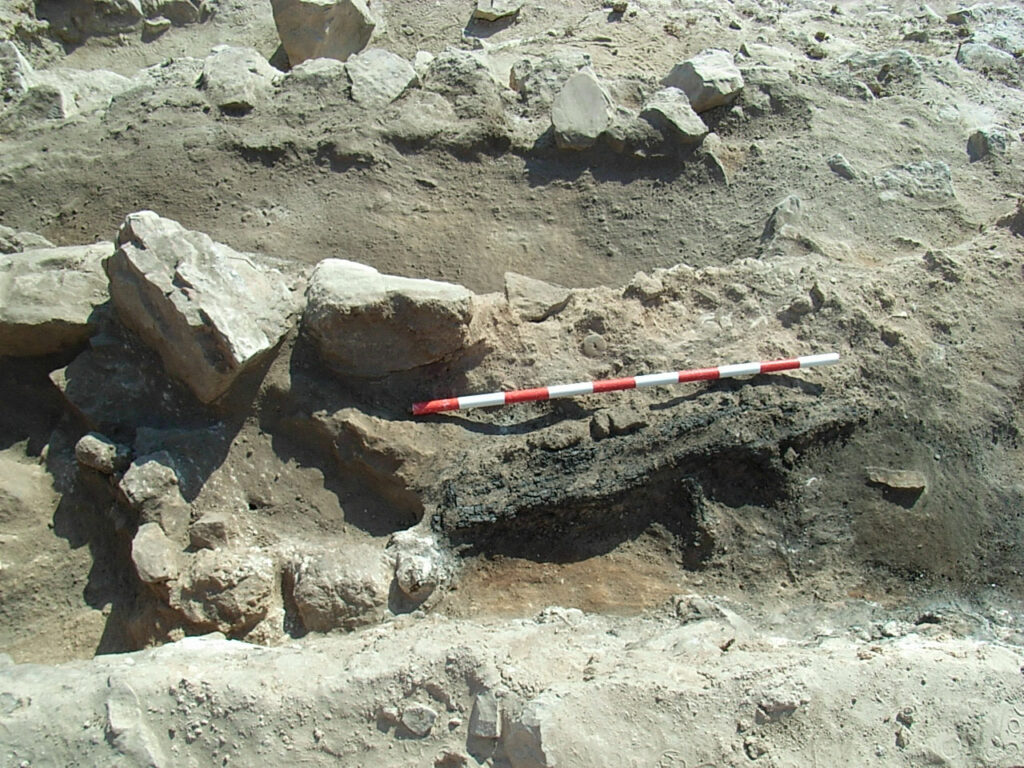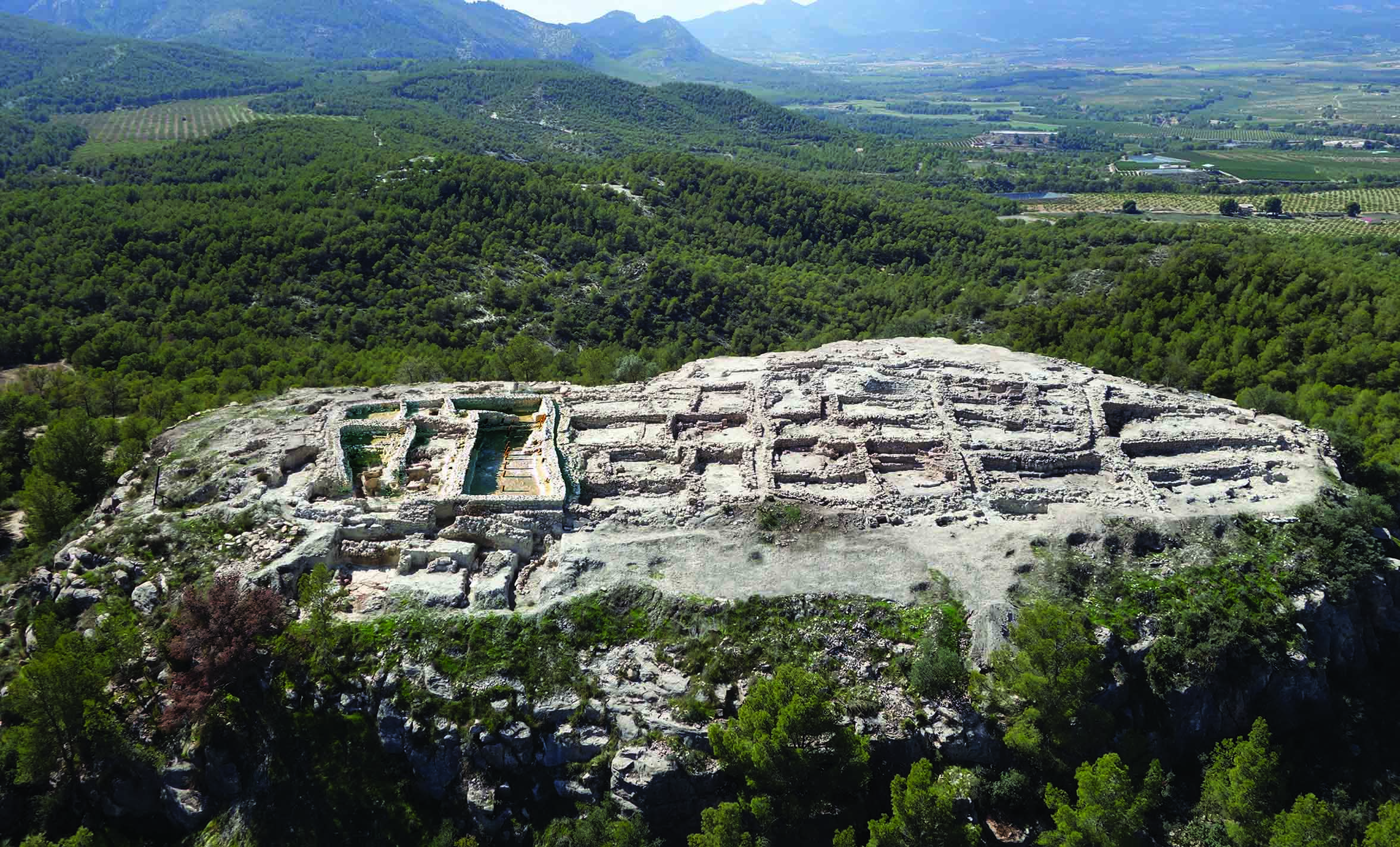
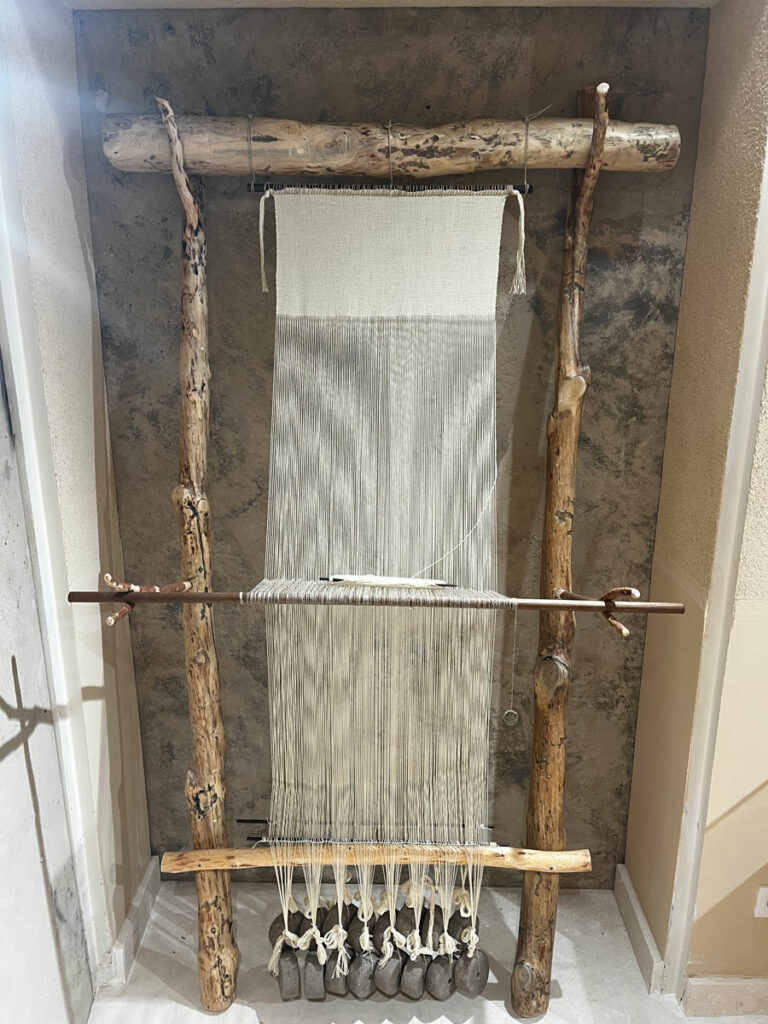
ALICANTE, SPAIN—According to a statement released by Antiquity, a team of researchers led by Ricardo E. Basso Rial of the University of Granada has analyzed and partially reconstructed a warp-weighted loom based upon charred timbers, plant fiber ropes, and clay loom weights discovered at the site of Cabezo Redondo in southeastern Spain. “The existence of textile production in Bronze Age southeastern Iberia was well established, particularly through the study of loom weights and spindle whorls,” Basso Rial said. “However, the wooden components of looms themselves are rarely preserved, which has severely limited our ability to reconstruct loom morphology, spatial organization, and weaving practices in detail,” he explained. The study determined that the loom is made from local Aleppo pine. The loom weights, however, were lighter than others found in the region and may have been used to weave different fabrics, such as open tabby fabrics made of plant fibers and perhaps denser early twills made of wool. “This represents a notable advance in our understanding of Bronze Age textile technology in Iberia,” Basso Rial concluded. Read the original scholarly article about this research in Antiquity. For more on Iberia finds from this period, go to "Artifact: Bronze Age Beads."