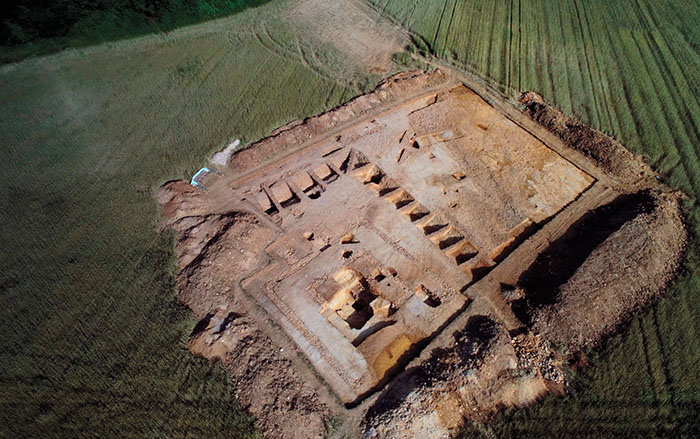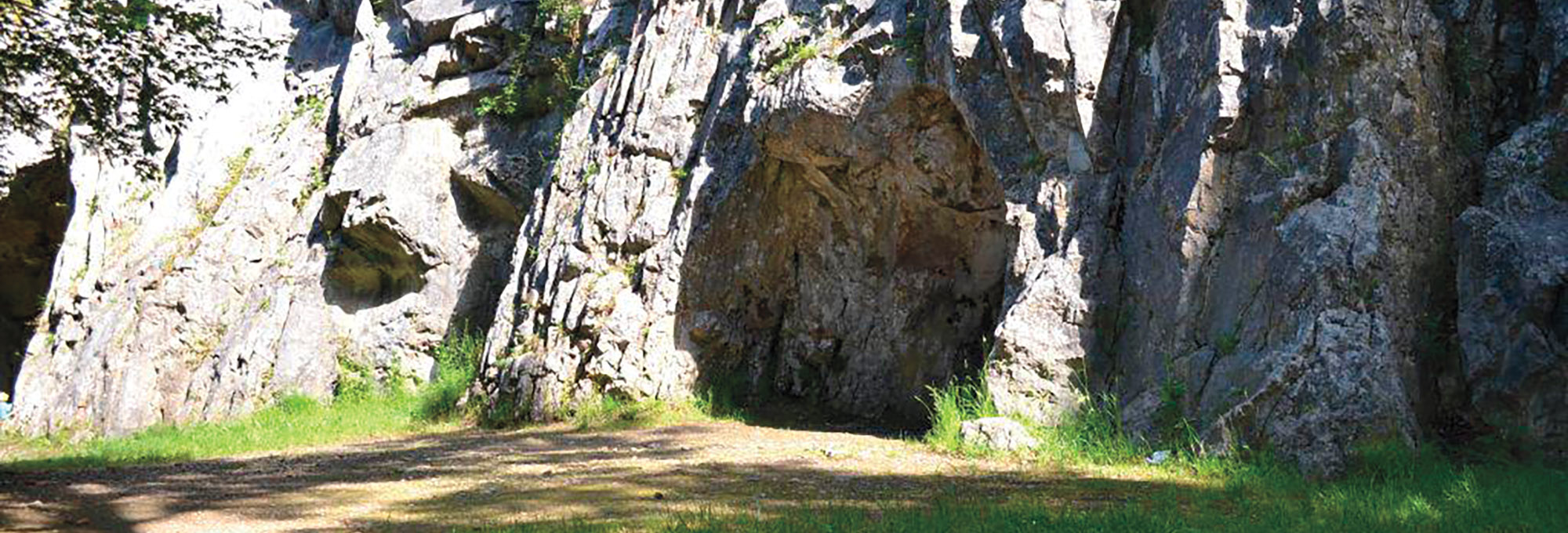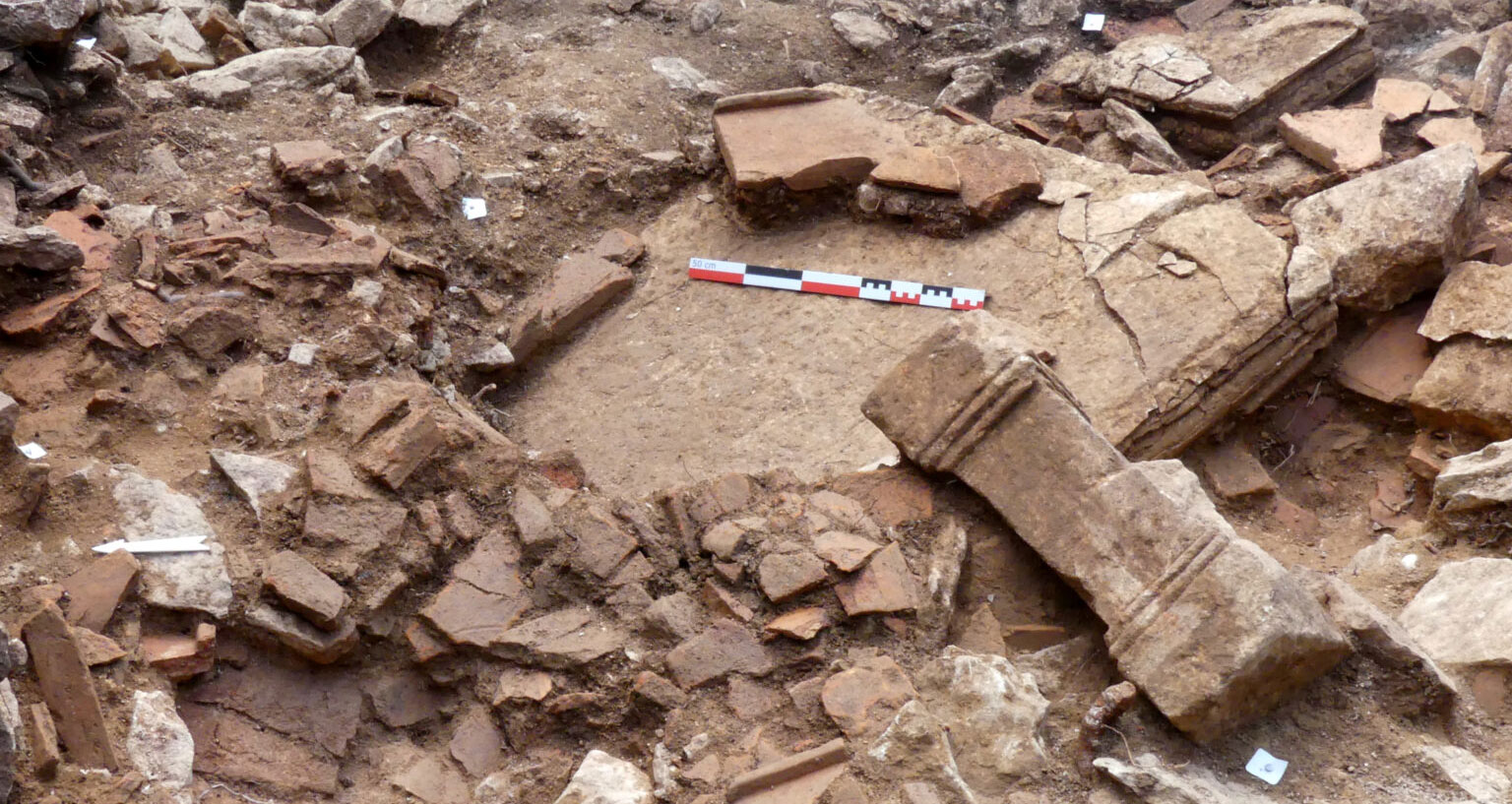
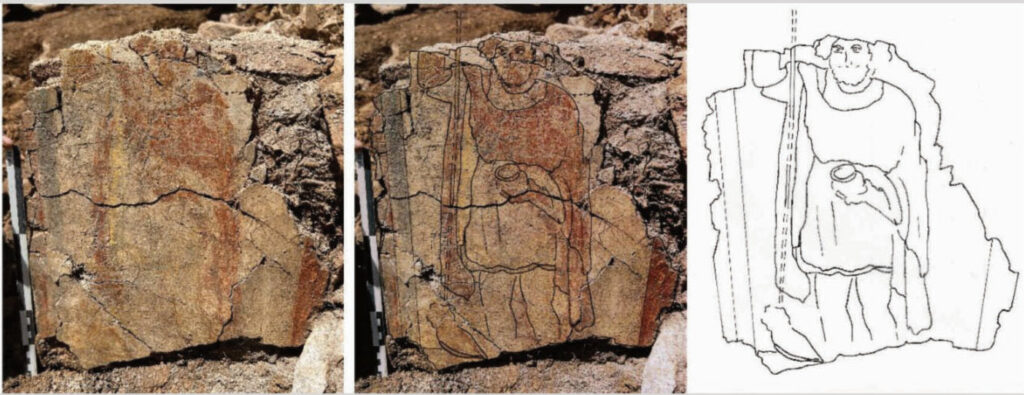
LYON, FRANCE—A painting of the Celtic god Sucellus has been discovered in Mancey, a hilltop sanctuary in eastern France, by a team of researchers led by Grégory Compagnon of France’s Archaeological and Archaeometry Laboratory, according to the Greek Reporter. The cult site featured two main structures, paths, and gathering areas. The painted masonry block was found on a small altar covered with plaster in a room inside one of the buildings. This room also contained two statue bases, a large stone table, and an altar with a raised edge. The temple was built in the late third century, Compagnon said, based on a collection of coins found on a clay floor surface dated to about A.D. 280. The 17 coins were likely a foundation deposit, he explained. The temple was then remodeled around A.D. 325, when a vestibule, benches, and a podium were added to the room. Traces of possible ritual meals consisting of piglets, chickens, small birds, and fish were recovered on this floor layer, along with ceramic and glass cups, coins, pins, beads, and a gold ornament. When the temple fell out of use, some 100 coins, a cult lamp, and 10 white clay figurines of mother goddesses were placed in a pit. Various coins and cup fragments suggest that people continued to visit the temple site until the end of the fourth century. To read about the burial of an elite Iron Age man unearthed in north-central France, go to "Tomb of a Highborn Celt," one of ARCHAEOLOGY's Top 10 Discoveries of 2015.