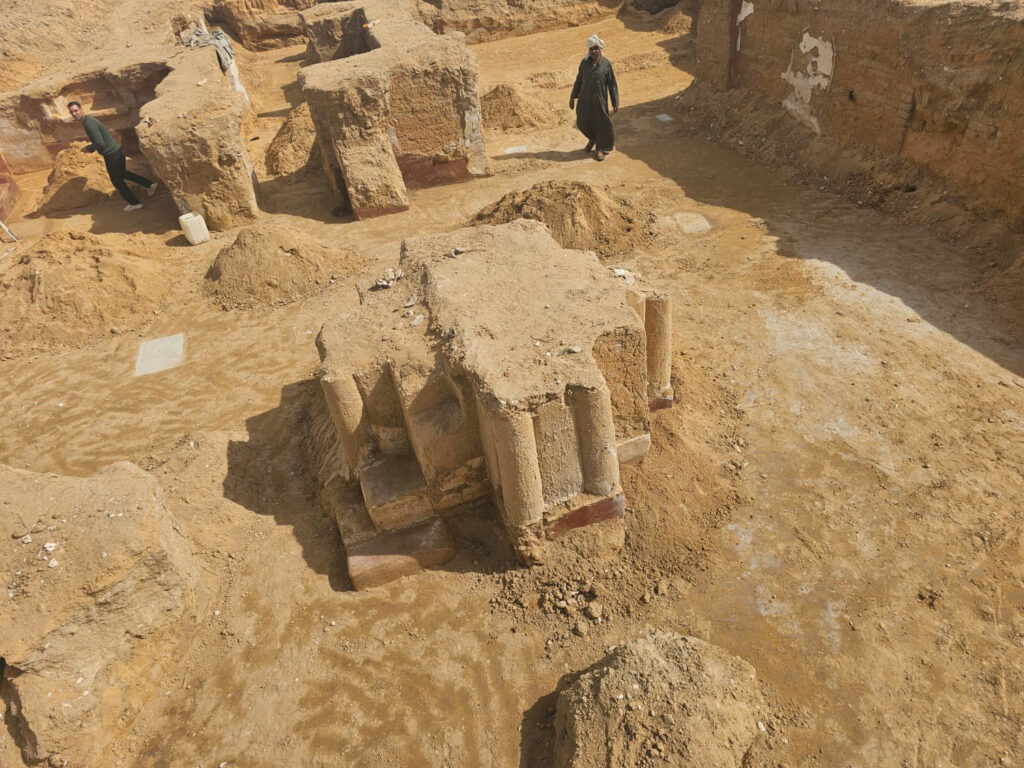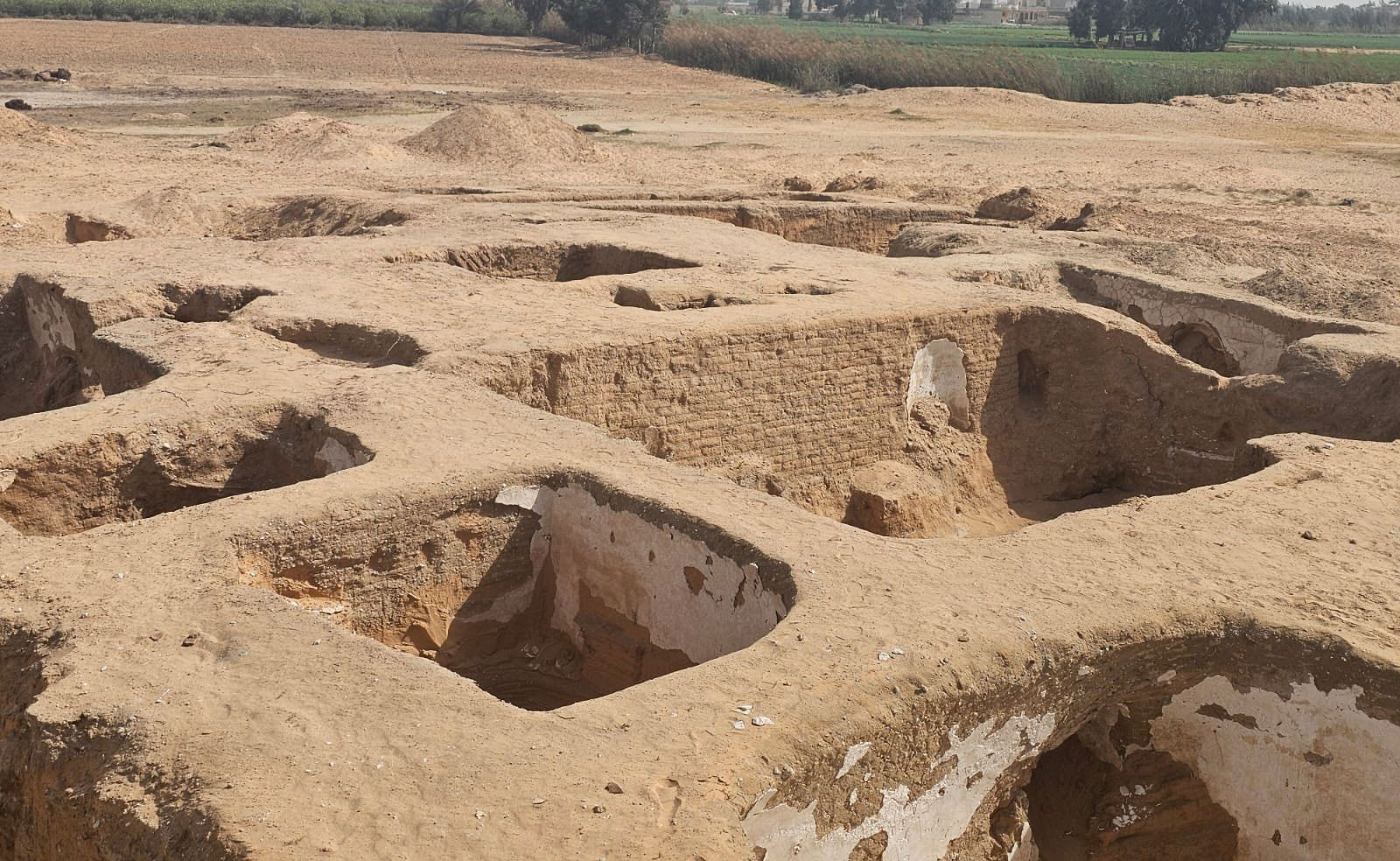
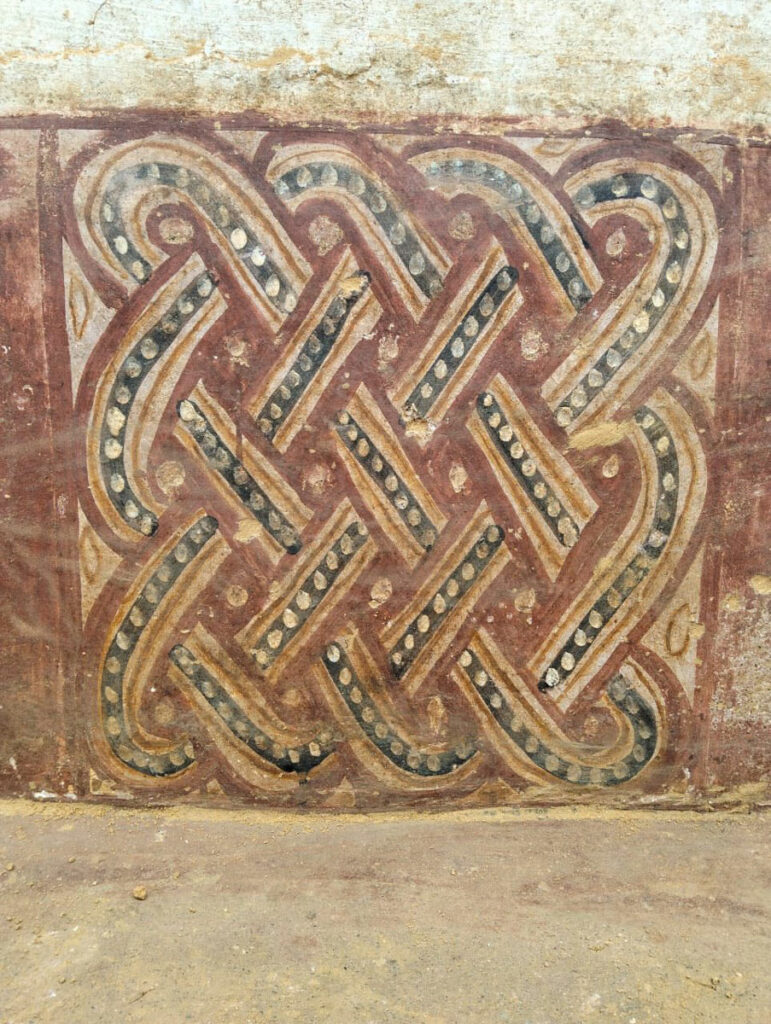
BEHEIRA, EGYPT—According to an Ahram Online report, a 13-room building discovered at the Al-Qalaye site in northern Egypt may have been used as a monastic guesthouse in the fifth century A.D. “The site’s architectural style reflects the earliest nucleus of monastery establishment,” said Hisham El-Leithy of Egypt’s Supreme Council of Antiquities. Wall paintings and other decorations in the rooms serve as examples of early Coptic art, including monastic figures, plant-based motifs, and braided patterns. The smaller rooms were used as individual and communal living quarters for monks, while larger rooms were used for hospitality and teaching, explained team member Diaa Zahran. “These spaces are divided by architectural arches and supported by service facilities such as kitchen and storage areas,” he explained. One large hall, likely used to receive visitors, contained stone benches decorated with plant motifs. A room at the center of the building with limestone cross was likely used for prayer. Marble columns, column capitals and bases, pottery, bird and animal bones, and seashells were also recovered at the site. To read about a papyrus that preserves a prayer written in Coptic, go to "Divine Initiation."