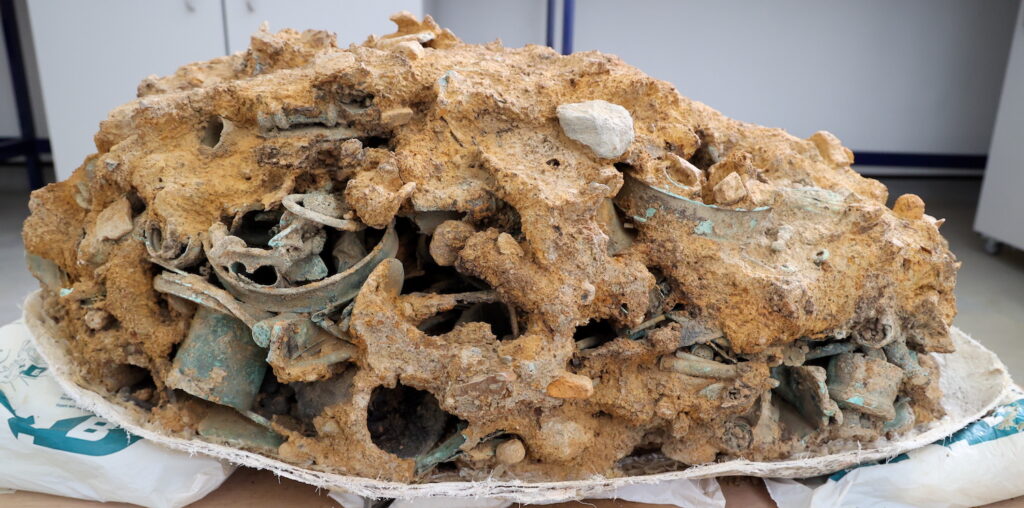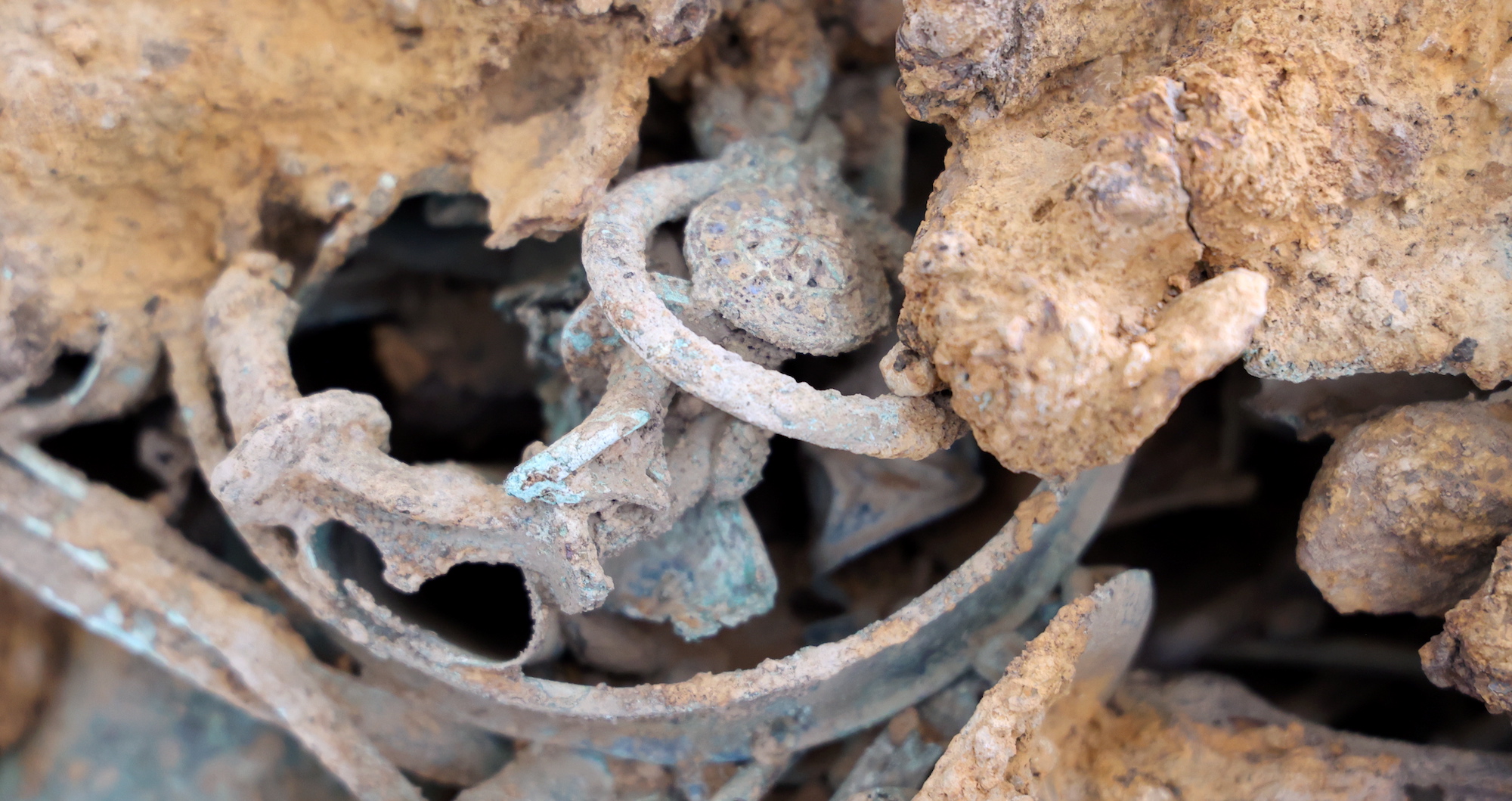
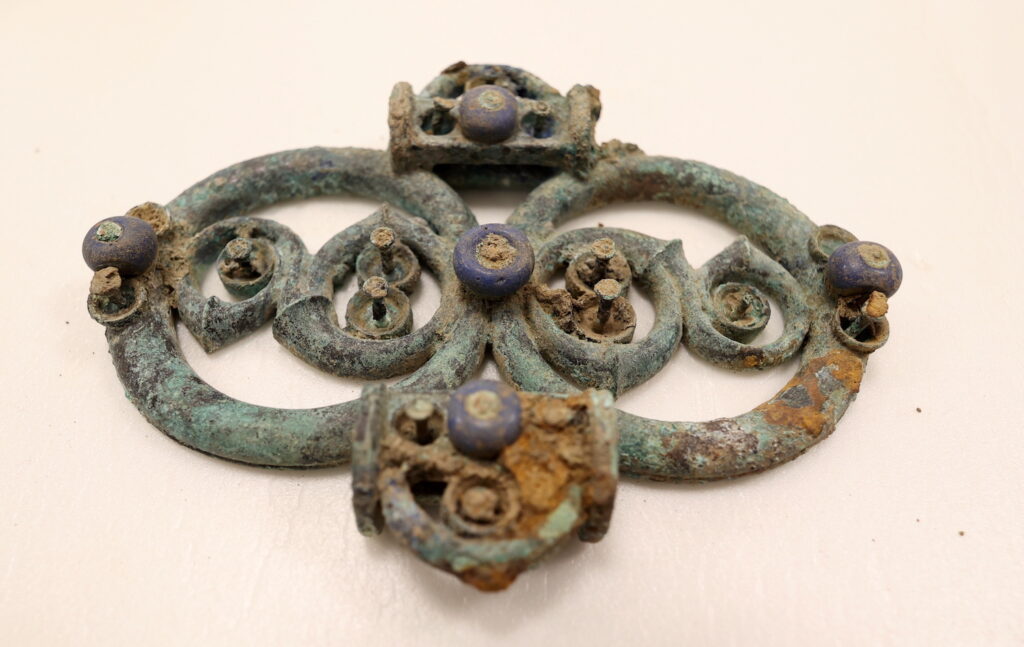
MELSONBY, ENGLAND—According to a Phys.org report, a team of researchers led by Sophia Adams of the British Museum and Jamie Armstrong of Durham University have examined more than 950 objects recovered from two separate hoards discovered by a metal detectorist near the site of a known Iron Age power center in northern England. The artifacts have been dated to between the late first century B.C. and the early first century A.D., and appear to represent about 300 whole objects that had been deliberately dismantled, damaged, and placed in ditches. The researchers suggest that most of the artifacts were parts of at least seven different four-wheeled wagons, such as iron tires and brackets, linchpins, yoke fittings, kingpins for steering wagons, bolts, rein rings, and coral and glass decorations. The hoards also contained a cauldron and other vessels, spears, an iron mirror, box components, a shield boss, edge bindings, and melted pieces of copper alloy. Although human remains have not been found, the signs of burning and melting, the lack of wear on the harness fittings, and the presence of feasting vessels suggests that the items may be related to funerary rituals, the researchers explained. Read the original scholarly article about this research in Antiquity. To read about a cache of late Iron Age and Roman coins unearthed in Derbyshire, go to "The Dovedale Hoard."