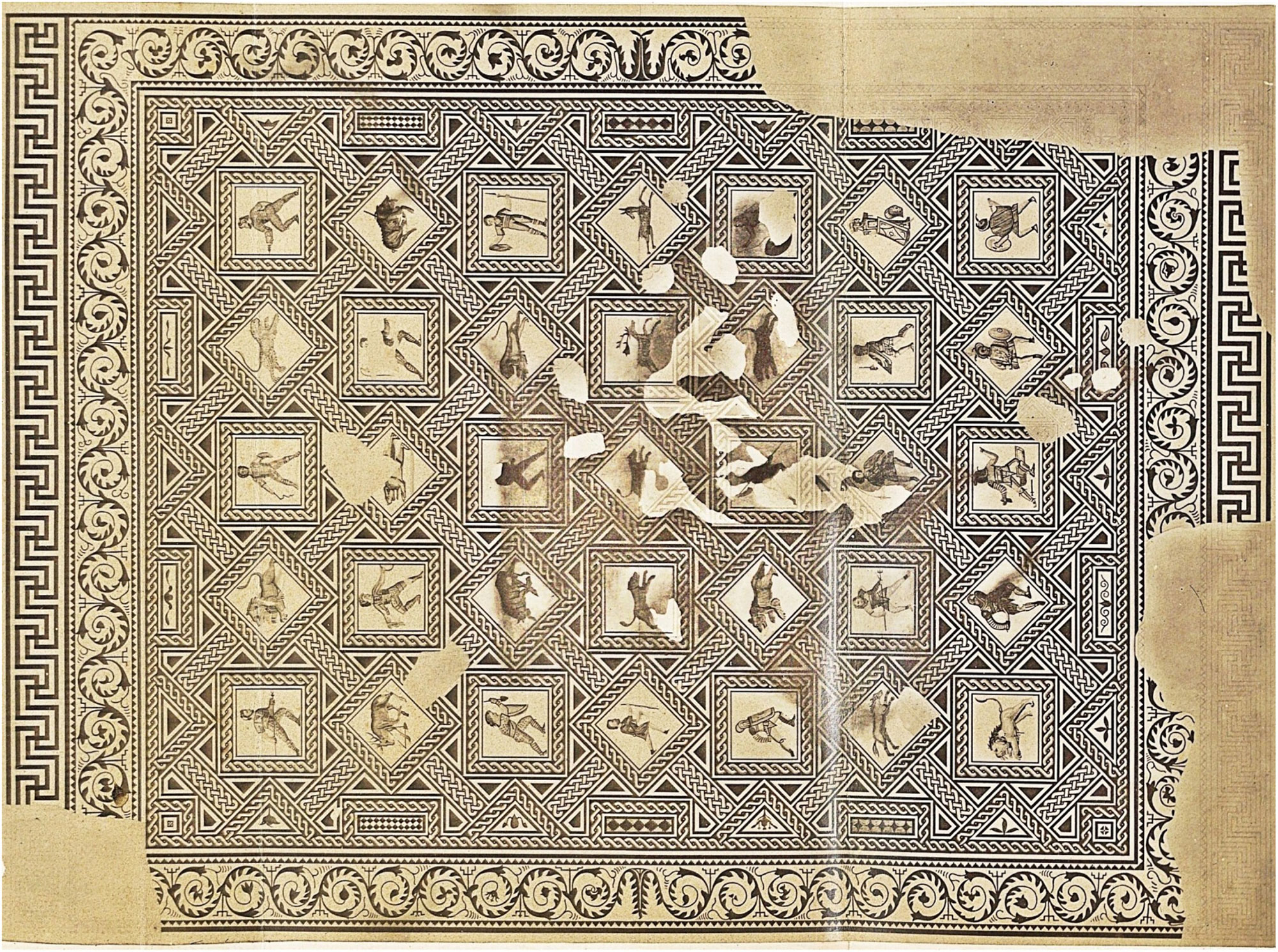
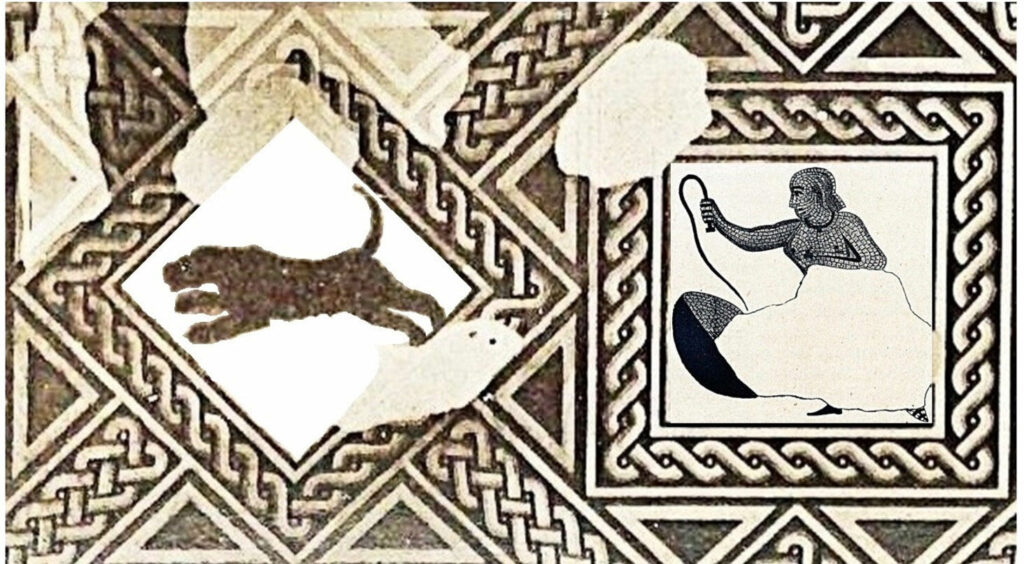
BERKELEY, CALIFORNIA—Sports researcher Alfonso Mañas of the University of California, Berkeley, examined an illustration of a third-century a.d. Roman mosaic discovered in 1860 in Reims, France, by archaeologist Jean Charles Loriquet, according to a Live Science report. Most of the mosaic was destroyed by bombing during World War I, but Loriquet’s illustration of the artifact survived in his book, which was published in 1862. Mañas said that the surviving fragment of the mosaic, housed in the Saint-Remi History Museum, closely matches the drawing, which shows animals, hunters, and gladiators. He thinks that one figure in particular, previously identified as a paegniarius, or a sort of clown with a whip, may actually depict a topless huntress. A paegniarius, Mañas explained, fought with a whip and a stick and wore an armguard. This figure, however, lacks a stick and an armguard. A prisoner sent to the arena would not have been provided with a whip. Illustrations of female gladiators, Mañas continued, are also shown topless and without helmets in order to confirm that they are women. Read the original scholarly article about this research in The International Journal of the History of Sport. To read about other types of gladiators, go to "Let the Games Begin."