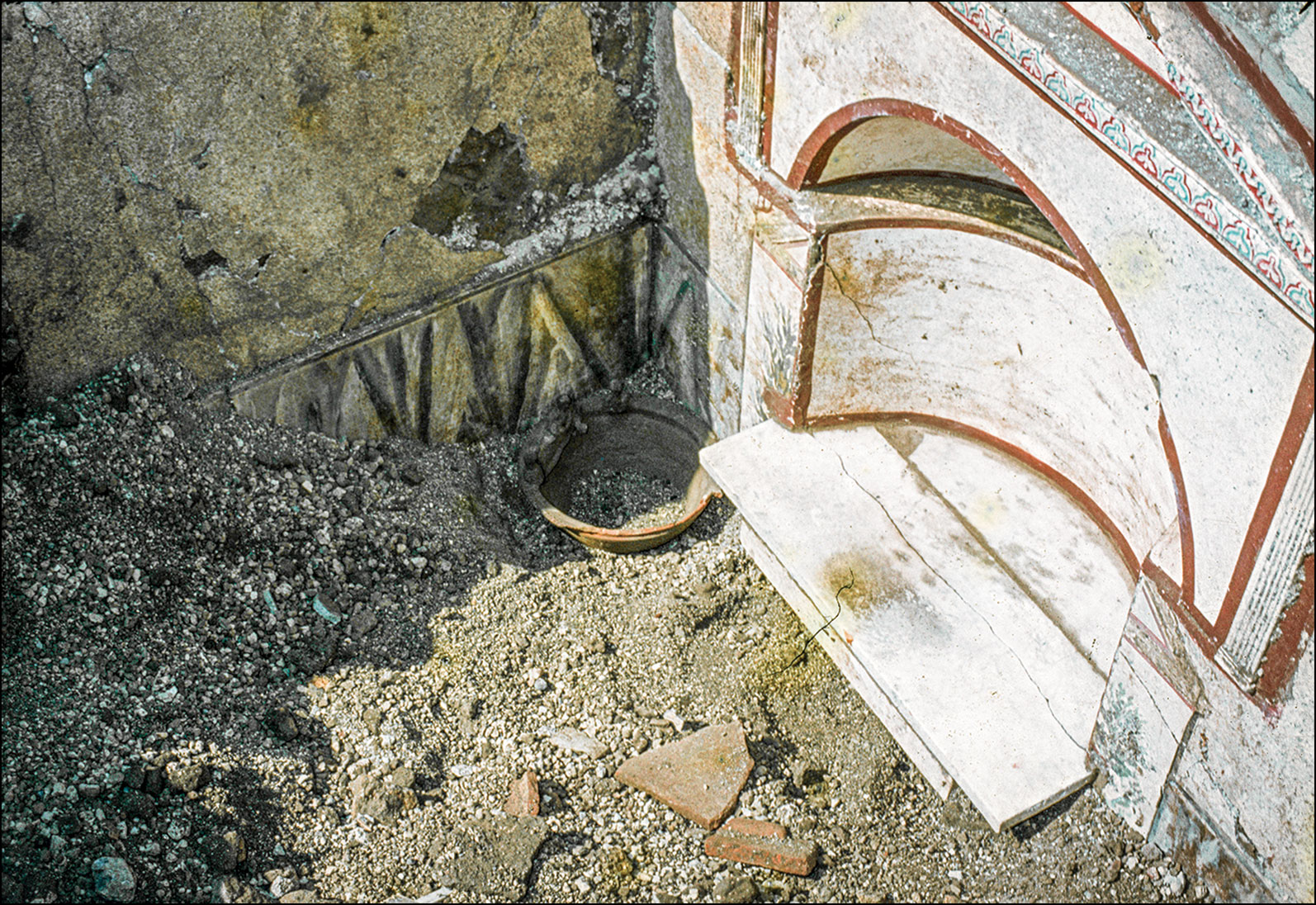
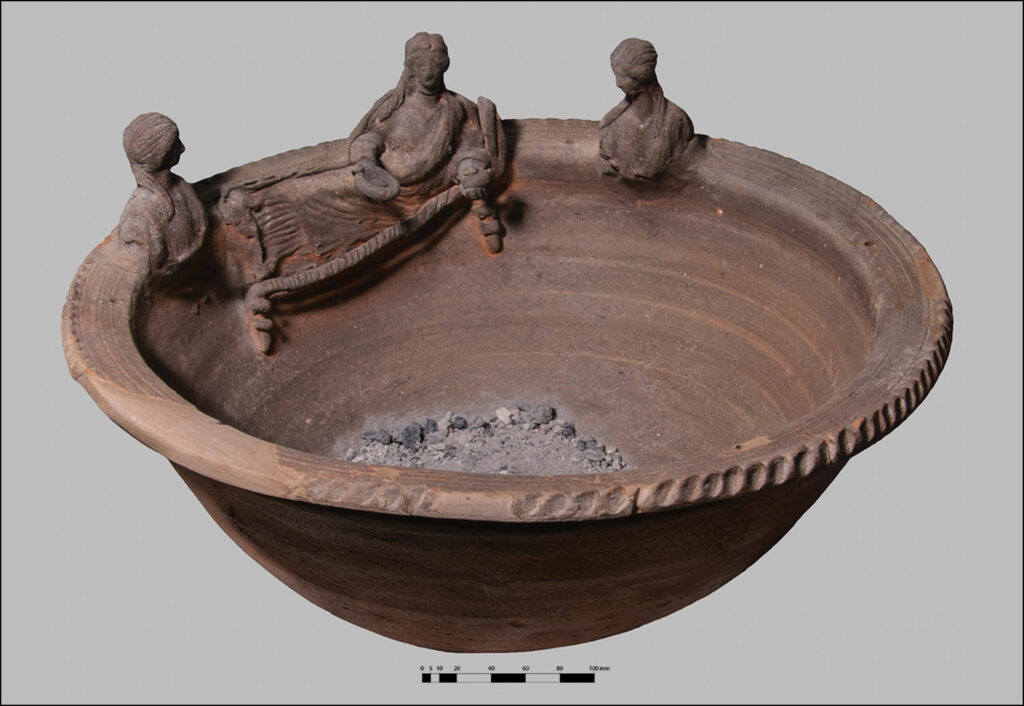
ZURICH, SWITZERLAND—According to a Gizmodo report, analysis of residue samples taken from an incense burner previously unearthed near Pompeii has identified an offering used in ancient Rome. “We’ve long known from ancient writers that the Romans burnt frankincense in their sacrifices,” said Johannes Eber of the University of Zurich. “Preserved ashes and traces of fragrant resins from a domestic shrine near Pompeii provides tangible proof and a striking reminder of just how globalized the ancient world truly was,” he added. The terracotta censer, decorated with an appliqué of a reclining woman, came from a domestic shrine at a rural villa north of Pompeii. The woman may have been intended to represent a deceased person who was venerated with the burning of incense. The residues and phytoliths recovered from the ash within the burner contained traces of wine and frankincense, ingredients for a ritual practice called praefatio intended to invite the gods to bless the proceedings. Praefatio had been known from written sources, but this is the first time that it has been verified in the archaeological record, Eber explained. The study also determined that the frankincense had been imported from either India or sub-Saharan Africa. Read the original scholarly article about this research in Antiquity. To read about a marble incense burner and other objects excavated in a Pompeian garden, go to "Digging Deeper into Pompeii's Past: Gardens."