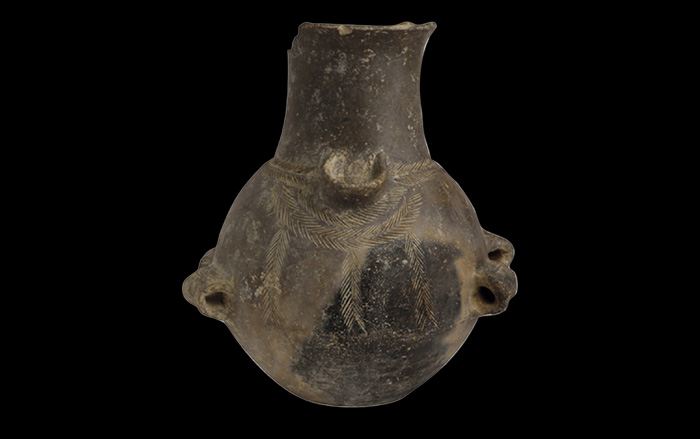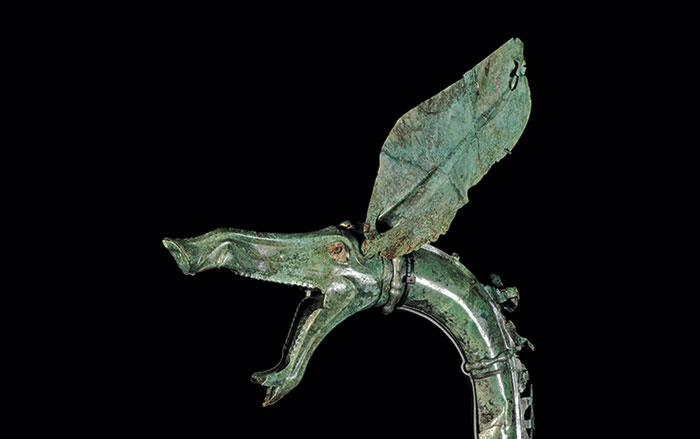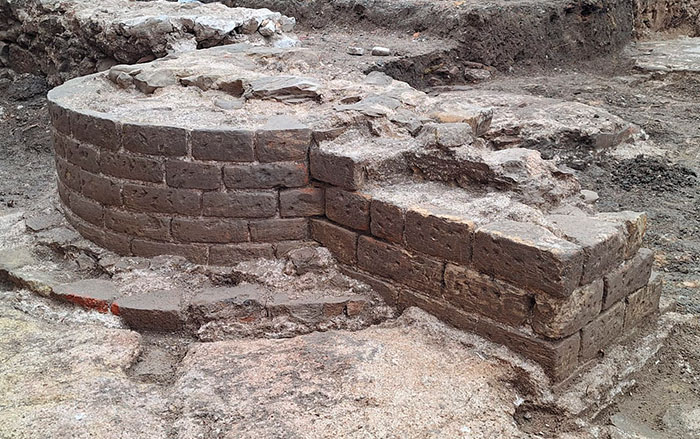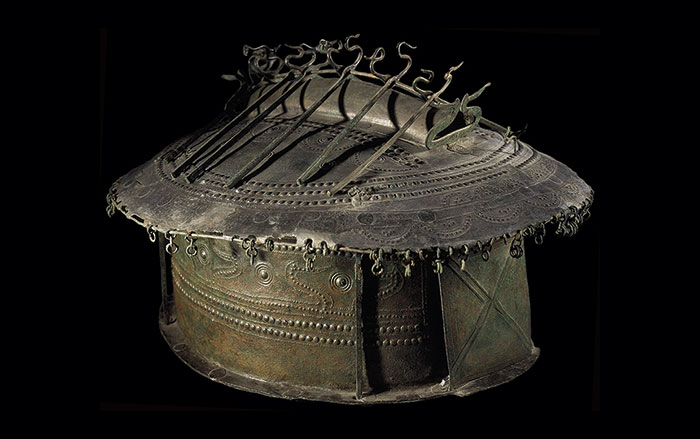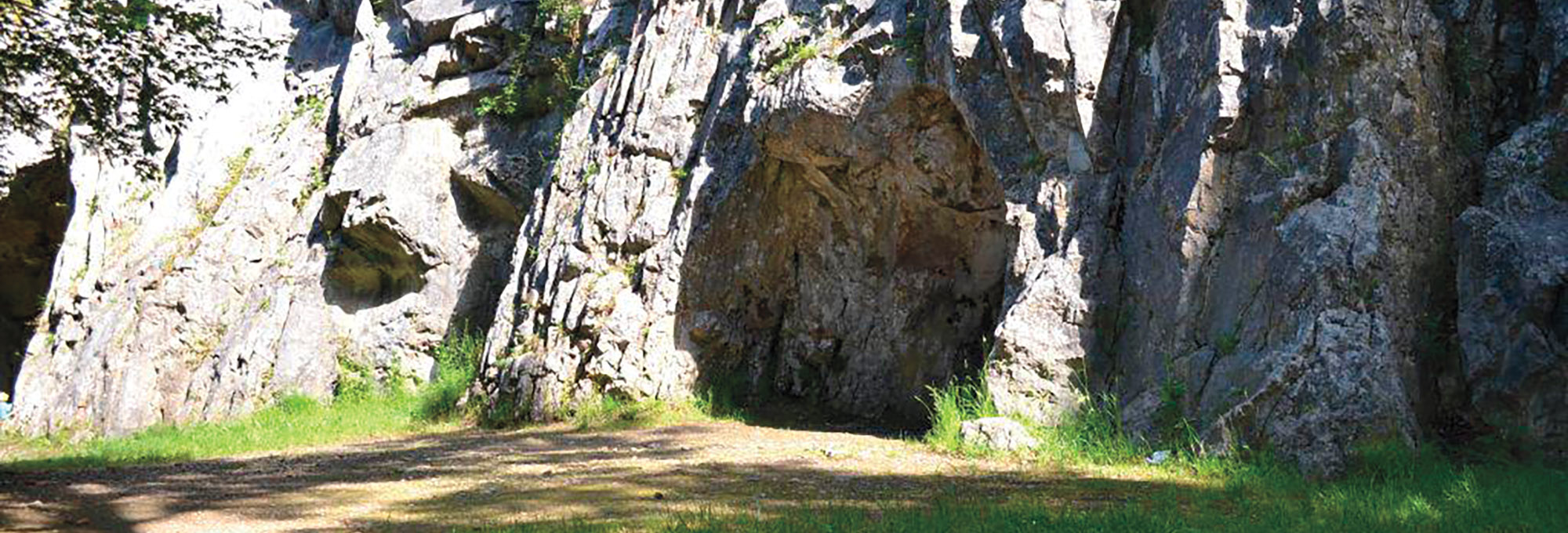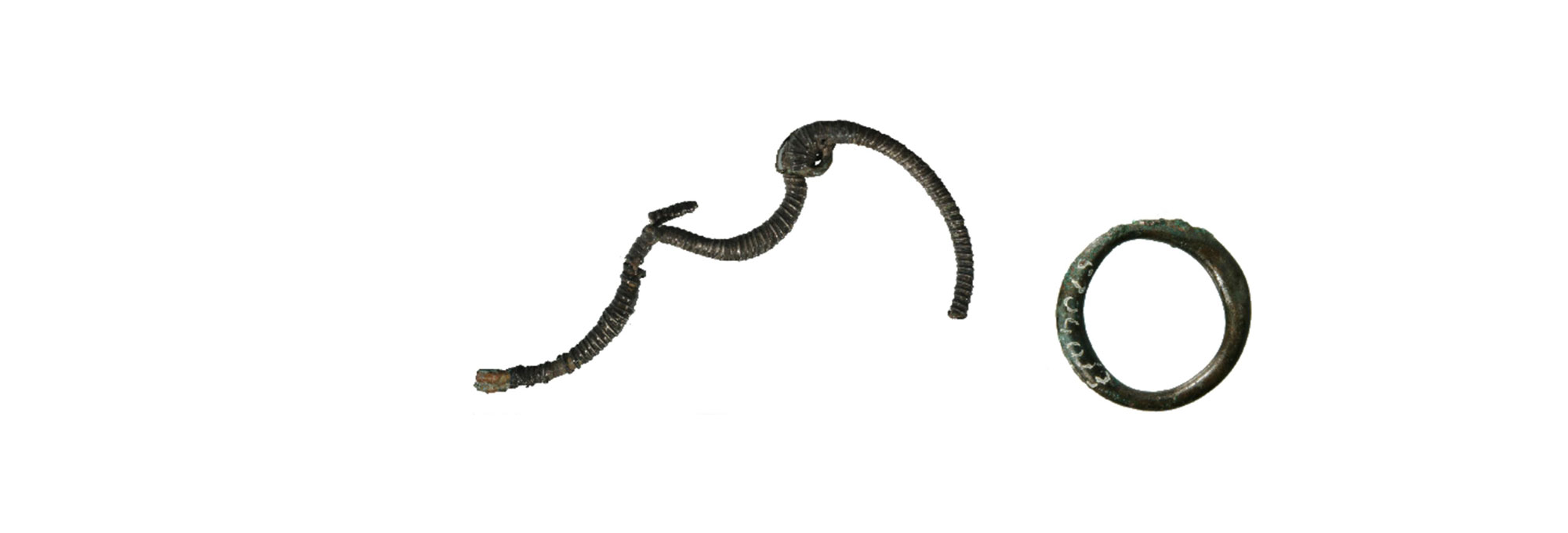
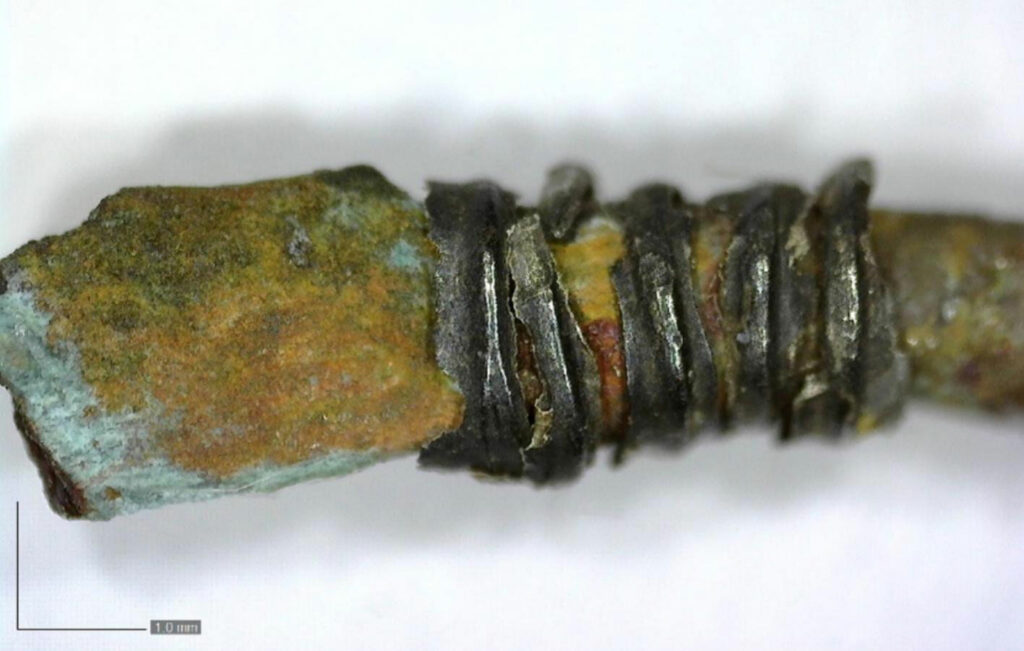
BISENZIO, ITALY—New examination of artifacts recovered from a tomb discovered in 1927 near the Etruscan site of Bisenzio suggests that luxury materials from the western Mediterranean were traded in the interior of the Italian peninsula, according to a report in La Brújula Verde. Located in central Italy’s necropolis of Olmo Bello, the rectangular stone cist contained cremated remains, weapons, and ceramics dated to between 750 and 725 B.C. Andrea Babbi of Italy’s Institute of Heritage Science said that one of these artifacts, a bronze brooch, had been wrapped with a thin, ornamental silver wire shaped by a series of grooved rollers. Study of the high-quality silver with mass spectrometry and lead isotope analysis showed that it had been mined in southern Spain. Babbi and his colleagues also examined a flask made from a gourd that had been preserved in the tomb. Gas chromatography and mass spectrometry analysis of residues in the gourd detected organic compounds commonly found in fermented fruit juice, perhaps from grape, apple, or pear. No tartaric acid, a component of wine, was found. Tests conducted on the gourd residue also identified heated pine resin and mastic resin, which were believed to have medicinal properties. Read the original scholarly article about this research in the Journal of Archaeological Science: Reports. To read more about Etruscan luxury goods, go to "Artifact: Etruscan Carved Gemstone."