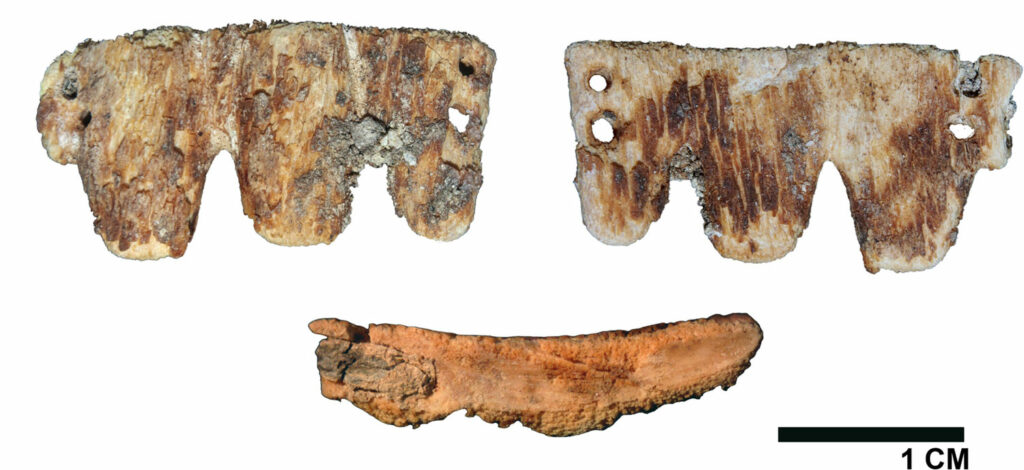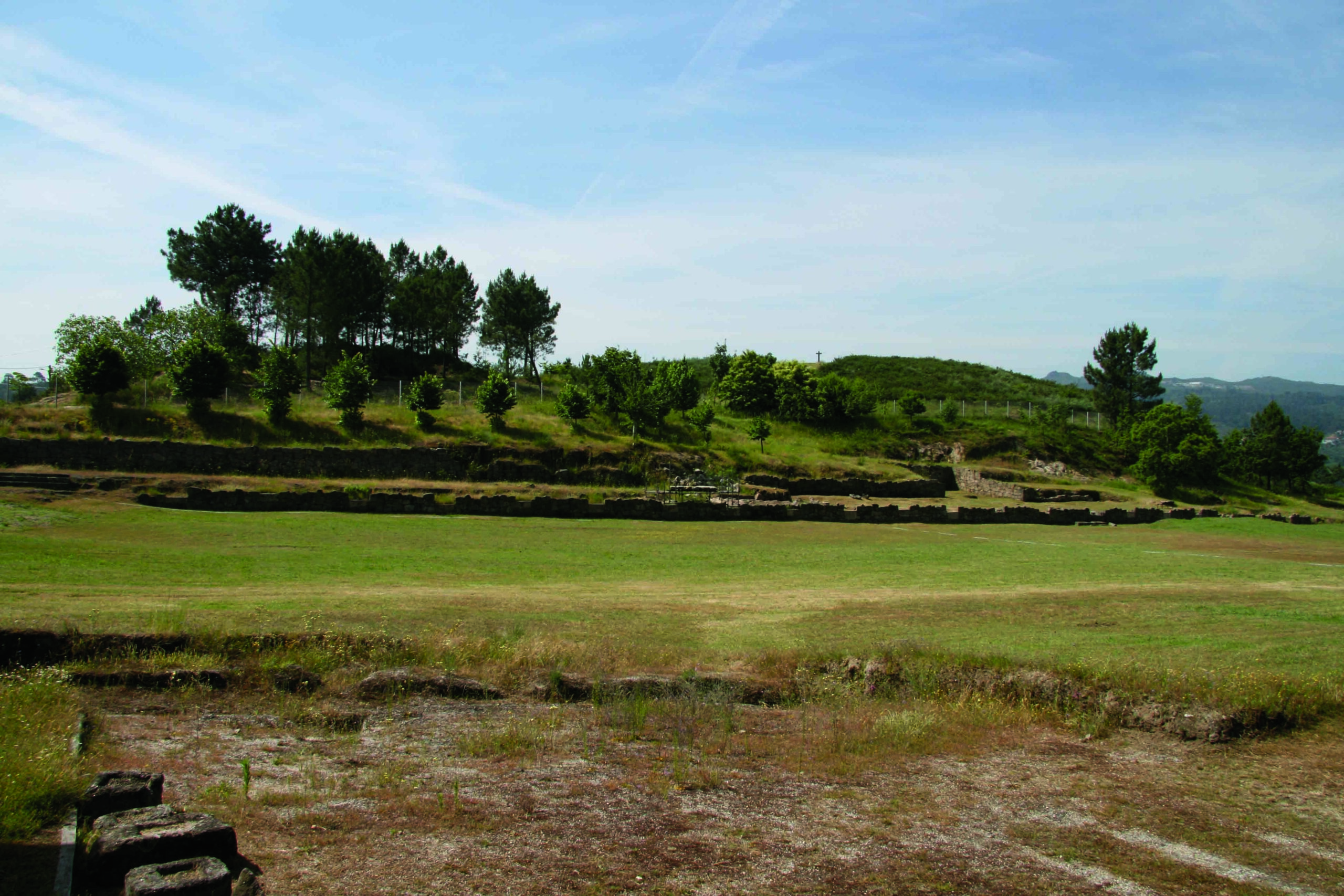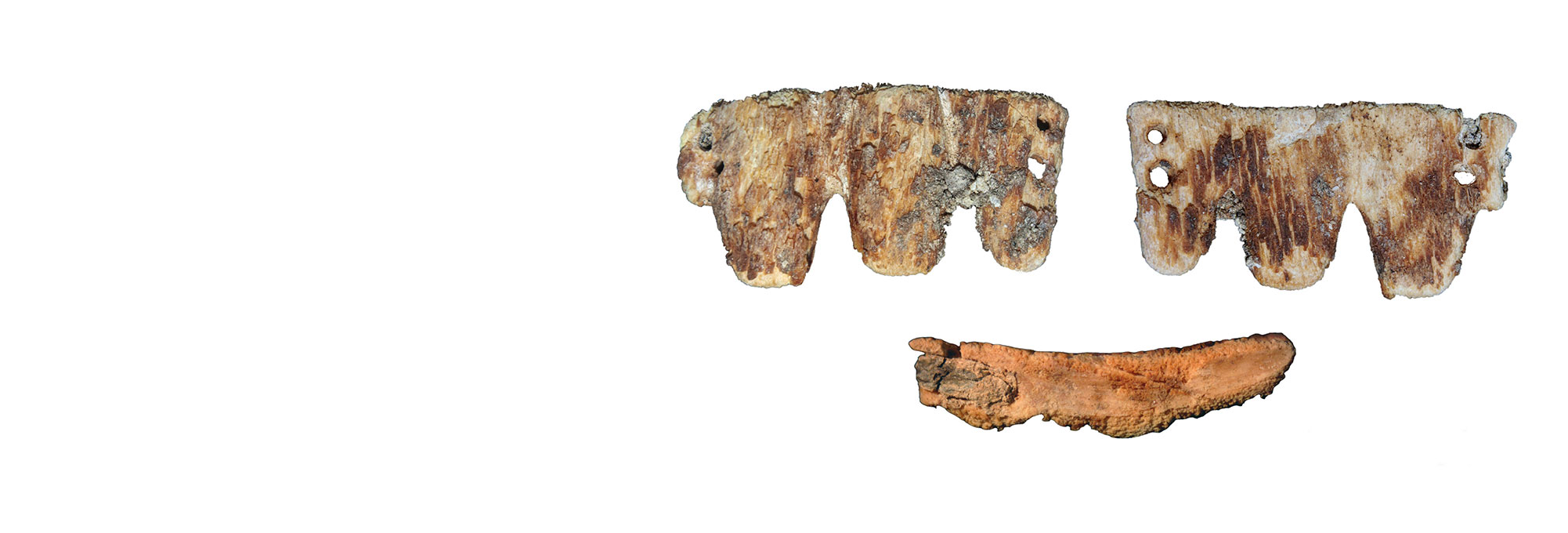
LISBON, PORTUGAL—According to a Phys.org report, a nineteenth-century dental bridge resembling three U-shaped teeth was unearthed at the site of a hospital cemetery in northwestern Portugal. The device likely served an aesthetic purpose rather than a functional one, according to Steffi Vassallo of the University of Lisbon. The bridge was found with the remains of an adult woman dated to between 1801 and 1831. Large sections of her face and lower jaw were missing, but the remains indicate that the woman was missing many teeth from her upper jaw at the time of her death. These empty tooth sockets had begun to heal and close, however. Only two of the woman’s own teeth were recovered from the burial. Examination of the dental bridge with micro-CT scanning, X-ray diffraction, and Zooarchaeology by Mass Spectrometry (ZooMS) revealed that the bridge was made with bone from an animal in the Bovidae family, such as cattle, European bison, or perhaps even African antelope. Testing also found the presence of lead in the dental device. The toxic metal may have been used to strengthen the holes on the sides of the bridge, which likely held wire or thread to fasten the implement in the mouth. Vassallo and her colleagues think the woman may have worn the bridge over her lower right incisors and canines or as a substitute for her missing teeth. Read the original scholarly article about this research in the International Journal of Osteoarchaeology. To read more about the archaeology of northwestern Portugal, go to "Off the Grid: Citânia de Briteiros, Portugal."