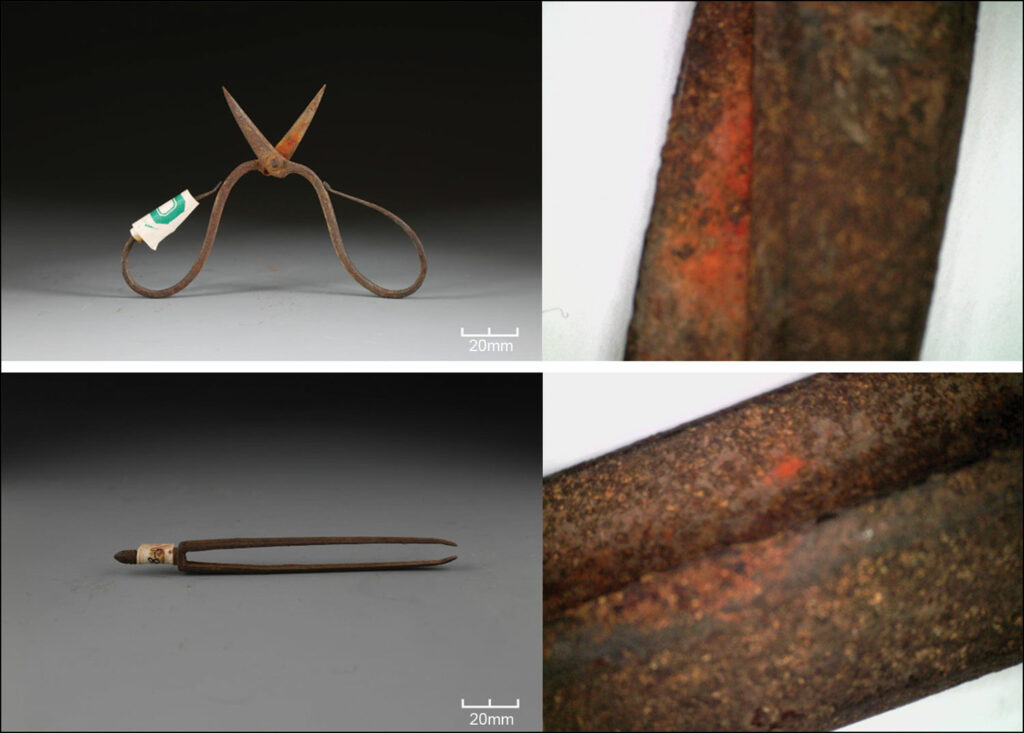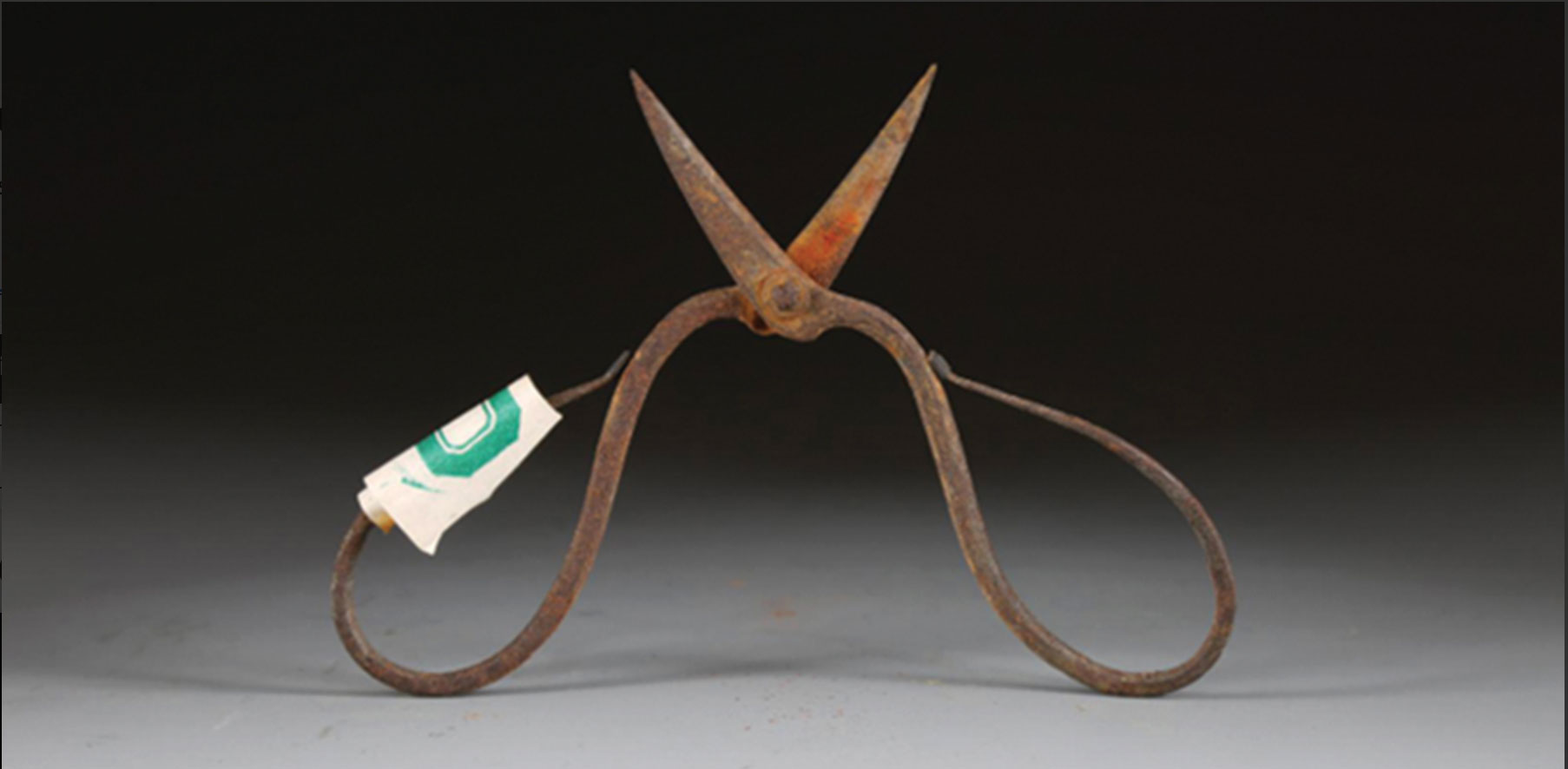
JIANGYIN, CHINA—According to a Live Science report, traces of an anesthetic have been detected on a pair of iron scissors and tweezers recovered from the 600-year-old tomb of Xia Quan in eastern China. Congcang Zhao of Northwest University in China and his colleagues used X-ray fluorescence analysis to identify the metal in the tools, and then used a microscope to remove three particles from their surfaces for additional study with micro-Raman spectroscopy. This technique focuses a laser beam at the sampled residues, which scatters photons. The pattern of the scattering photons can then be used to identify molecules in the residues. The researchers determined that both samples contained aconitine, an alkaloid toxin that is found in plants in North America, Europe, and Asia. The substance in the samples was probably made from wolfsbane, known to have been prepared by Ming Dynasty medical practitioners with acidic substances such as mung beans, vinegar, or the urine of young boys to detoxify the aconite. “Ming physicians used iron surgical instruments and controlled the toxicity of aconitine through topical application, compound prescriptions and strict procedural controls, demonstrating a practical ability to balance drug potency with safety,” Zhao explained. This is the first time that direct chemical evidence of anesthetics has been found on surgical tools, he concluded. Read the original scholarly article about this research in Antiquity. To read about the collapse of the Ming Dynasty, go to "China's River of Gold."