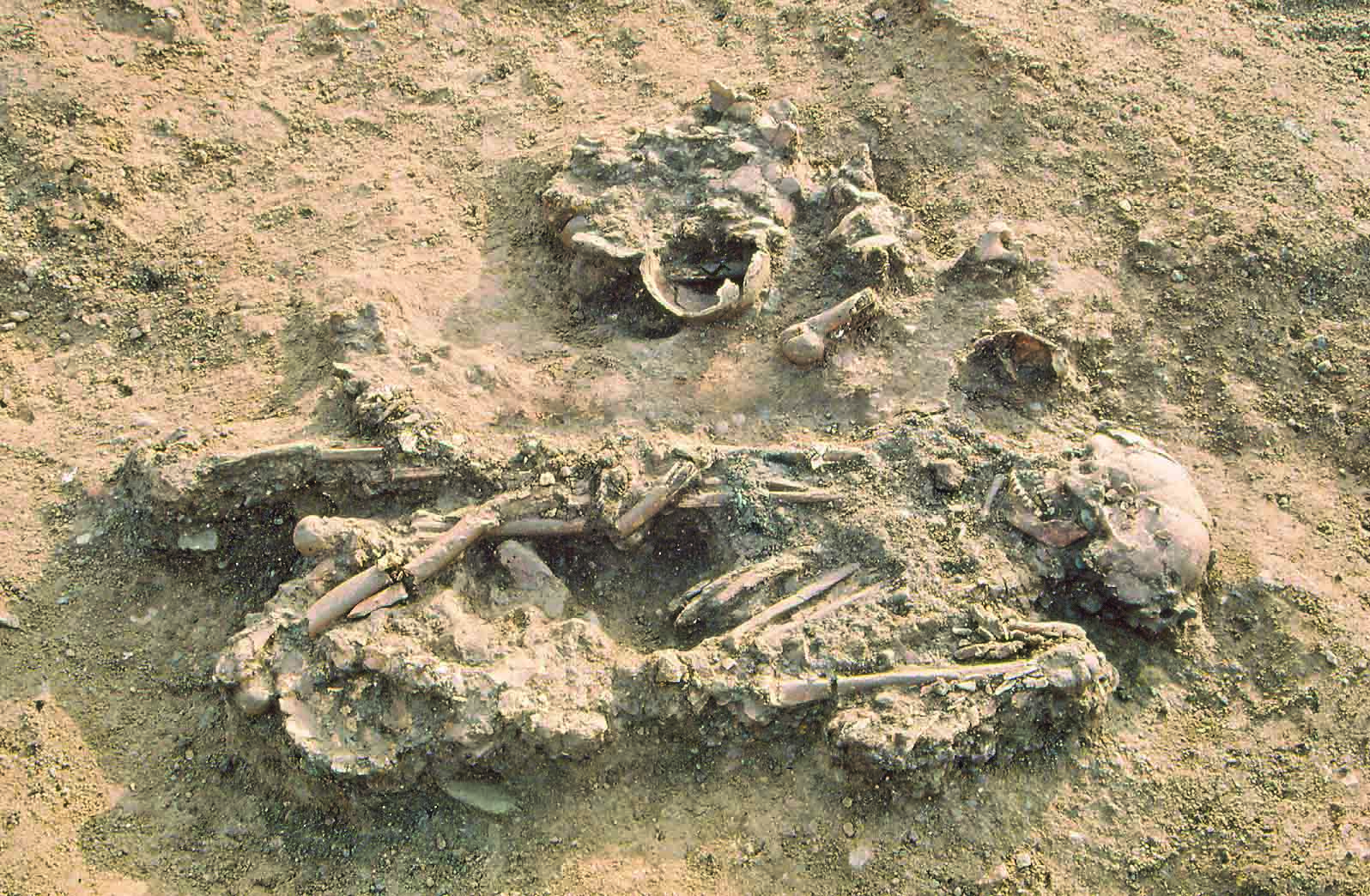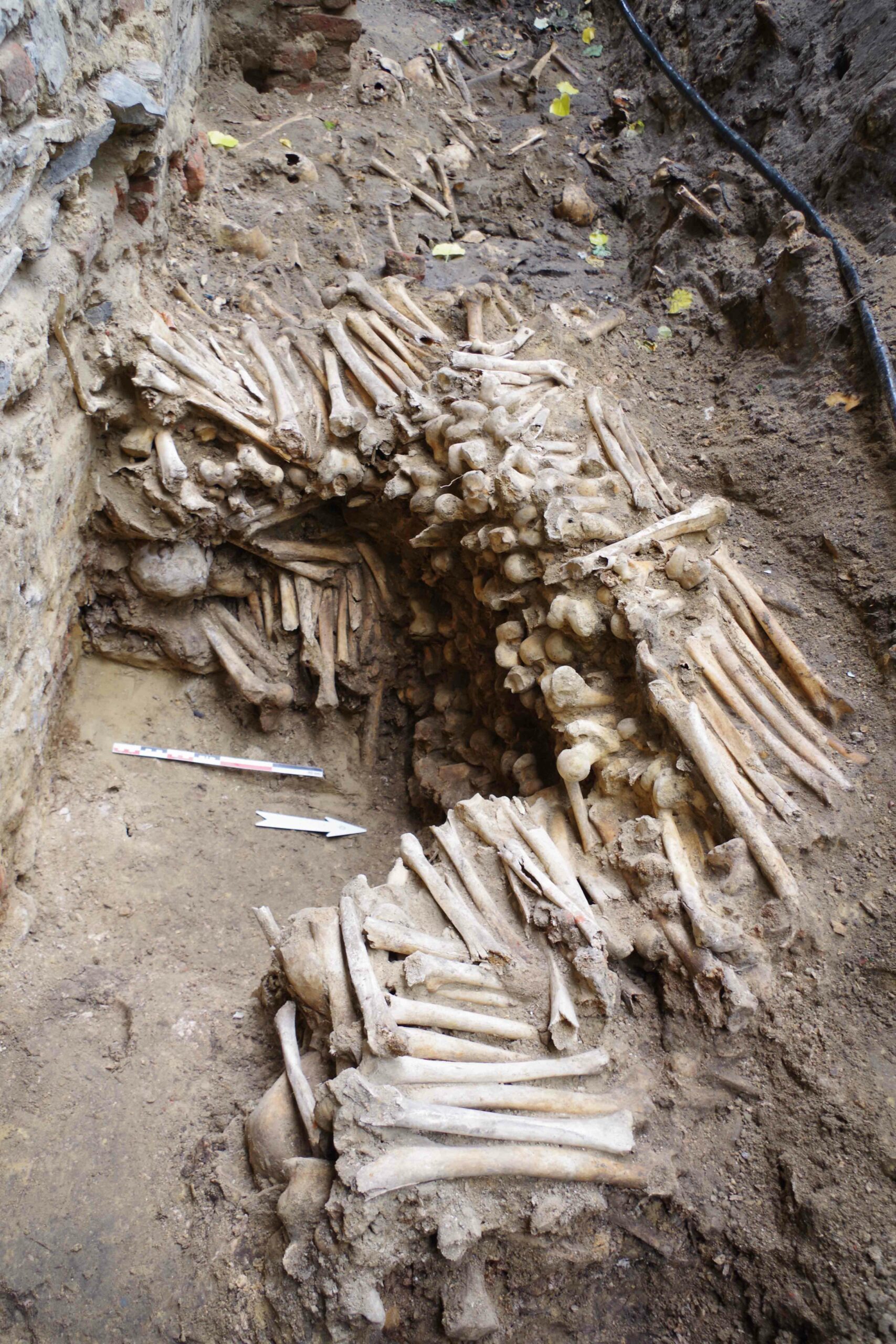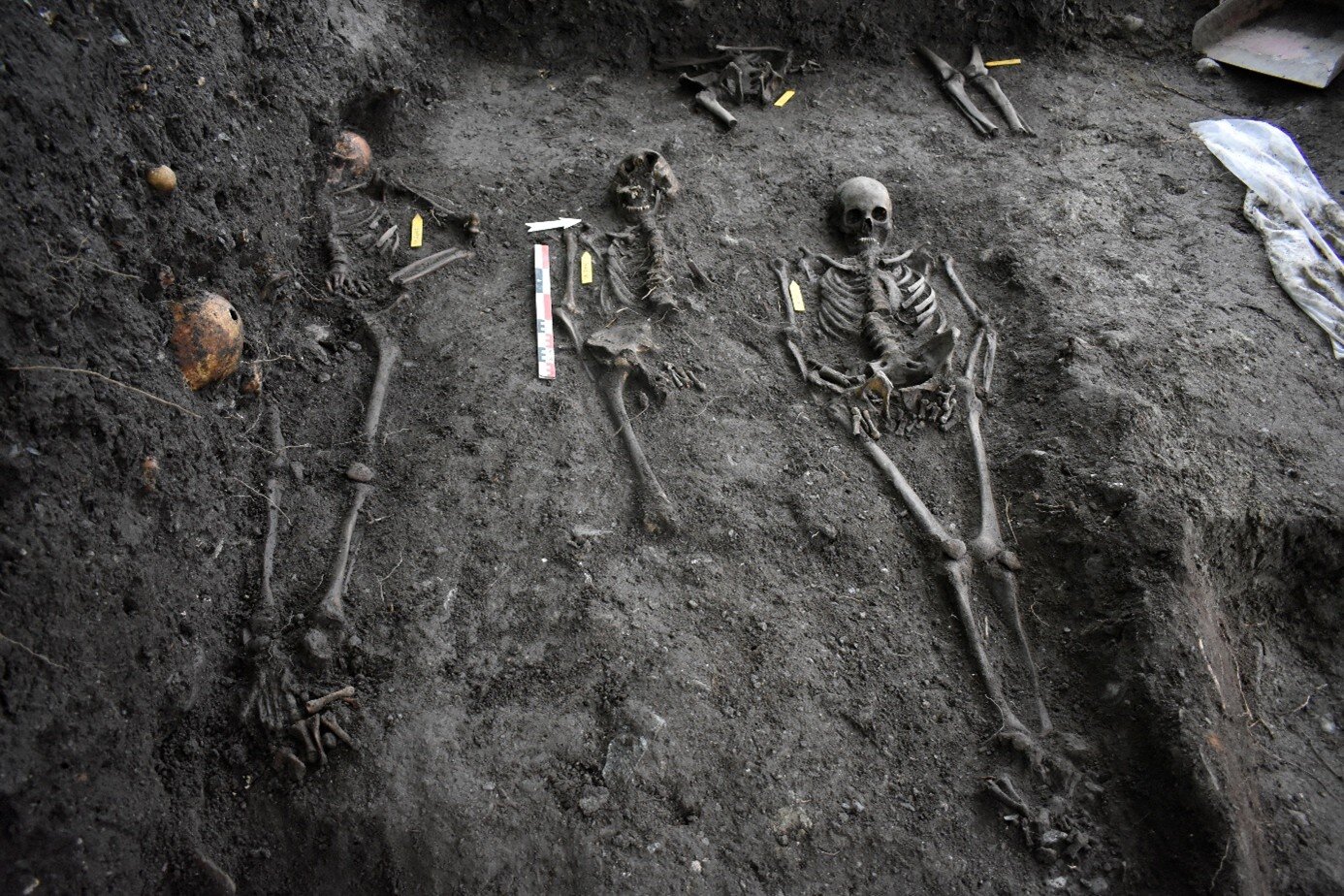
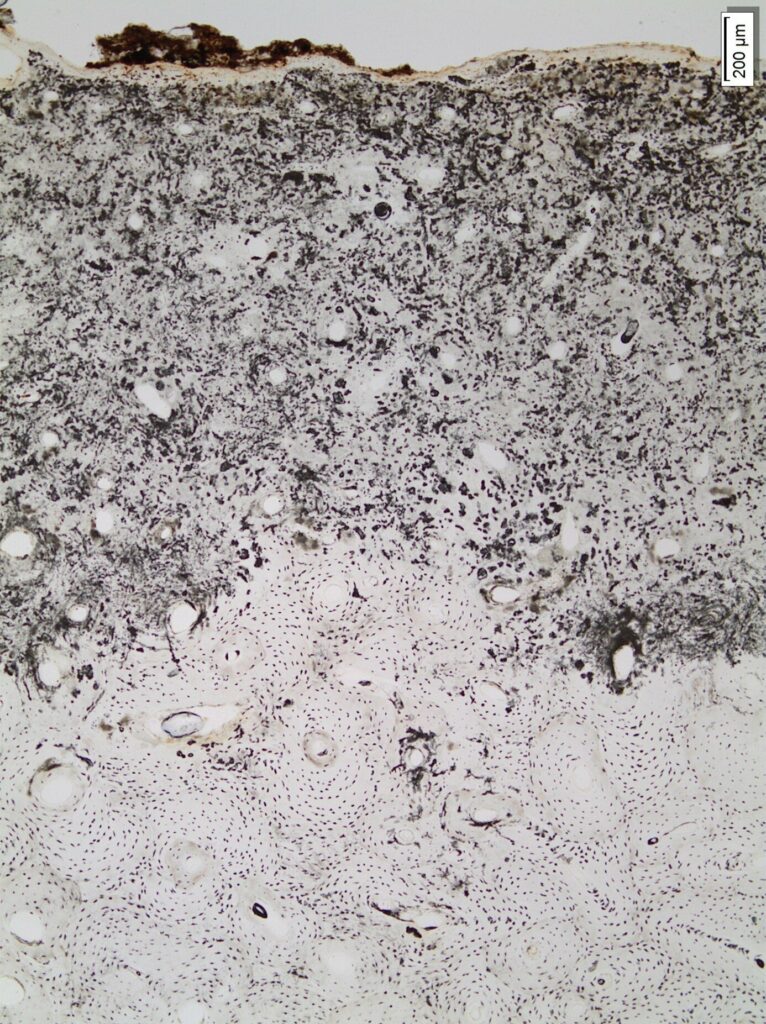
STAVANGER, NORWAY—According to a statement released by the Public Library of Science, Damla Kaptan of the University of Stavanger and her colleagues have determined that well-preserved bones uncovered at archaeological sites have different microbial communities than heavily degraded bone samples. The researchers analyzed bone samples taken from outdoor cemeteries and indoor church burials in southwestern Norway. All of the samples were dated to between the eleventh and nineteenth centuries A.D. Kaptan and her colleagues found that bones buried outdoors, and older bones, tended to be more degraded. Lysobacter and Streptomyces microbes were found among moderately degraded and well-preserved bones. Streptomyces and Streptosporangium bacteria are known to produce enzymes that break down collagen, which may have contributed to the breakdown of the bones, Kaptan explained. However, younger bones, bones from indoor burials, and well-preserved bones were found to have high microbial diversity, perhaps because the remains still contain nutrients and structures to support microbial life. “Some bodies disappear rapidly after burial, while others remain preserved for centuries. Even today we do not fully understand why,” she concluded. To read more about microbes and bioarchaeology, go to "Worlds Within Us."