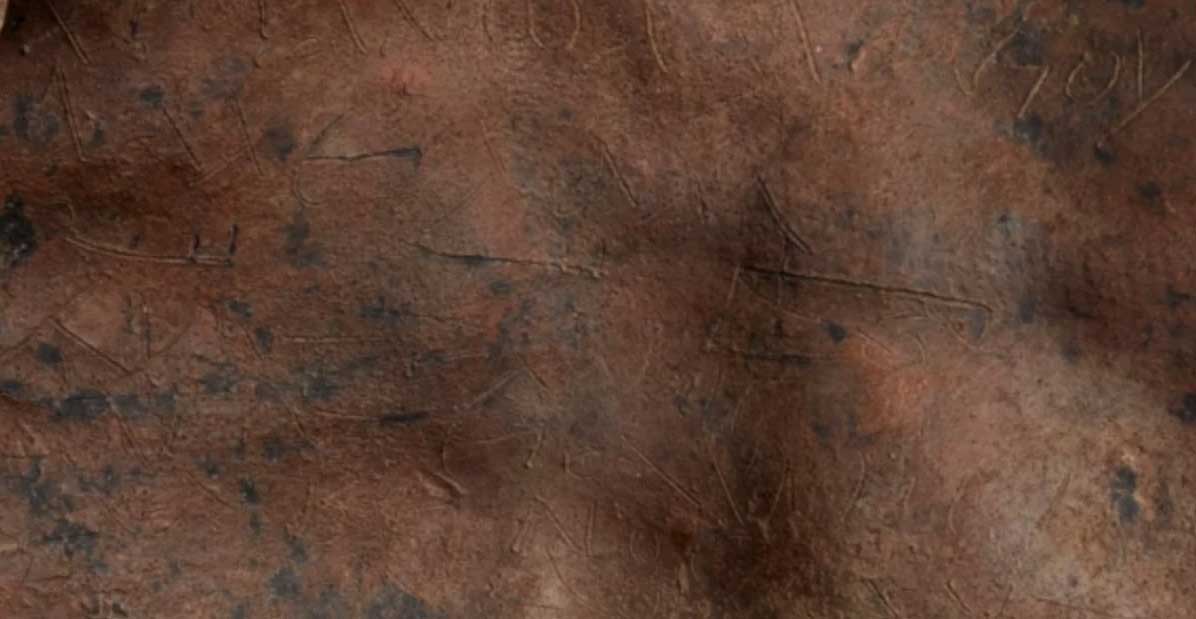
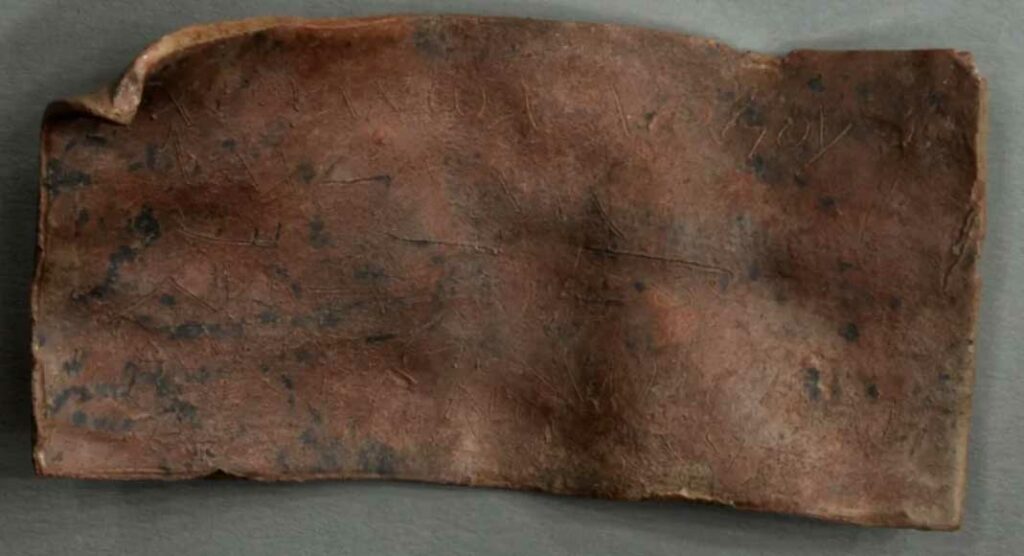
HEERLEN, THE NETHERLANDS—A curse tablet discovered in the southeastern Netherlands has been analyzed with reflectance transformation imaging and deciphered by Rodney Ast of the University of Heidelberg and his colleagues, according to a report in La Brújula Verde. The lead sheet, dated to the second century A.D., was discovered in a well in what had been the Roman military settlement of Coriovallum. It measures about 3.5 inches long and almost two inches wide. Multiple photographs of the curse tablet were taken under varying lighting conditions, and then digitally combined with a computer into a single image with adjustable lighting to highlight the surface details. Curse tablets were usually inscribed with incantations in Latin, but the text on this tablet was inscribed in Greek and invokes Egyptian gods and demons. Three magical symbols, or Characteres, on the tablet would have conveyed the message to supernatural powers, Ast explained. The names of two men with Latin names and two women with Greek names may have been the objects of the curse, or the curse may have been pronounced in their names against someone else, he added. To read about the discovery of similarly malicious artifacts, go to "The Cursing Well."