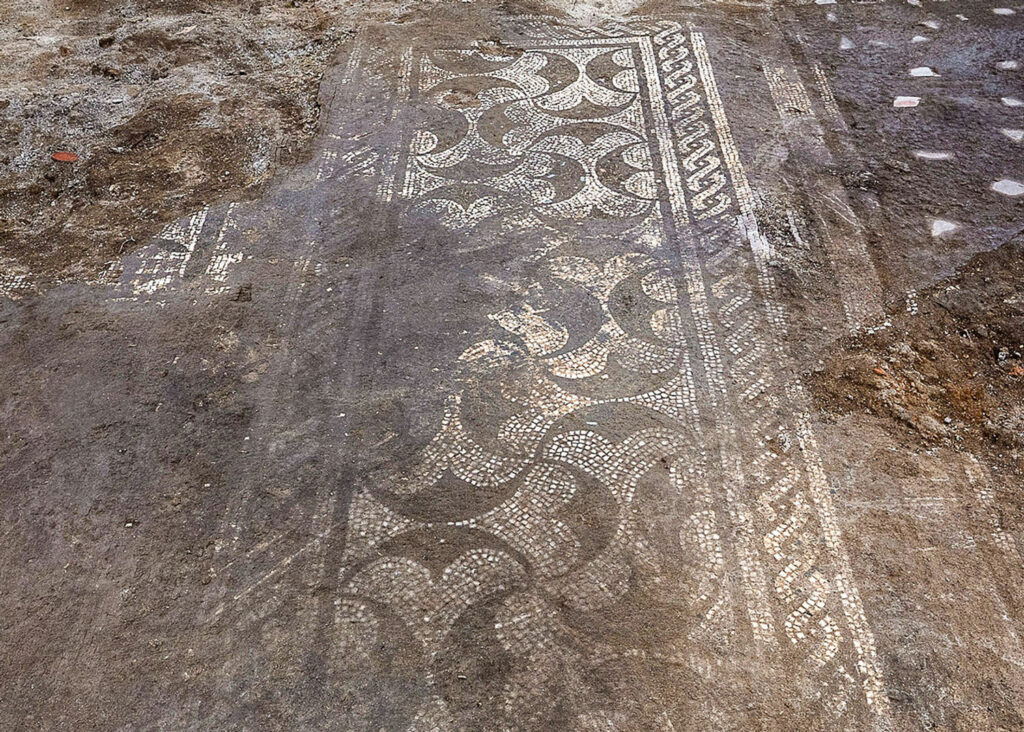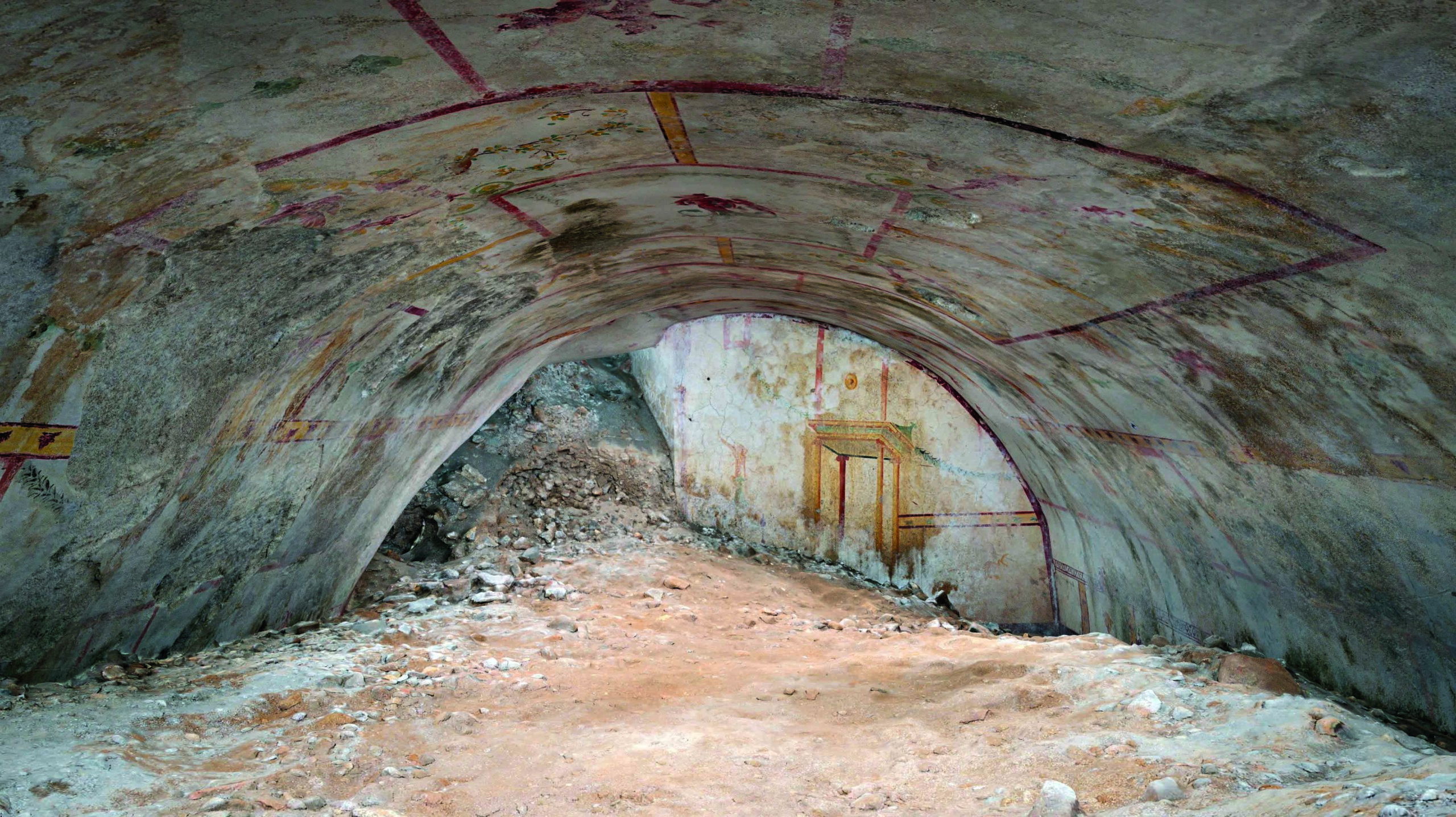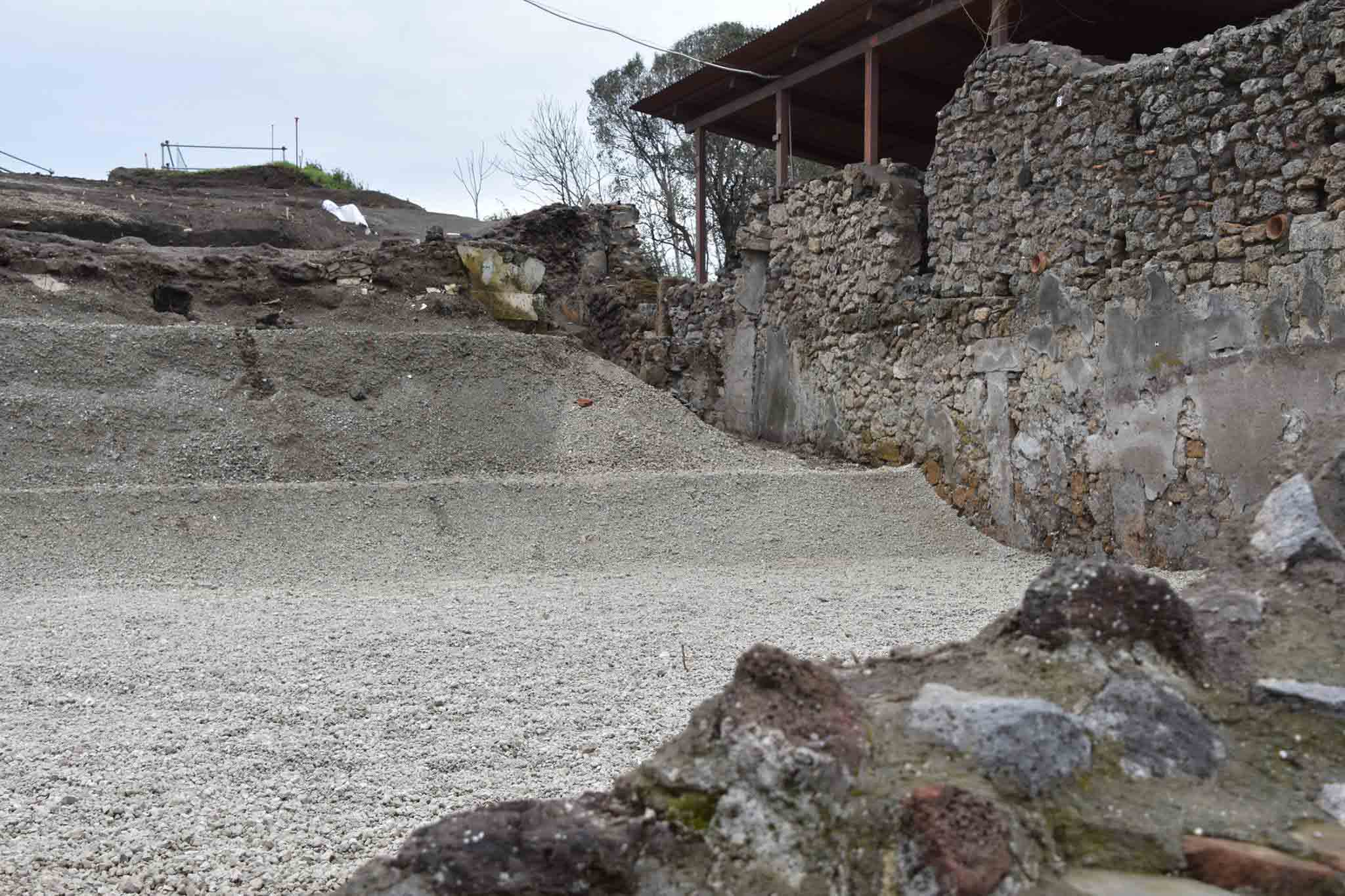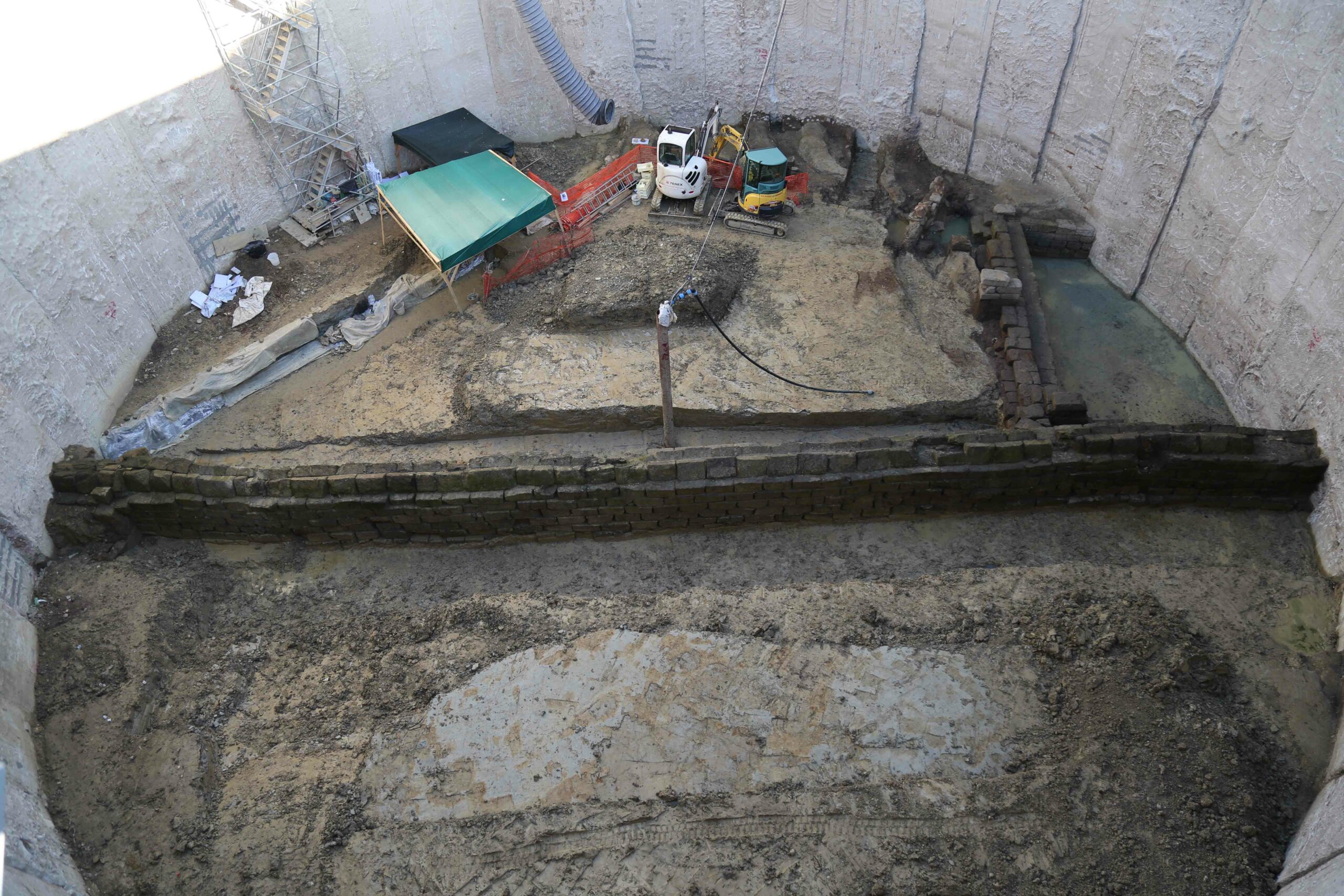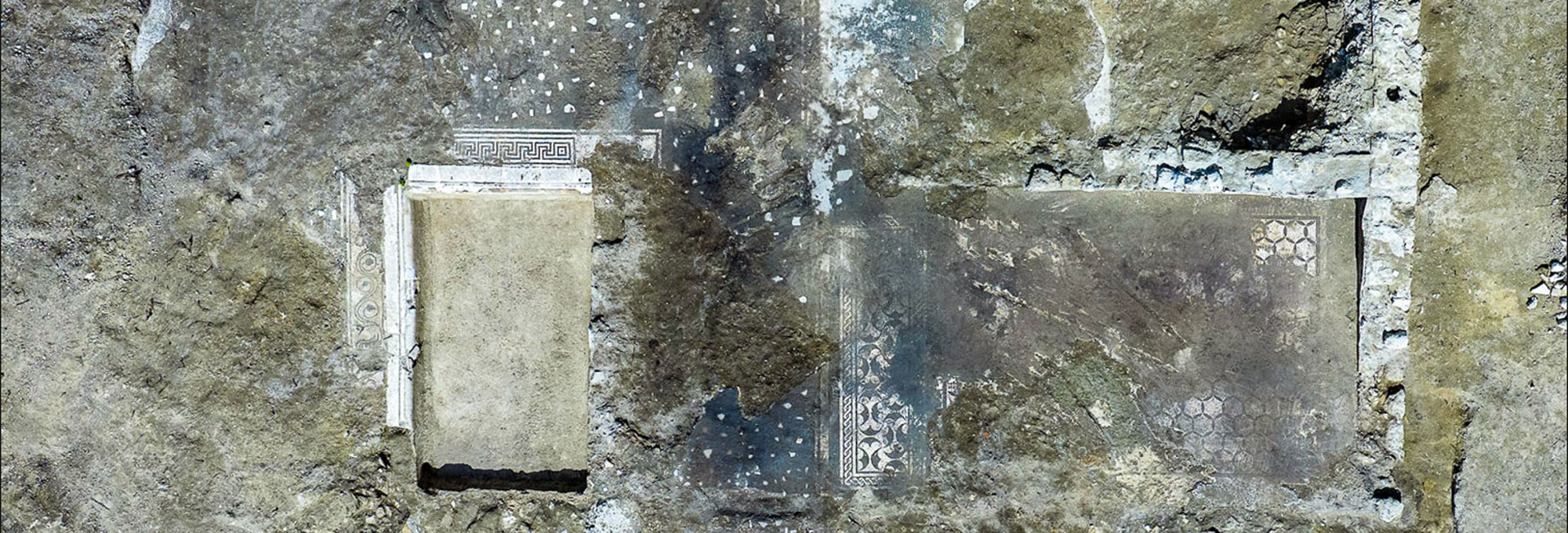
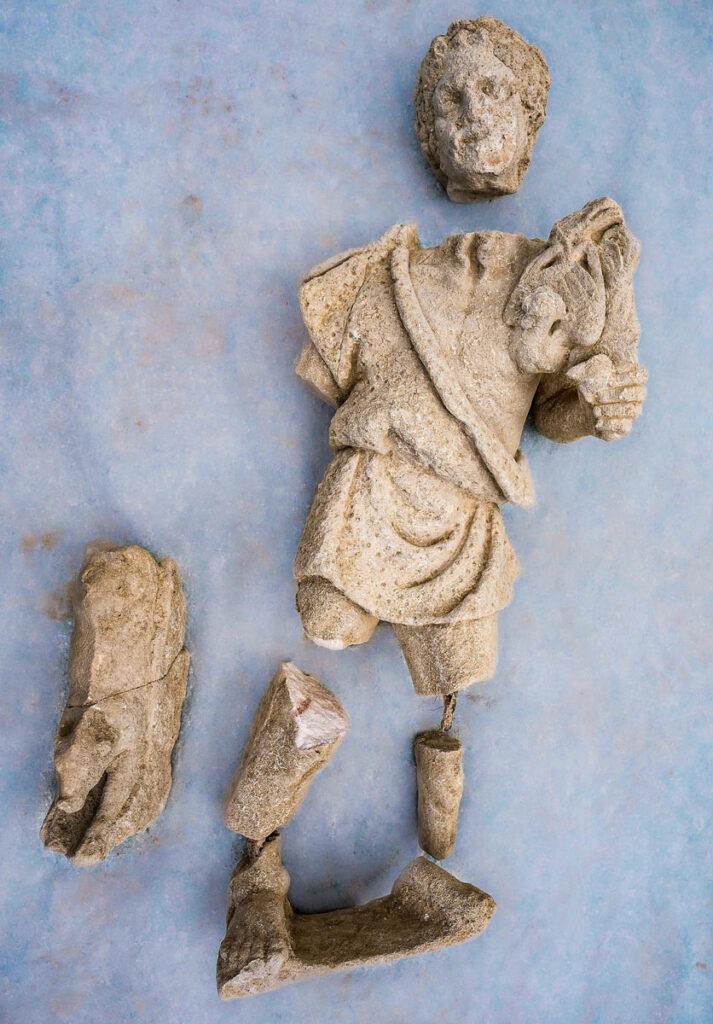
ROME, ITALY—CNN reports that a Roman villa has been discovered in the village of Castel di Guido, in what was a residential area outside Rome known as Lorium from 27 B.C. through the fifth century A.D. The emperors Hadrian, Antoninus Pius, and Marcus Aurelius are all known to have visited the town. Archaeologists were called to the site, which had been protected by a fence, after local residents alerted police to evidence of illegal excavations. “In just a few days, officials from the Ministry of Culture, in collaboration with the Carabinieri, stopped a clandestine operation,” said Alessandro Giuli, Italy’s Minister of Culture. So far, the archaeologists have uncovered an entrance hall with an atrium and a sunken basin surrounded by a black and white mosaic floor. Archaeologist Alessia Contino of the Special Superintendency of Rome said that a statue holding a small animal and a basket with birds found in the villa is thought to represent Silvanus, the god of the countryside. “The exceptional quality of the decorations testifies that the villa belonged to prominent members of the Roman aristocracy, closely linked to the Imperial court,” she explained. The researchers have also found damage caused by the illegal dig, which was conducted with a backhoe, pickaxes, and drills. It is not yet clear if anything was stolen from the site, Giuli concluded. To read about the rediscovery of a Roman villa near Verona nearly a century after it was first excavated, go to "Missing Mosaics."