Bronze Votive Chariot Found in Spain

News June 29, 2026

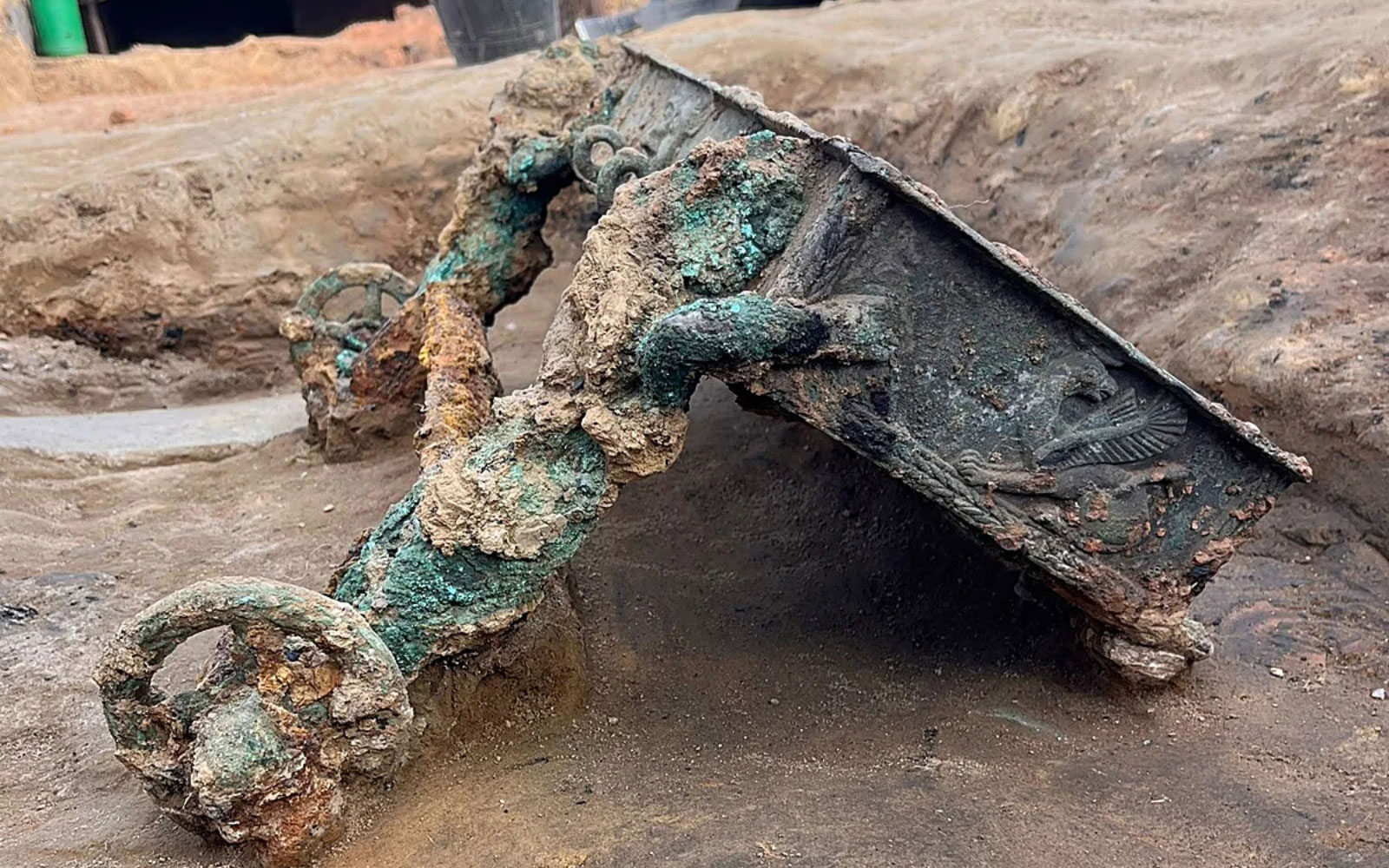
Bronze chariot in situ, Casas del Turunuelo, Spain
Guareña City Council
SHARE:

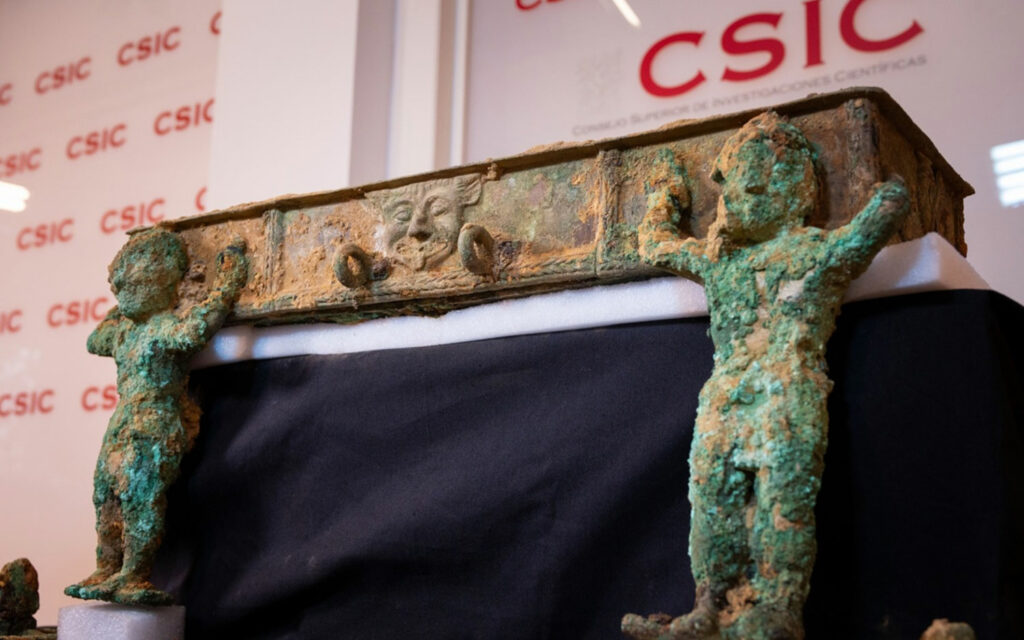
GUAREÑO, SPAIN—According to an article in The Greek Reporter, the wheels and parts of a 2,500-year-old miniature bronze chariot have been discovered in a monumental building at the Tartessian site known as Casas del Turuñuelo in southwestern Spain. In the area where the chariot parts were found, archaeologists had previously uncovered an altar shaped like a bull hide. The ceremonial vehicle is thought to have been used to hold embers, burned incense, or aromatic resins. It features bronze components joined with iron fittings; a central iron axle; and decorations on the frame resembling twisted rope, two griffins, and Achelous, a Greek river god who is portrayed with bull-like horns and a protruding tongue. The vehicle is supported by two figures thought to refer to Atlas, the Greek Titan condemned to hold up the sky for eternity. To read about a trilobite fossil uncovered at a Roman site in northern Spain, go to "Fossil Force."
  • Features May/June 2026

    Pioneers of Lakefront  Living

    Why Neolithic and Bronze Age farmers in the Alps built their villages on stilts

    Read Article
    Modern replicas of Bronze Age houses in Lake Constance
    © APM/Frank Müller
  • Features May/June 2026

    The Last Maya Kingdom

    On the shores of a lake in Guatemala, the Itzá people defied the Spanish for nearly 200 years

    Read Article
    Flores Island, Guatemala
    Courtesy Timothy Pugh/Itzá Archaeological Project
  • Features May/June 2026

    Art for the Ages

    A surreal style of painting endured for 4,000 years in the canyonlands of West Texas

    Read Article
    Shumla Archaeological Research and Education Center Archive
  • Features May/June 2026

    Bridge to the Past

    The Yellow River brought both prosperity and calamity to China’s dazzling medieval capital

    Read Article
    Henan Provincial Institute of Cultural Heritage and Archaeology