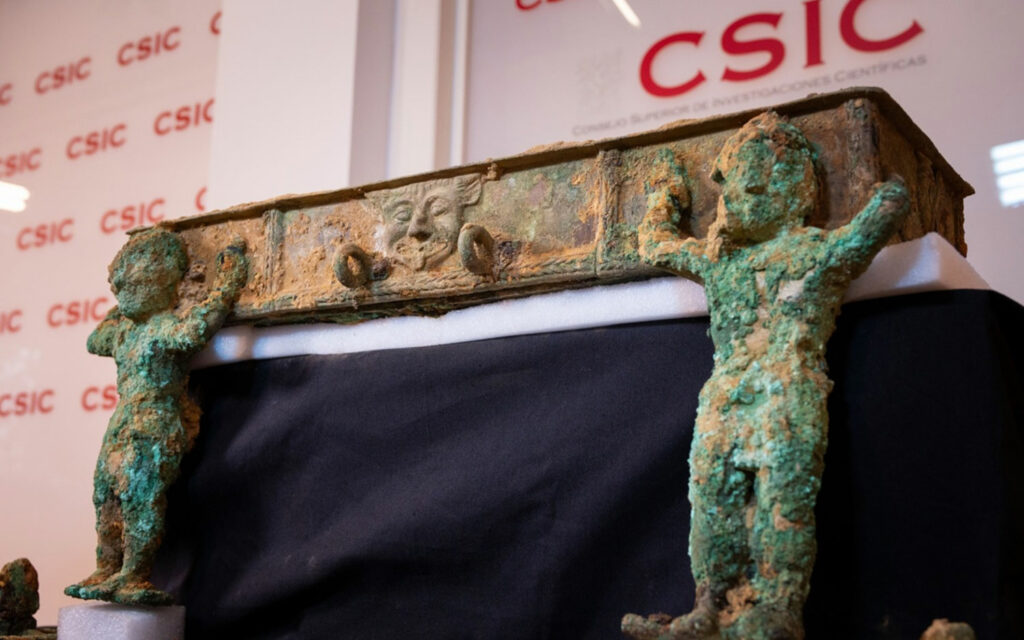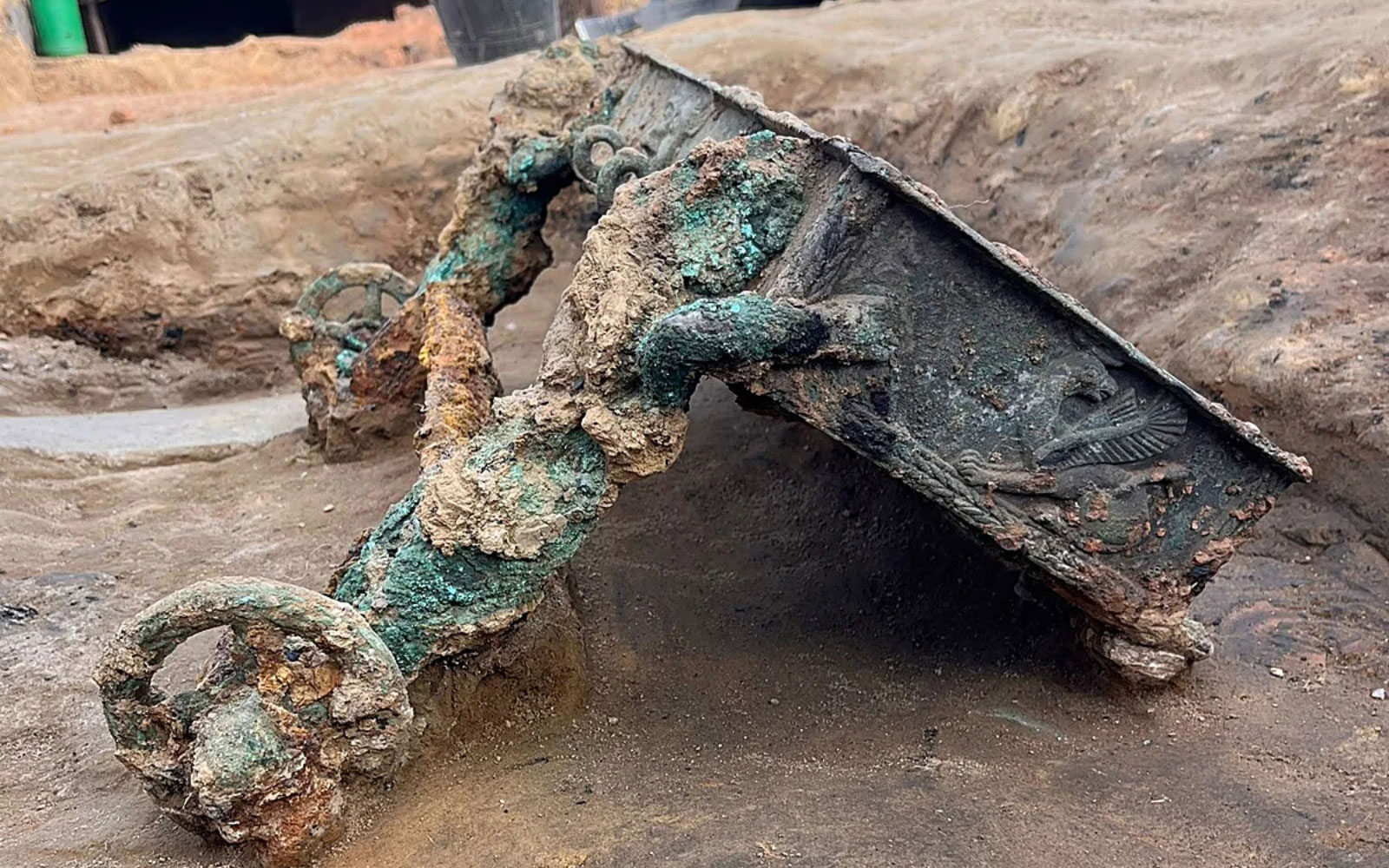
GUAREÑO, SPAIN—According to an article in The Greek Reporter, the wheels and parts of a 2,500-year-old miniature bronze chariot have been discovered in a monumental building at the Tartessian site known as Casas del Turuñuelo in southwestern Spain. In the area where the chariot parts were found, archaeologists had previously uncovered an altar shaped like a bull hide. The ceremonial vehicle is thought to have been used to hold embers, burned incense, or aromatic resins. It features bronze components joined with iron fittings; a central iron axle; and decorations on the frame resembling twisted rope, two griffins, and Achelous, a Greek river god who is portrayed with bull-like horns and a protruding tongue. The vehicle is supported by two figures thought to refer to Atlas, the Greek Titan condemned to hold up the sky for eternity. To read about a trilobite fossil uncovered at a Roman site in northern Spain, go to "Fossil Force."