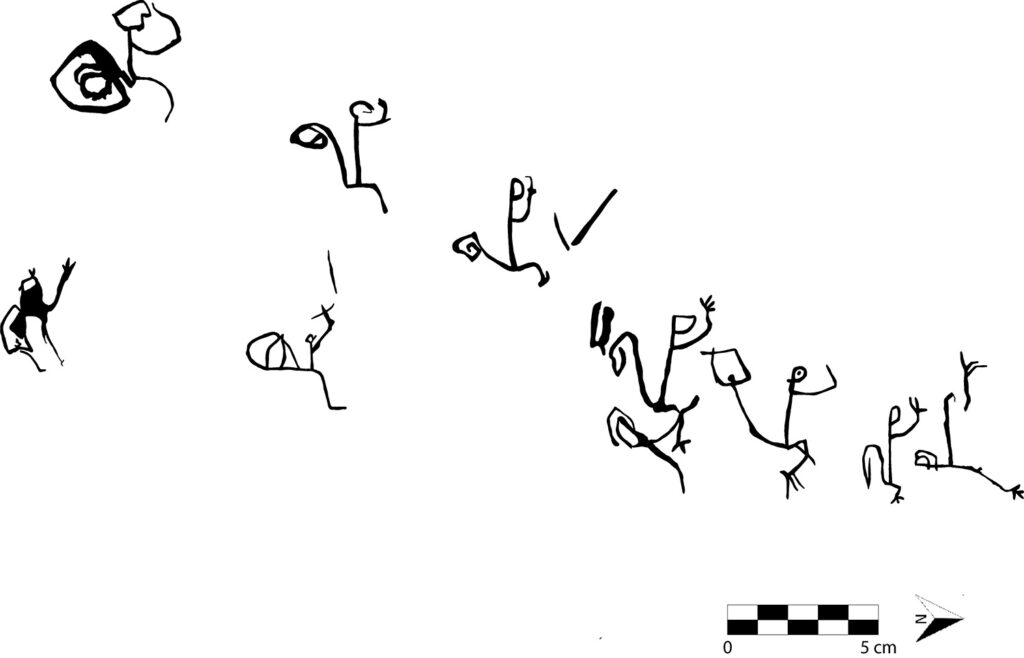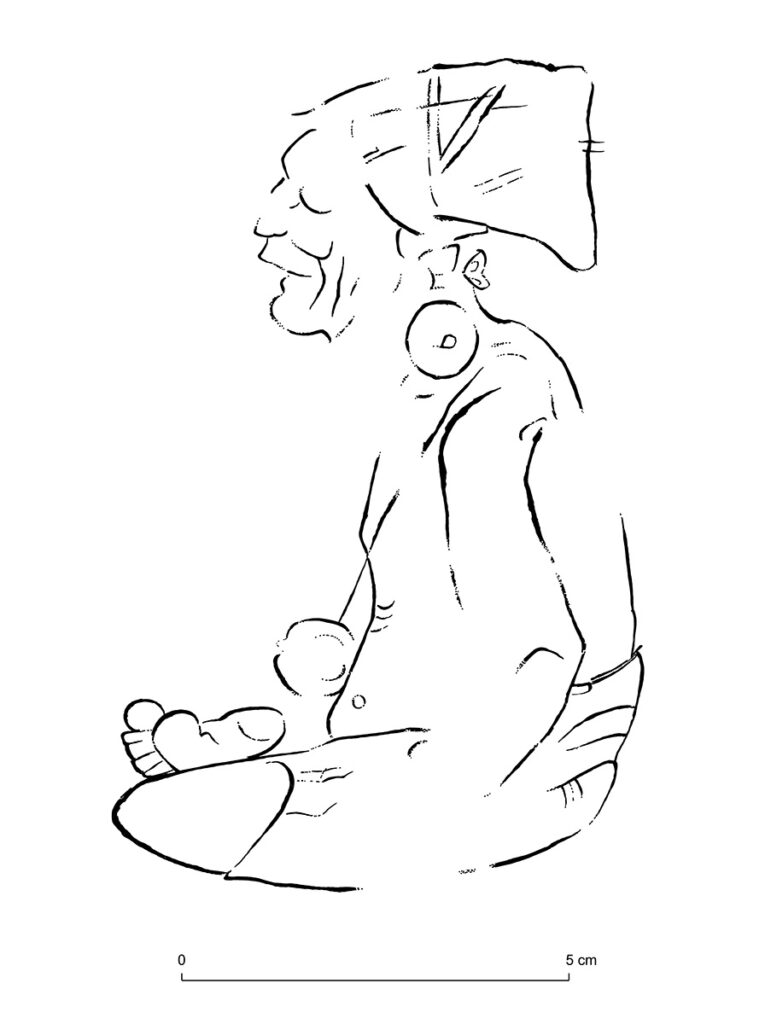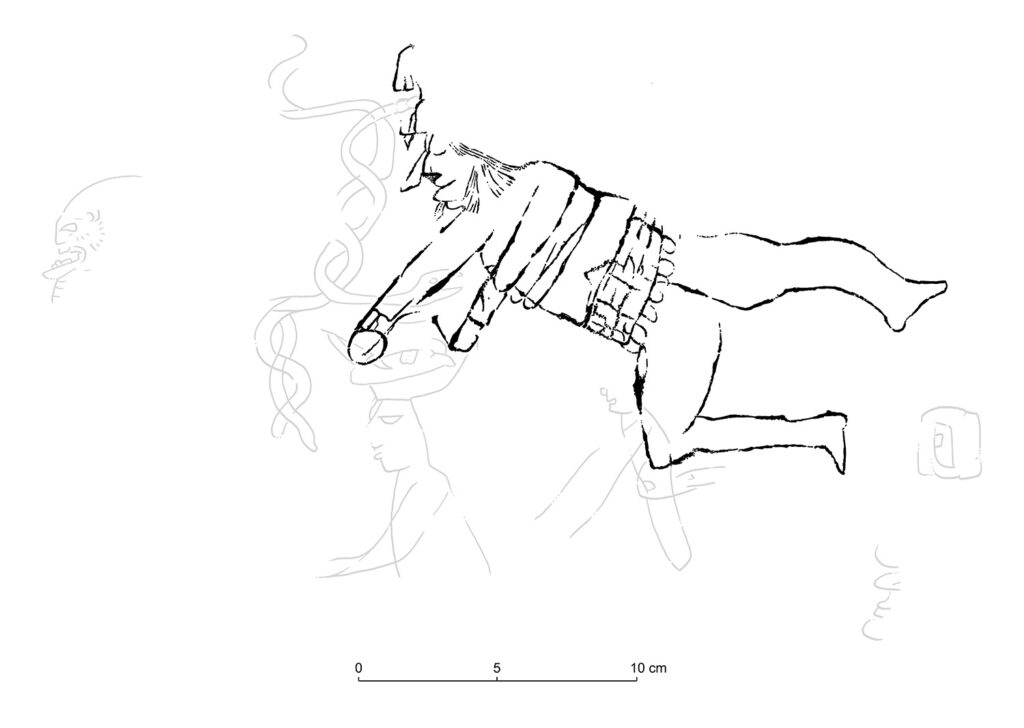
For rich Maya boys in the late seventh and eighth centuries a.d., boarding school appears to have offered a stimulating education and no shortage of diversions. At the site of Xunantunich, on a ridge above the Mopan River, archaeologists recently excavated a complex they believe to have been used for student housing. It includes a large sweat bath, gaming boards, and rooms with benches for sitting or sleeping. Nearby, in El Castillo, the city’s monumental central pyramid, researchers have found two rooms whose walls contain around 400 drawings. These illustrations include a headdress-wearing sage, calendar dates, hieroglyphs, and multiple monkeys sketched by different hands.One monkey is skillfully rendered. Some are not half bad. Others are attempts by beginners doing their best. “We have lots of images that look like someone just learning to draw,” says archaeologist Kathryn Brown of the University of Texas at San Antonio. “It’s almost as if somebody was saying, ‘OK, this is how you draw a monkey. Now you try, you try, you try.’ We think these particular rooms were used for artistic and scribal training, for teaching young children how to draw.” Before this discovery, archaeologists had little evidence for where and how Maya kids were educated.
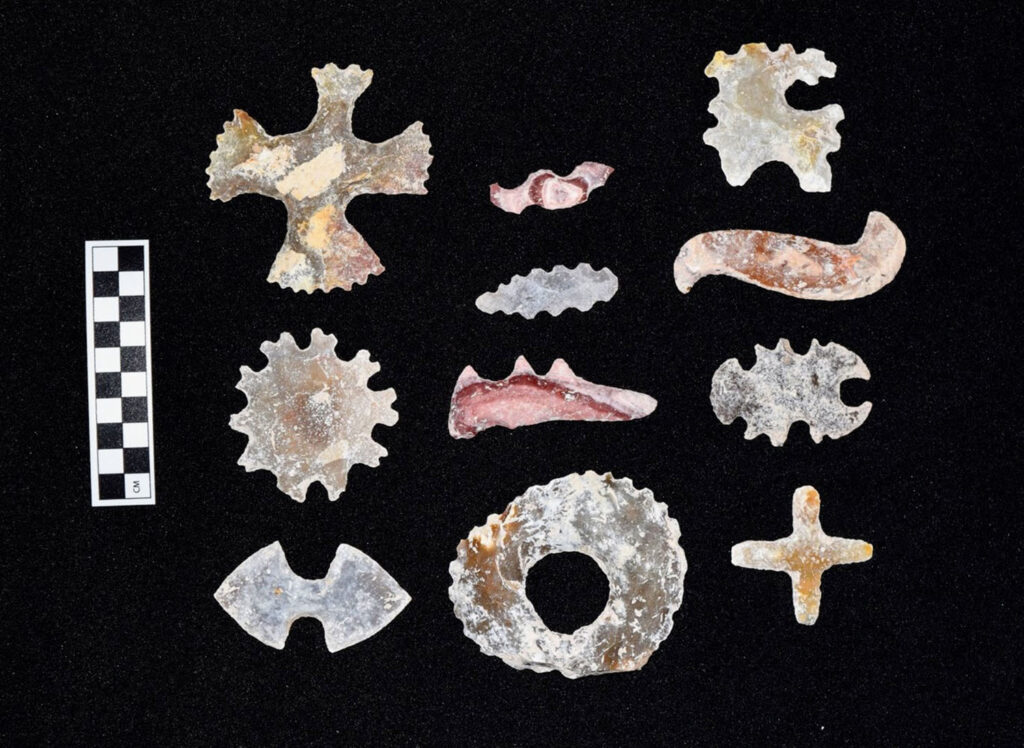
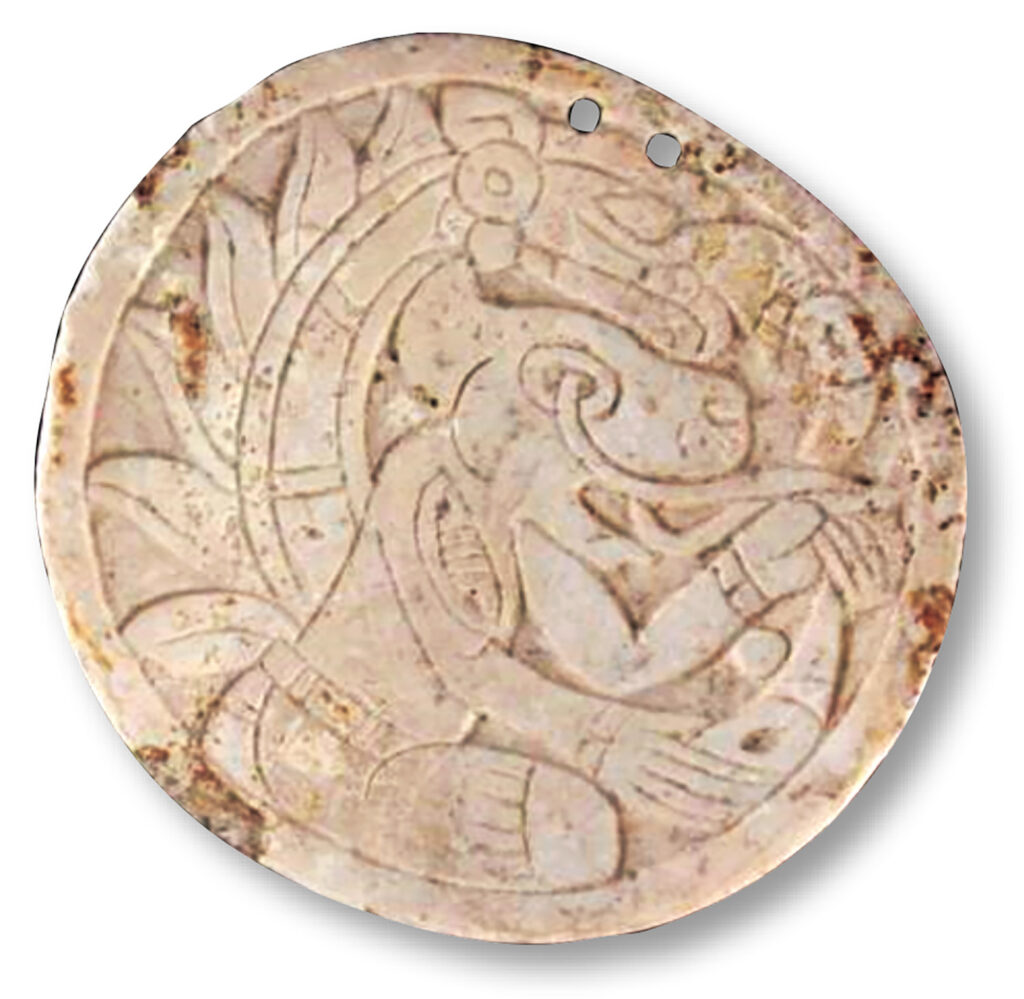
In a shrine just east of the school, archaeologists found a skeleton possibly belonging to a shaman buried with two carved shell disks, which are thought to be ear ornaments or pieces of a headdress. The disks both portray a human with the head of a deer holding one eyeball in its hand, the optic nerve still attached. The individual’s other eyeball peers around its head at a figure representing the Vision Serpent, a liaison between the realms of gods and mortals. “In the ritual that’s depicted,” says Brown, “this individual is transforming into its own wise spiritual companion and communicating with the other world.”
Xunantunich’s boarding school and the burial of a likely shaman are only a few of the compelling finds archaeologists have made at the site over the past two decades. In 2008, Brown’s team began unearthing a vast ceremonial platform dating to the eighth century b.c., which was used for communal rituals. The platform was situated so people could see the sunrise, sunset, and stars, whose positions they used to plan agricultural activities. To make this view of the sky possible, residents of Xunantunich cleared a huge swath of dense rainforest.
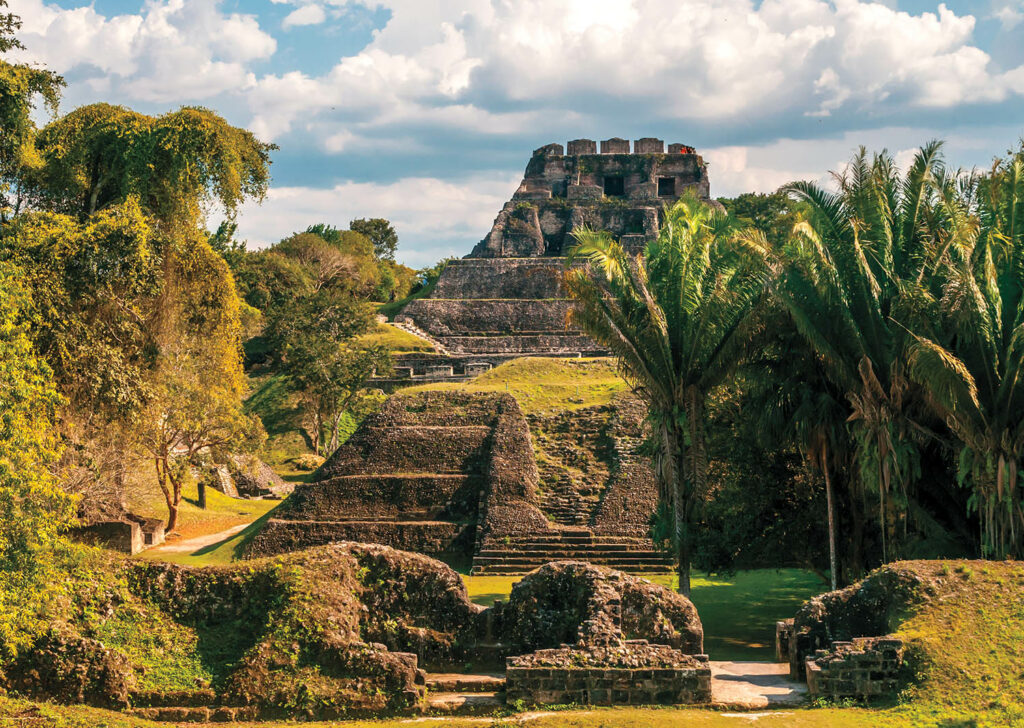
THE SITE
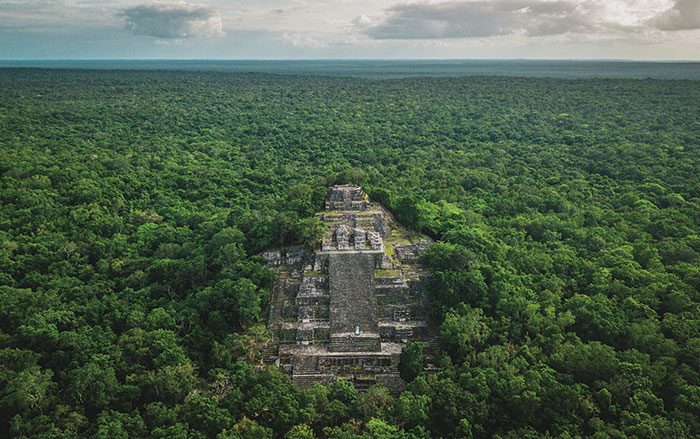
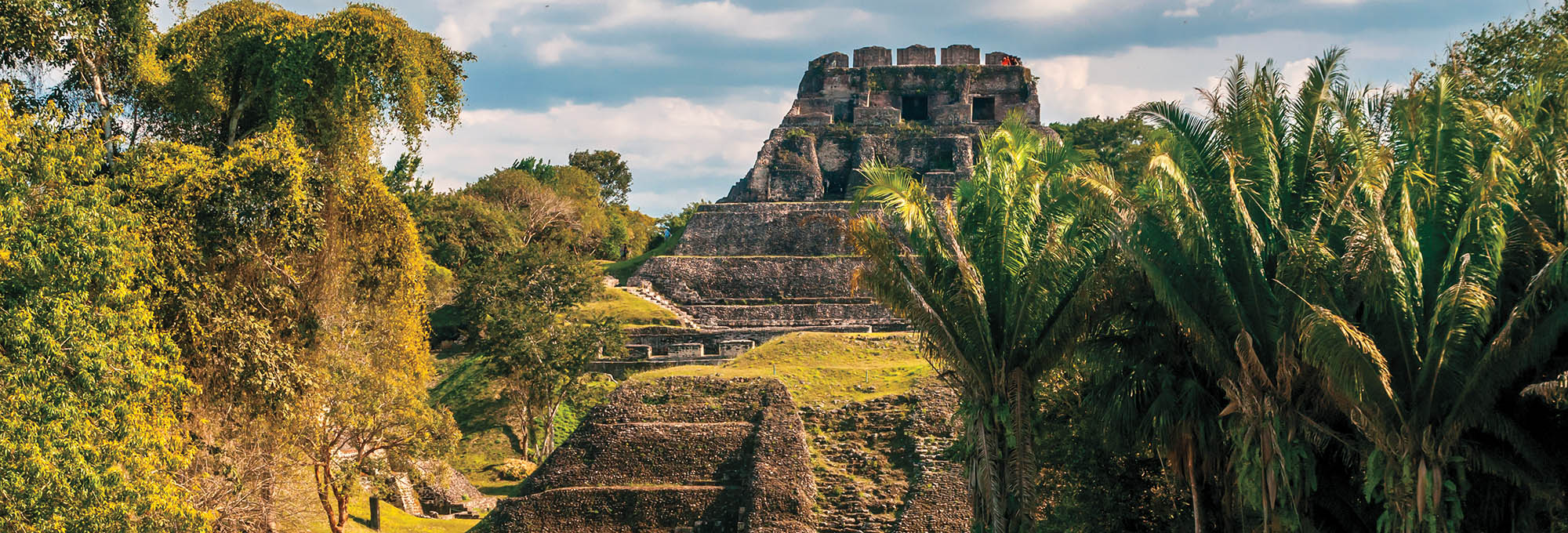
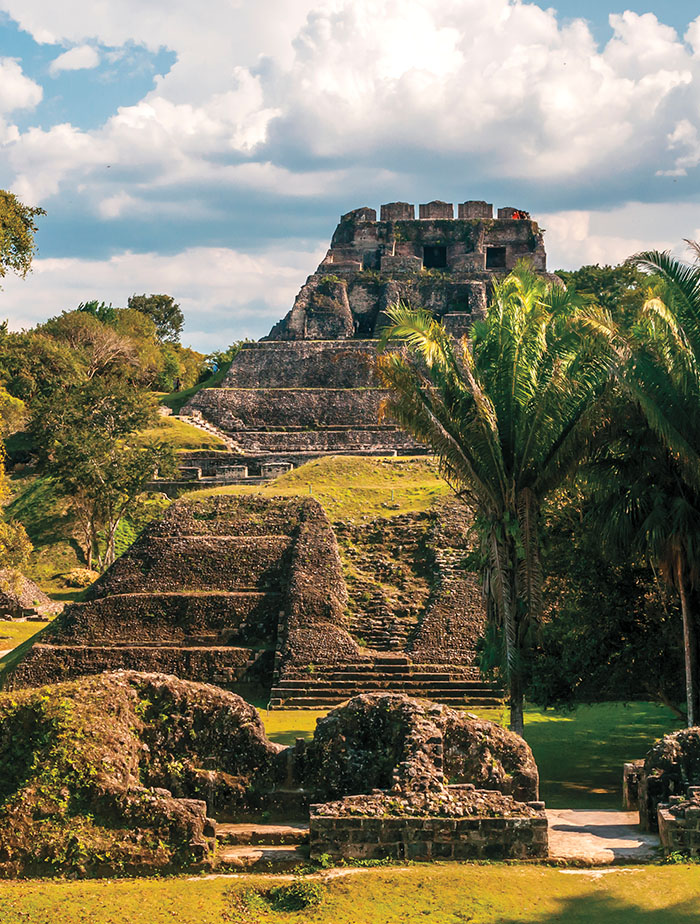
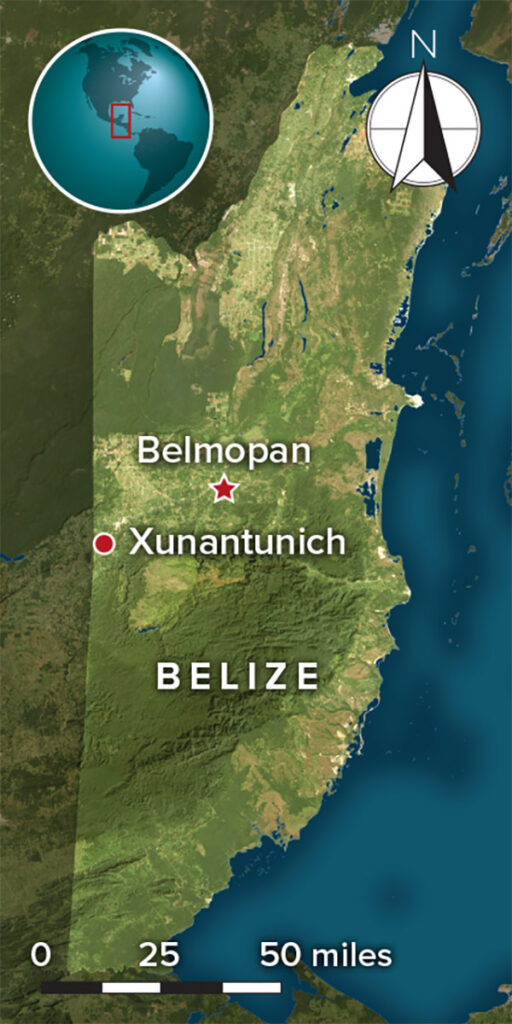
From the village of San José Succotz, a five-minute ride via hand-cranked ferry gets you across the Mopan River, and it’s a mile-long amble or drive to Xunantunich from there. The site’s major structures fan out from El Castillo. Visitors can climb to the top of the pyramid and see the well-preserved remnants of a stucco frieze that wraps around an upper terrace. On the pyramid’s eastern side are scenes of a king or royal ancestor among the heavens. The western side features themes related to the setting sun and the underworld. North of the pyramid stand the ruins of a palace built around the turn of the eighth century a.d., when a rival Maya city called Naranjo likely ruled over Xunantunich. Decades later, part of the palace was torn down, and a man was buried inside with his wrists and ankles bound. By analyzing isotopes in the man’s teeth, researchers determined that he was from the Naranjo area—evidence that Xunantunich regained its independence.
WHILE YOU’RE THERE
The Mopan River and surrounding valley provide a lush haven for tubing, canoeing, hiking, horseback riding, and spotting howler monkeys. If you overnight at one of the valley’s tranquil eco-lodges or farm stays, you can get expert advice on wilderness jaunts to enjoy during any season, guided or solo.
Slideshow: Ancient Maya Art Academy
The skills and beliefs that built and sustained the great culture of the Maya for at least a thousand years were taught to young boys in school, with some pupils developing aptitude in military tactics, others in scribal arts, and a precocious few in the arcana of religion. “That knowledge has to be taught from one generation to the next,” says archaeologist Kathryn Brown of the University of Texas at San Antonio. “It’s the same from the ancient Maya all the way to ritual practitioners today.”
At the site of Xunantunich in Belize, Brown and fellow archaeologists including Jason Yaeger, Lauren Nowakowski, and Whitney Lytle have identified evocative evidence of Maya shamanism and schooling in the late seventh and eighth centuries a.d. At a shrine containing the burial of a likely shaman, archaeologists found adornments and tools the person would have used in life and, perhaps, the afterlife. Nearby, in the city’s center, the next generation was learning to draw at what archaeologists think is a school. In two rooms covered in graffiti, artists of varying skill levels tried their hands at sketching human figures, animals, and glyphs.