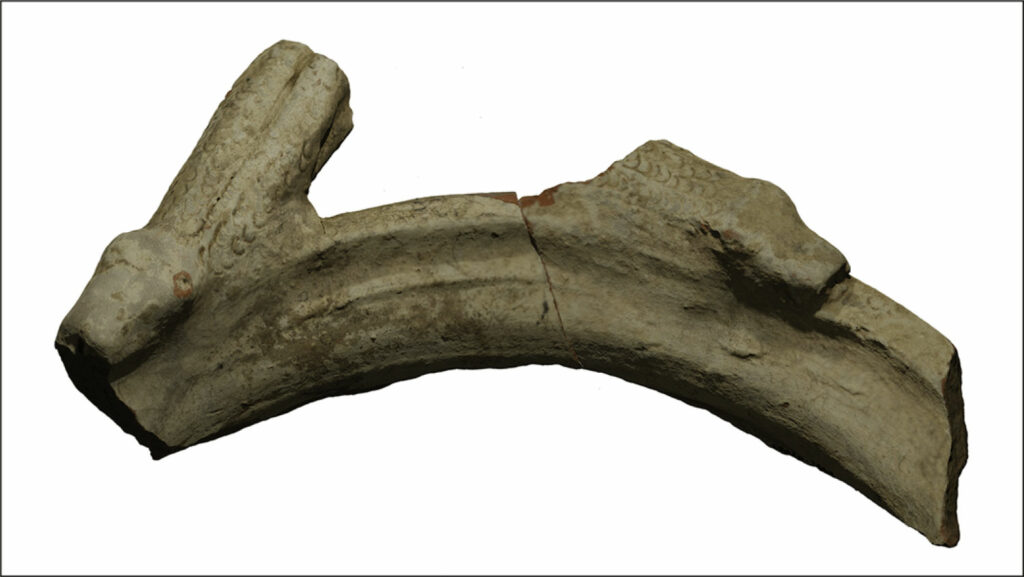
COLLET, SPAIN—Phys.org reports that a ceramic vessel unearthed at a rural Roman villa on the coast of northeastern Spain suggests that a minor Eastern cult had spread to the western edge of the Roman Empire. Researchers led by Marc Bouzas Sabater of the University of Girona determined that the recovered pieces of the vessel include a part of the rim and a handle in the shape of a two-headed serpent. Features of the pot suggest that it was not made locally, but may have been produced in North Africa. Wine jars and cups, dated to between 27 B.C. and A.D. 14, were found near the vessel. Comparison of the imagery on the vessel with other Roman objects from the time period suggests that it was linked to the worship of Sabazios, a deity from Thrace and Phrygia. One of these objects, a bronze plaque depicting Sabazios surrounded by symbols of his cult, was found in a first-century A.D. tomb in the nearby town of Emporiae. Sabater and his colleagues think that a priest of Sabazios may have traveled from the east to Emporiae, spreading the cult's influence all the way to the rural villa. Read the original scholarly article about this research in Antiquity. To read about a Hittite deity that appeared as Sabazios in Phrygian culture, go to "The Home of the Weather God."