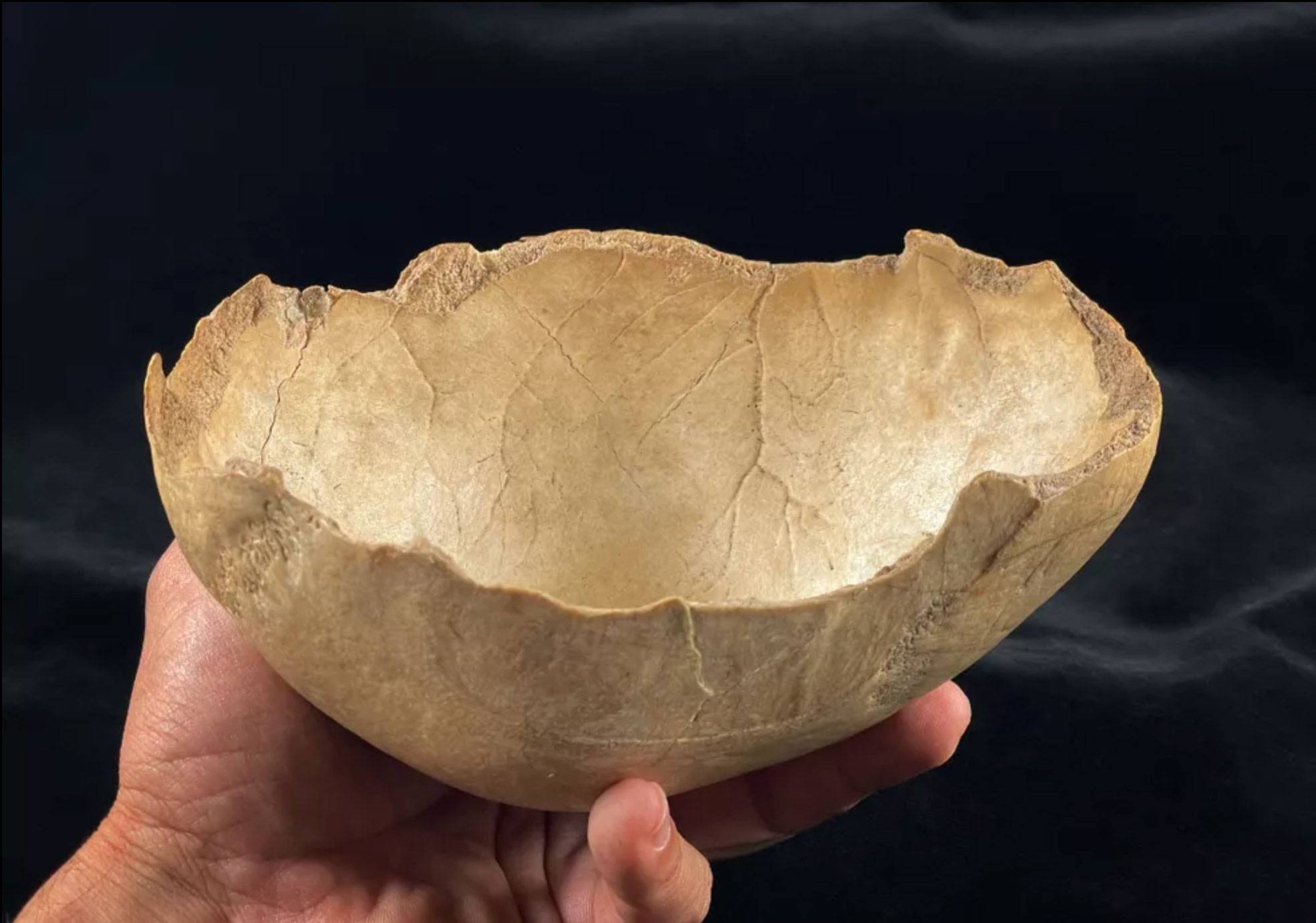
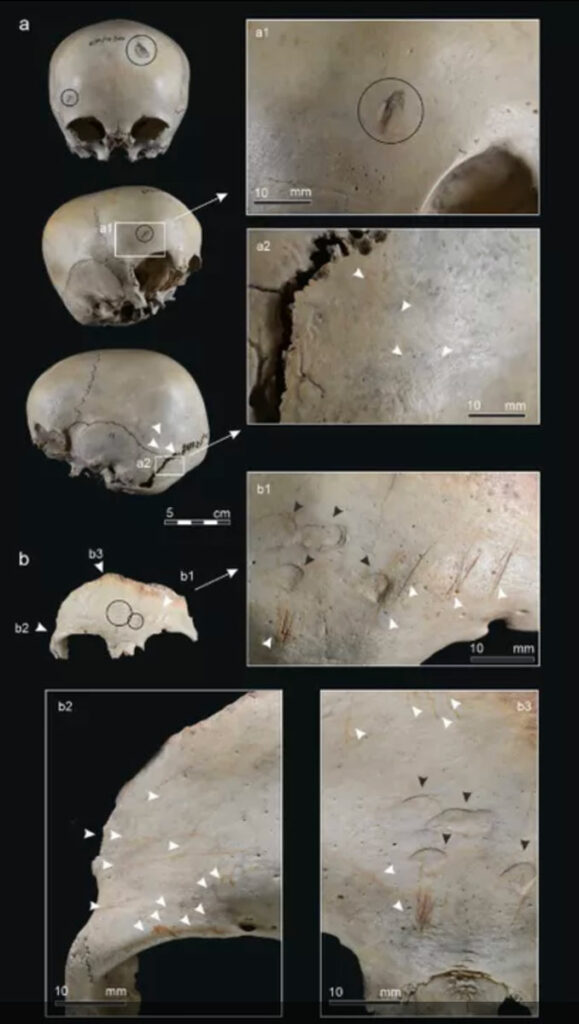
GRANADA, SPAIN—Phys.org reports that Palmira Saladié of the Catalan Institute of Human Paleoecology and Social Evolution (IPHES-CERCA) and her colleagues analyzed some 1,000 human bones and teeth unearthed in three caves in southern Spain for evidence of cannibalism, such as cut marks, fractures, cooking, and human bite marks. They also determined how old the individuals were when they died, and dated a sample of the bones. The study determined that the bones of at least 36 individuals from Malalmuerzo Cave date to the Early Neolithic period, from about 5300 to 4950 B.C. The researchers suggest that the individuals may have all died in one violent episode. More than half of these remains bear evidence of boiling, and two of the skulls show evidence of blunt force trauma. At Carigüela Cave, dating of the bones revealed that they spanned much of the Neolithic period. Almost all of these bones had butchery marks, and two skulls had been made into drinking cups. Bones recovered at Majolicas Cave were dated to between 3950 and 3760 B.C., in the Late Neolithic period. The bones had been stained red with cinnabar, suggesting that cannibalism may have been part of a ritual or funerary practice. Over all, Saladié and her colleagues concluded that these cases of cannibalism took place at different times, for different reasons, in different ways. Read the original scholarly article about this research in the Journal of Archaeological Science. To read about Magdalenian skull cups found at Gough's Cave in England, go to "Ice Age Cannibalism."