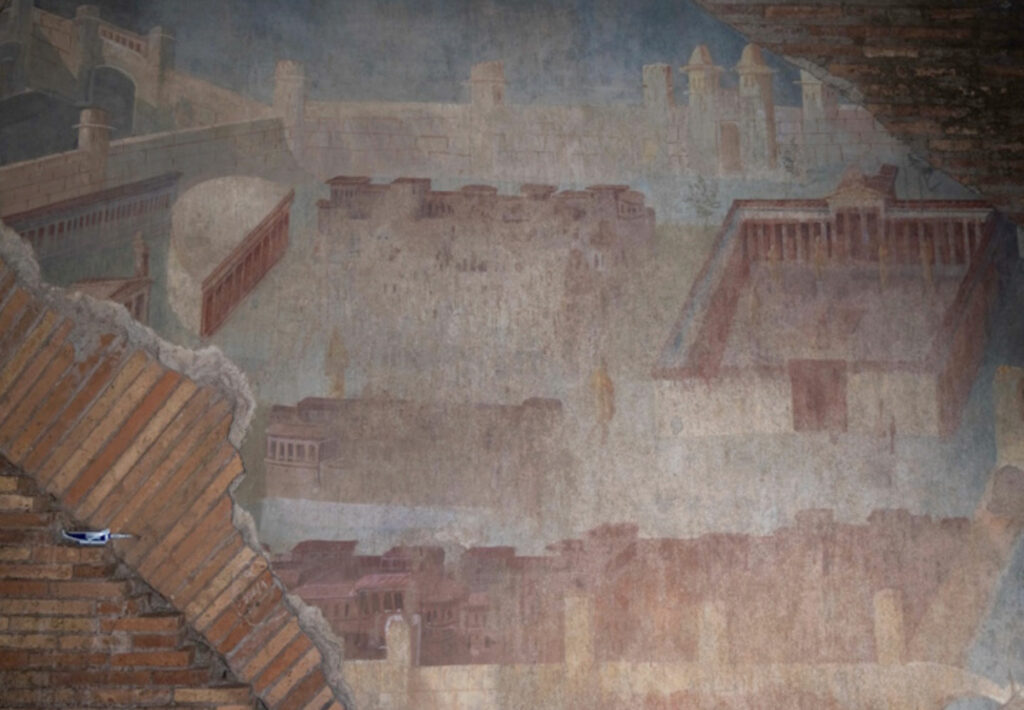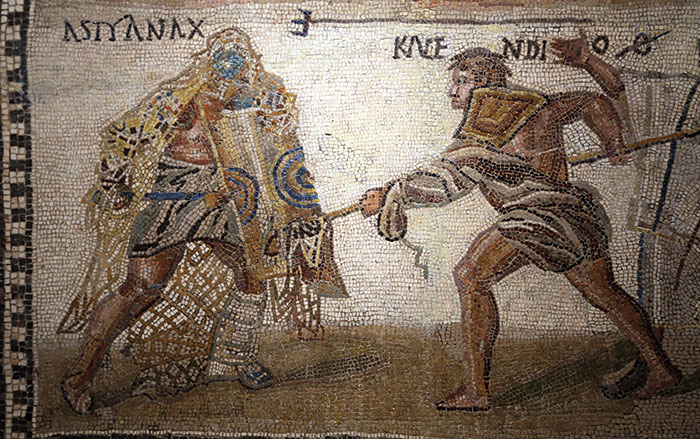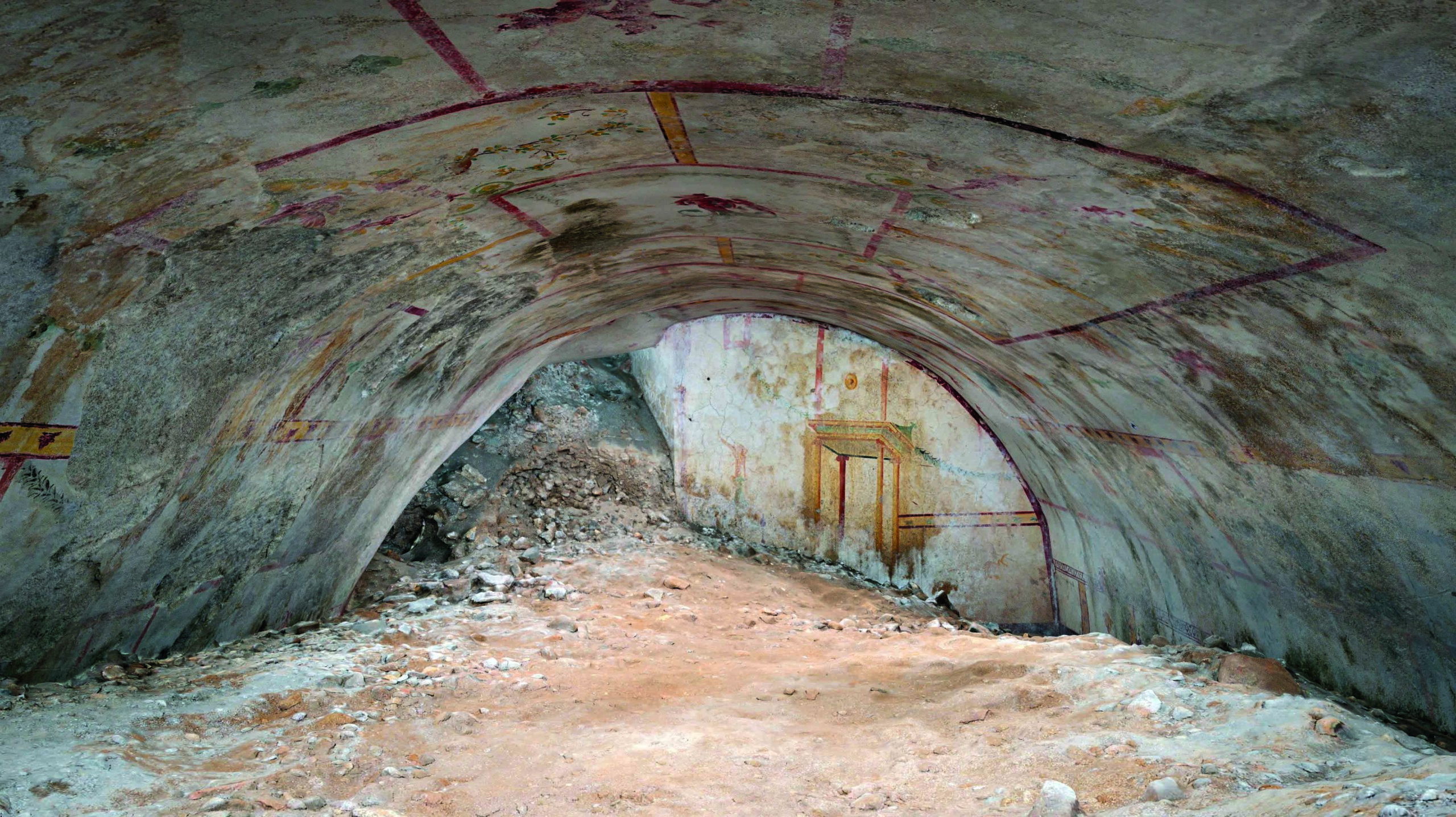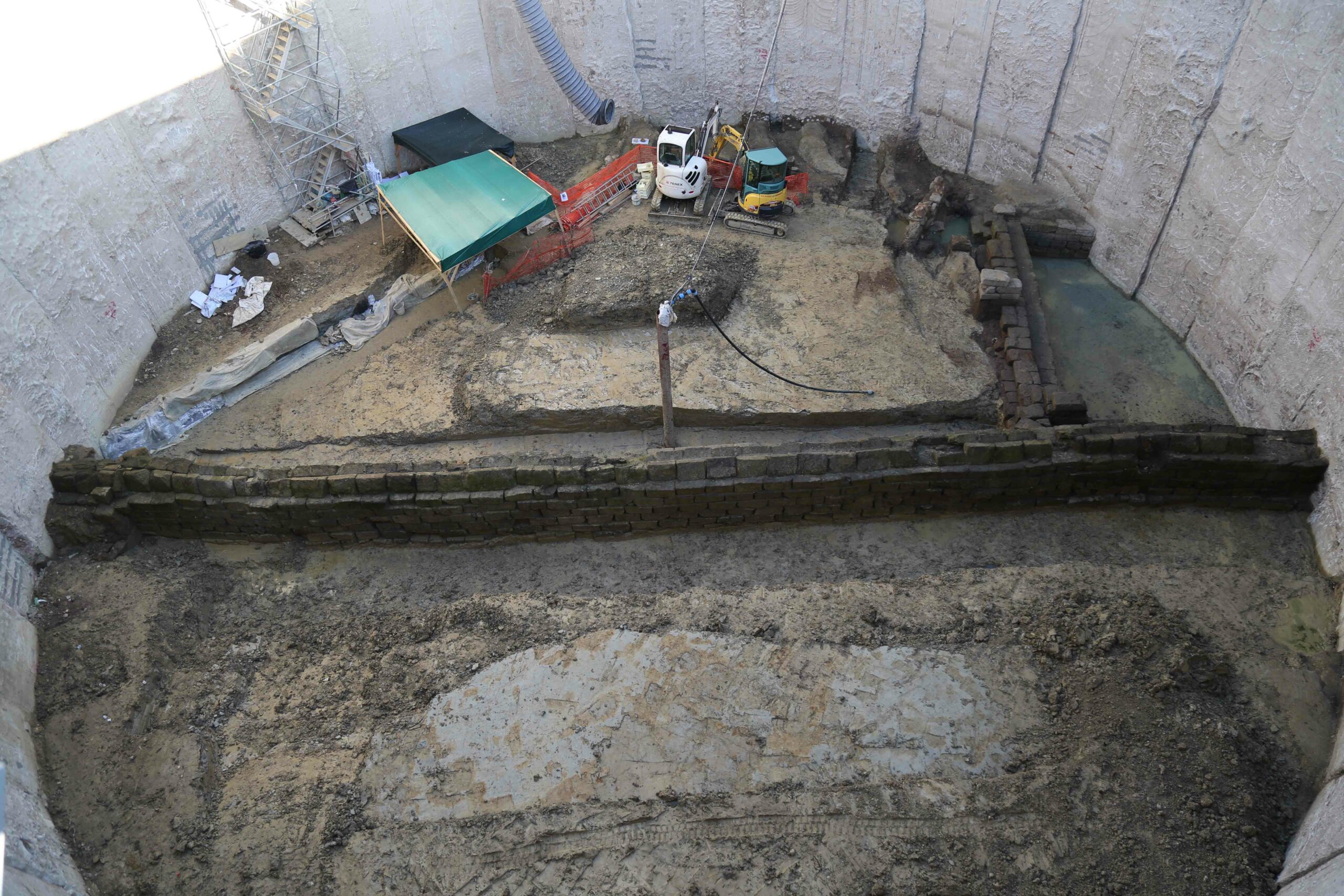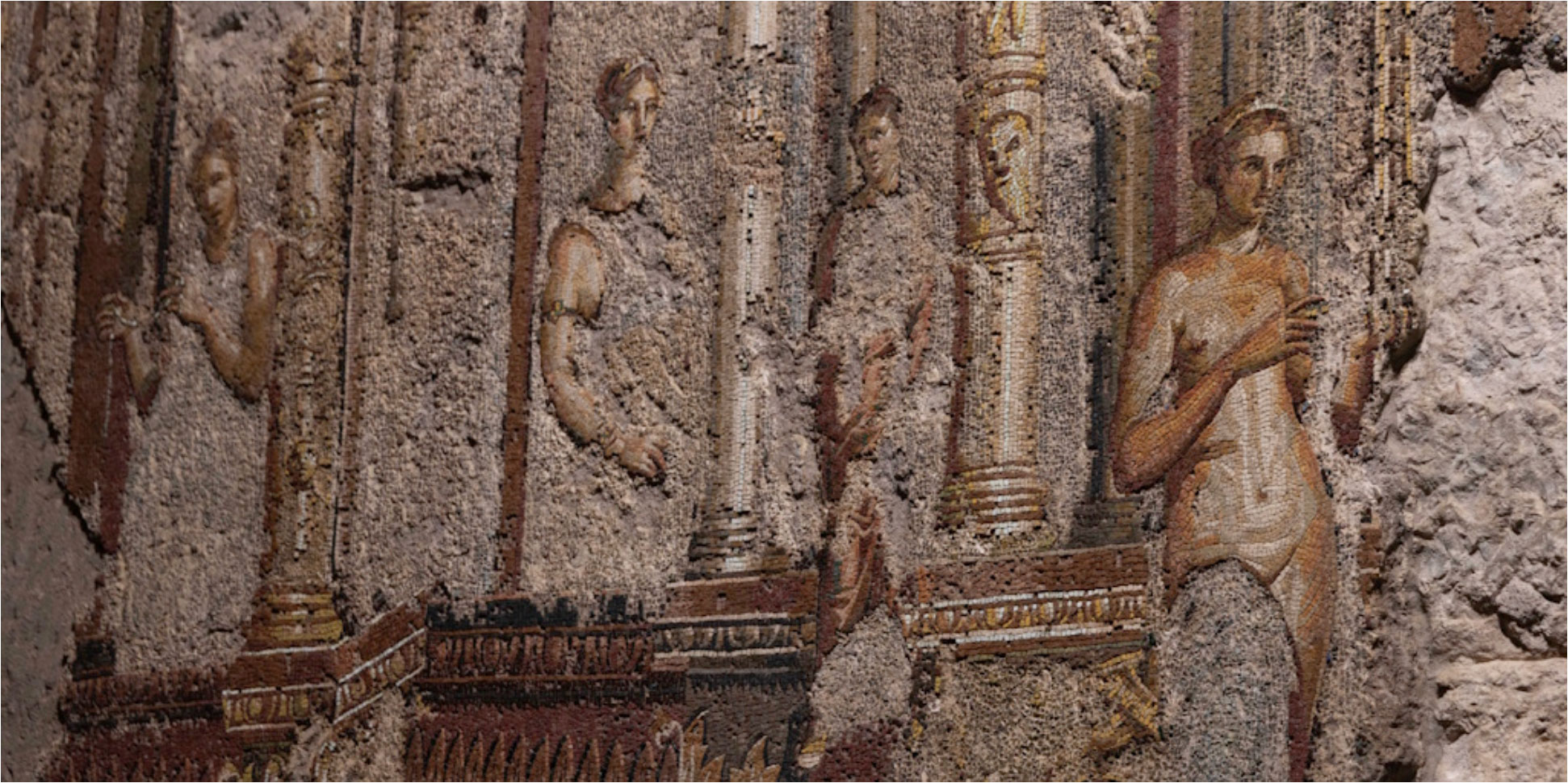
ROME, ITALY—Thirty years after they were first discovered, a colorful fresco and ancient Rome’s largest-known wall mosaic are set to go on display to the public for the first time, CNN reports. The artworks were uncovered in the 1990s during excavations within the sprawling Baths of Trajan, the Roman Empire’s largest bath complex, which was built in the early second century a.d. However, the emperor Trajan constructed the facility on top of the emperor Nero’s famous house, the Domus Aurea, which dates to between a.d. 65 and 68, and it is not yet known whether the works were originally part of the opulent palace. The 108-square-foot “Painted City” fresco depicts a waterfront walled city, roads, a theater, and a temple. Experts are still unsure whether the metropolis was an actual place or simply an idealized utopian port. The “Great Mosaic” also features scenes within a walled city and theatrical motifs with human characters, such as a bearded philosopher and a young poet. Parts of the mosaic were created from blue and white marble and gemstones, which mimic the effect of the sun shining on the sea. It measures 33 feet high and 52 feet long, though the Italian team has still not uncovered its full extent. “We estimate that it is the biggest wall mosaic ever found in the Roman World and we are still digging to find out where it stops,” said archaeologist Francesco Pacetti. For more on the Domus Aurea, go to "Golden House of an Emperor."