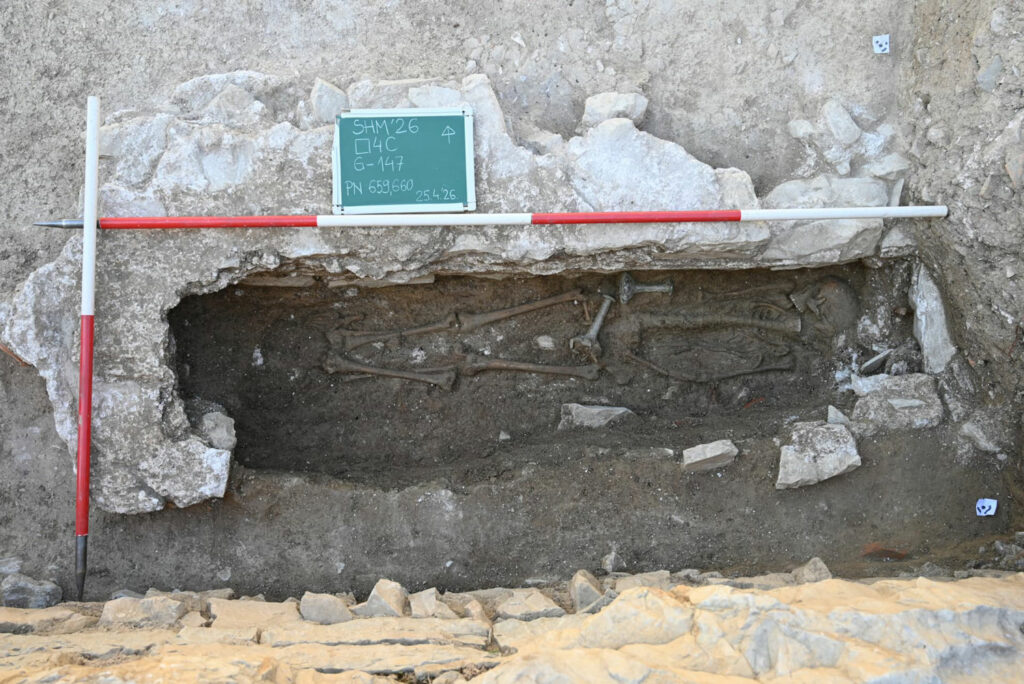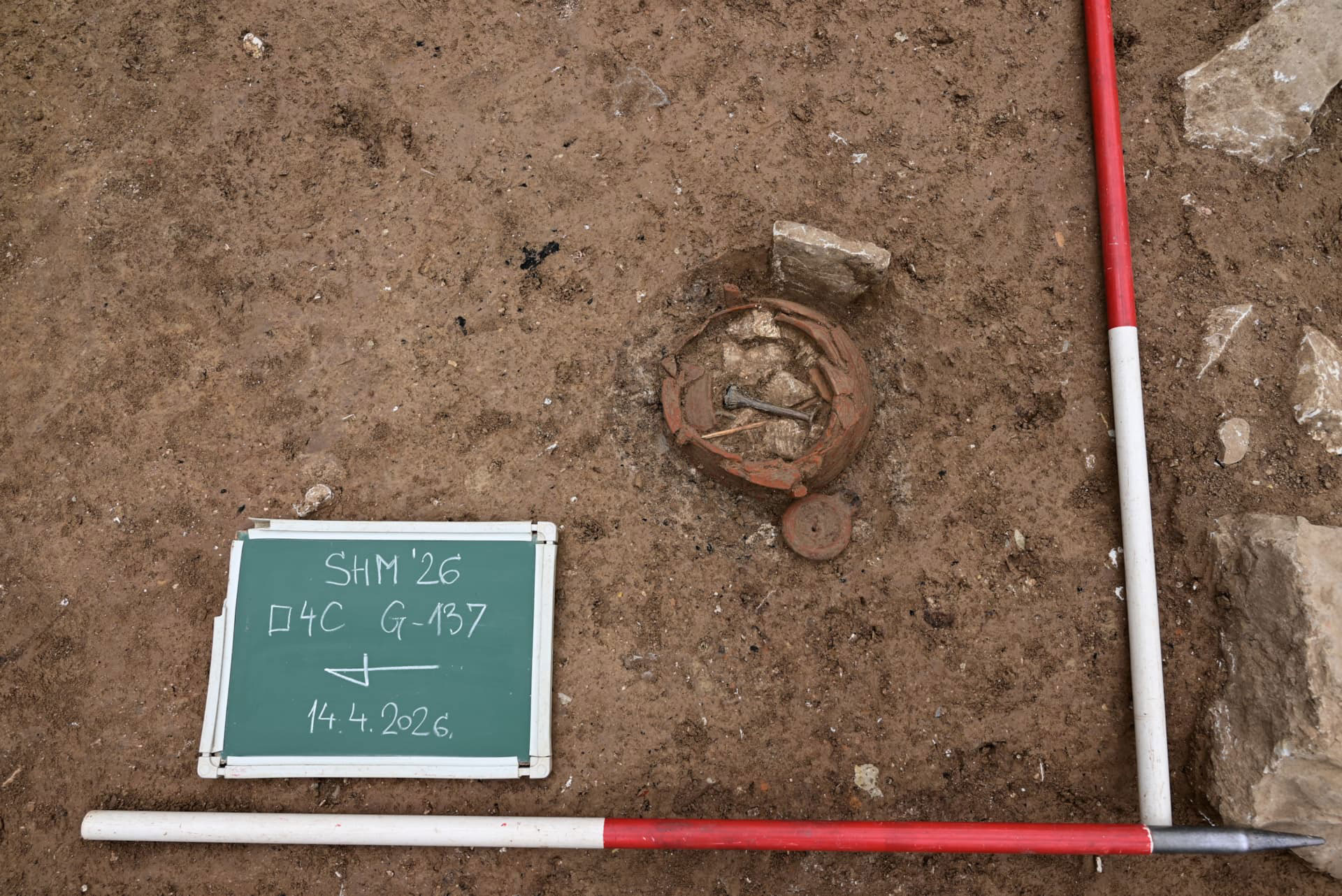
SPLIT, CROATIA—Croatia Week reports that one of the 16 inhumation burials recently unearthed in the western necropolis at the ancient city of Salona, the capital of the Roman province of Dalmatia, held the remains of a person who had been placed face down in the grave. Researchers from the Croatian Conservation Institute and the Croatian Academy of Sciences and Arts also recovered three glass bottles and a small glass vessel from this grave. One of three unguentaria, or perfume bottles, buried with the deceased had been crafted in the shape of a date. Twelve other burials held cremated remains that had been placed directly into the earth. Ceramic urns were used to hold cremations in another three burials, while a stone urn containing cremated remains was found in just one of the graves. One of the cremation burials held a glass unguentarium, a bone needle, and a ceramic oil lamp. In all, more than 150 graves have been investigated in the necropolis to date. For more on archaeology in Dalmatia, go to "Roman River Barge."