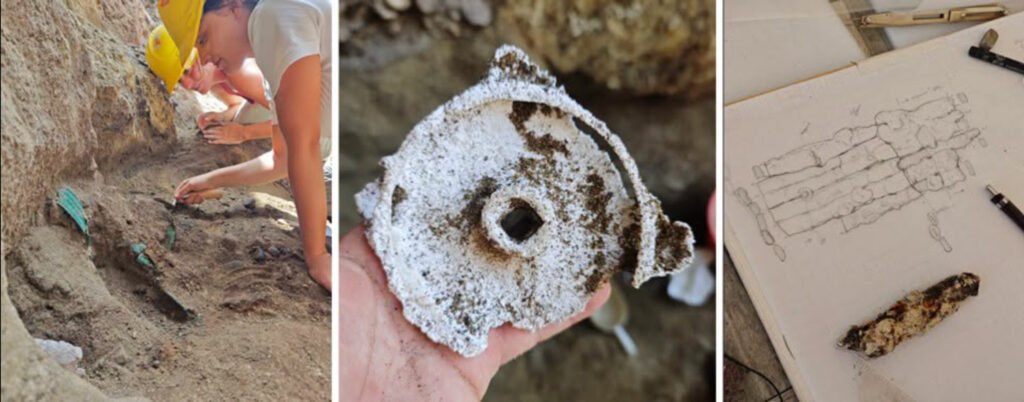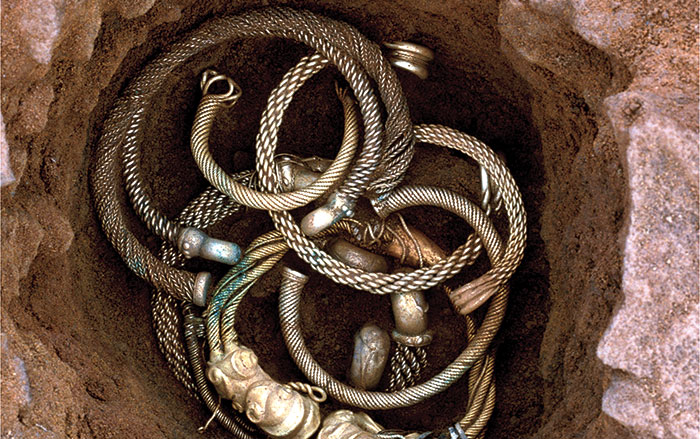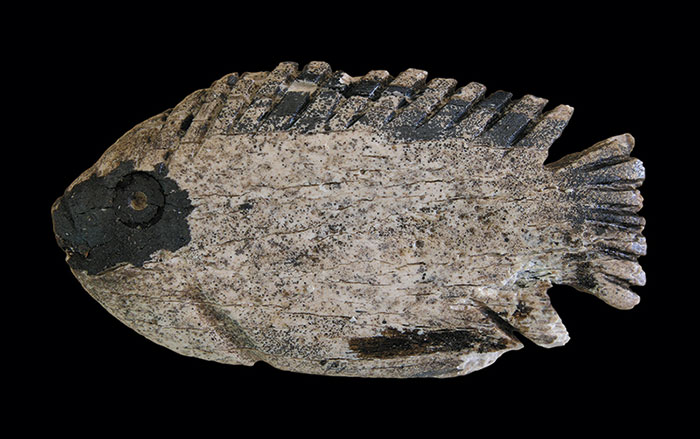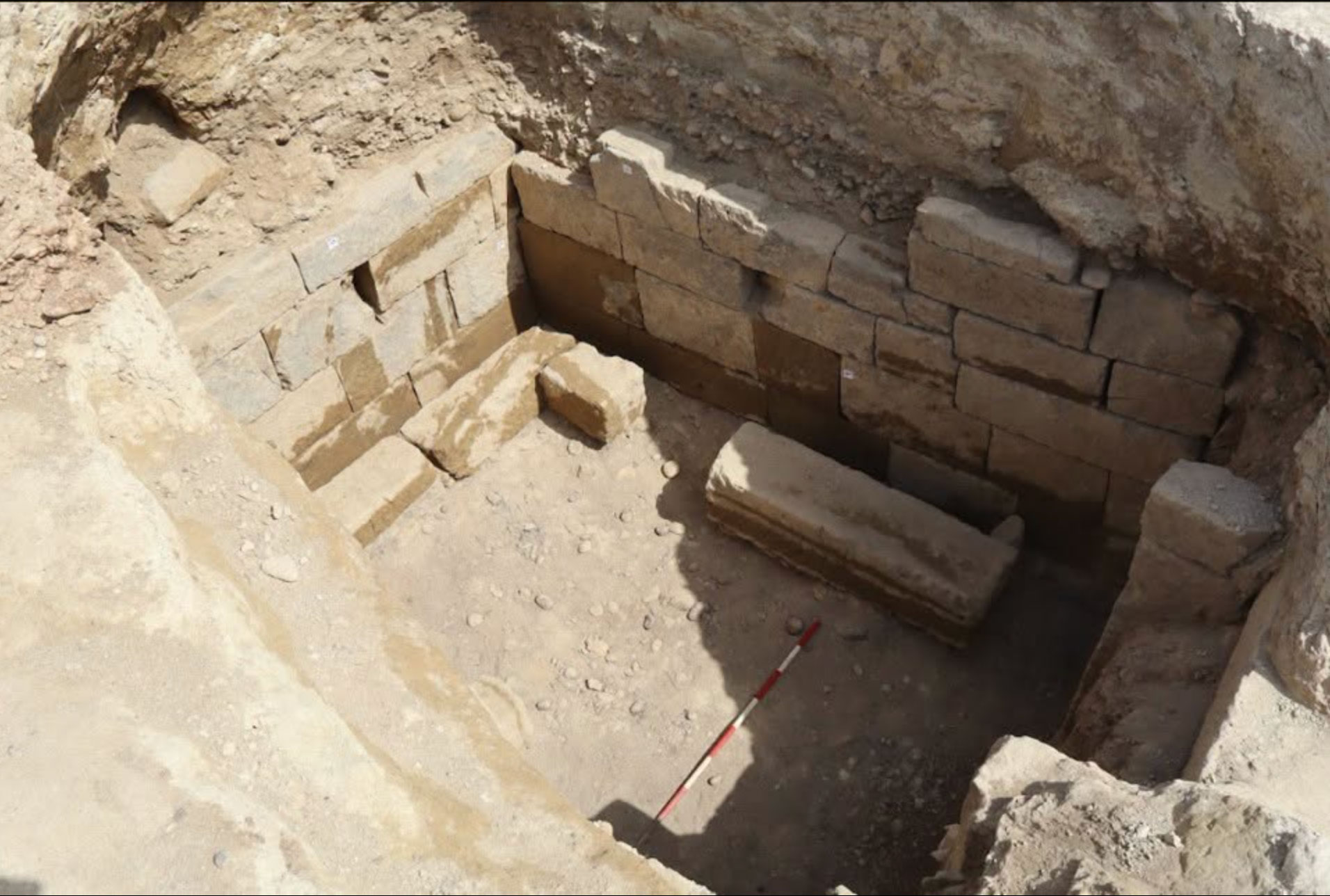
ROME, ITALY—According to the Greek Reporter, an international team of researchers has uncovered a tomb dating to the late seventh century B.C. in a necropolis near the site of the Etruscan city of Vulci. The tomb had three rooms made of large blocks of volcanic stone, but repeated looting in the twentieth century caused the roof and walls to collapse. The resulting layers of rubble protected the remaining artifacts. Archaeologists from Sapienza University, the French School at Rome, and the British Museum recovered local pottery as well as ceramics imported from Athens and Corinth, ceremonial dining vessels, weapons, chariot fittings, a bronze tripod, a lamp made of gypsum alabaster, carved bone and ivory, jewelry, and women’s footwear from the tomb. The researchers suggest that the lamp may have been imported from Naucratis, Egypt, or the Greek island of Rhodes. To read about the early Etruscan practice of interring ashes of the deceased in urns shaped like homes, go to "Model Homes: A Hut for the Afterlife."