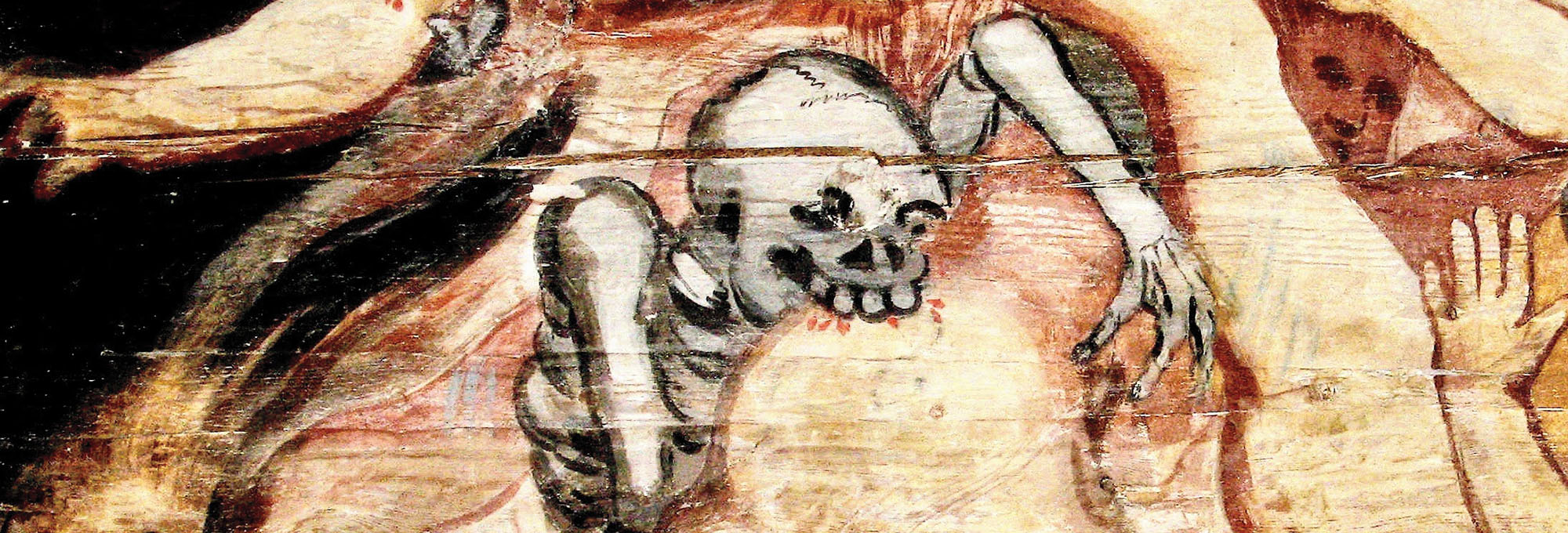
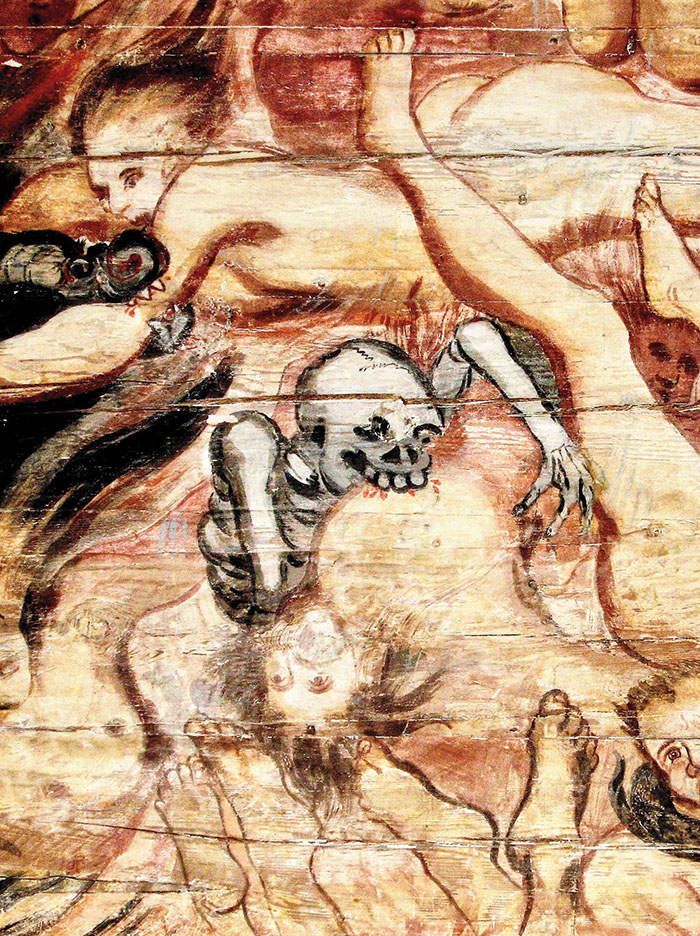
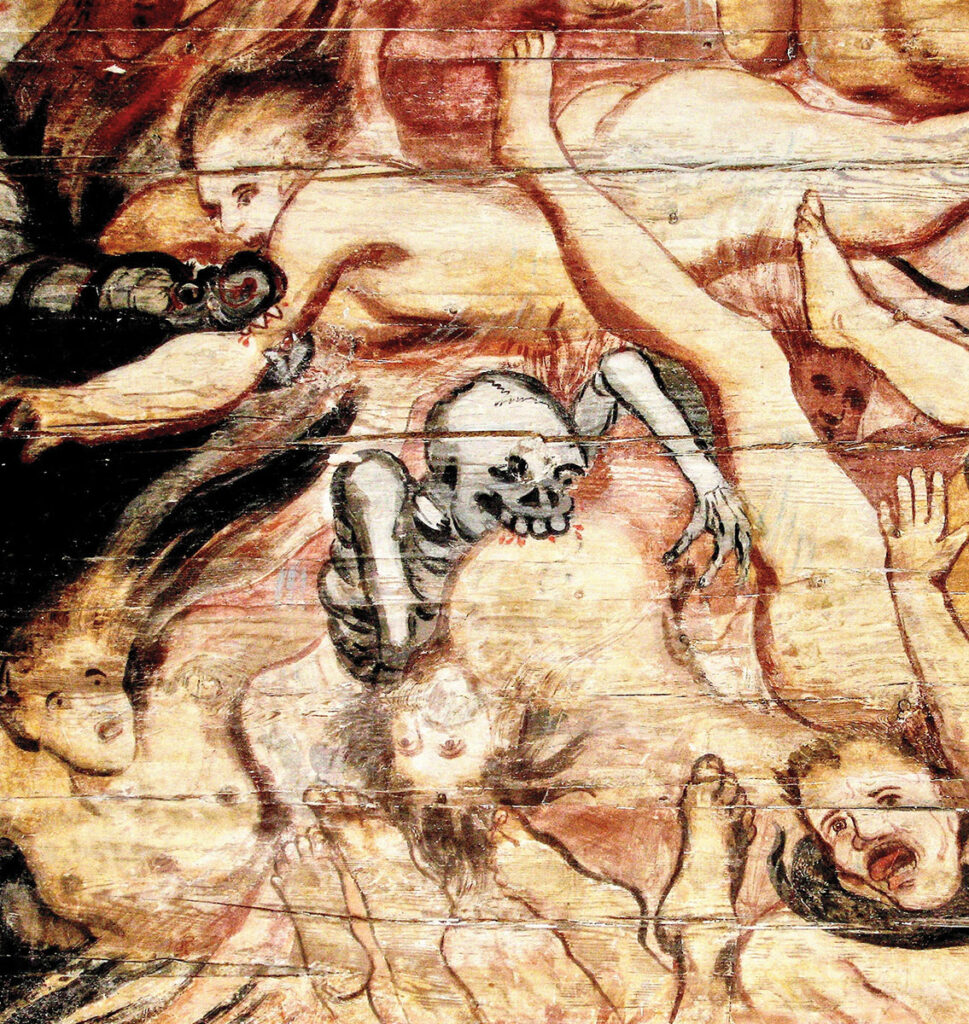
Around 1190, a man died in Buckinghamshire, in southeast England. The night after he was buried, he returned home, barged into his wife’s bedroom, and attempted to suffocate her. A few days later, he harassed his brothers. Rebuffed but undeterred, the dead man “took to dancing around wildly among the animals in and near the houses, as their restless and abnormal behavior showed,” writes twelfth-century historian and cleric William of Newburgh. “This was an equal nuisance to friends and neighbors.” The dead man began spooking villagers by day, though only some could see him. Something had to be done.
William and other chroniclers of the eleventh and twelfth centuries knew that the walking dead were a persistent problem. They also knew how to deal with the problem. The corpse of an indolent priest who returned from the grave was struck with an ax, then burned. Villagers dug up two dead men who had been roaming with their coffins on their backs, beheaded them, then cut out and burned their hearts. “Like anything else, certain procedures get established,” says archaeologist John Blair of the University of Oxford. A gentler approach was taken by Buckinghamshire’s bishop, who absolved his restive practitioner of his transgressions. Thankfully for all, no further measures were needed to quiet the corpse.
Skeletal biologist Simon Mays of Historic England led a team that studied a collection of unusual human remains excavated in the 1960s in the deserted medieval village of Wharram Percy in North Yorkshire. The team determined that the remains belonged to at least 10 different people, whose corpses had been variously hacked, dismembered, and scorched. Radiocarbon dating revealed that the individuals—men and women, adults and children—most likely died over a period of at least 100 years between the eleventh and thirteenth centuries. The mutilations did not match the types of trauma osteoarchaeologists usually observe on victims of murder, execution, battle, or cannibalism. “We were left with the idea that these were revenants, corpses that had risen from their graves to menace the living,” says Mays. “In medieval textual sources, these revenant corpses have a sort of aggressive physicality to them. And the way to combat that physical aggressiveness is by physical means.”
The dangerous dead, as some scholars call malevolent returning corpses, are invoked in literature as early as the Akkadian epic Descent of Ishtar, composed in Mesopotamia in the second millennium b.c. “I will raise the dead, that they shall eat the living,” threatens the goddess Ishtar. Archaeologists have suggested that Mesopotamian burials in which bodies were weighted down with stones, tied up, maimed, or burned may have been intended to prevent such uprisings. Medieval Europeans practiced all these techniques, adding further ways to violate corpses such as impalement with spears and stakes. As recently as 2019, a posse of Romanians, including a priest, was prosecuted for staking a corpse.
Bram Stoker’s Count Dracula was partially inspired by reports from 1720s and 1730s Serbia of the undead inflicting fatal illnesses on the living. The Serbian vampires reportedly sucked blood and could turn their victims into fellow vampires. Like other vampire panics, the eighteenth-century Serbian phenomenon unfolded in a tumultuous period. During outbreaks of disease, religious upheavals, and bursts of political violence, the undead are often blamed and their corpses assaulted. “Once any kind of extreme ritual starts, it’s quite difficult to stop it,” says Blair. “Once you’ve ‘killed’ three or four corpses, it becomes harder and harder to say, ‘That was all pointless.’”
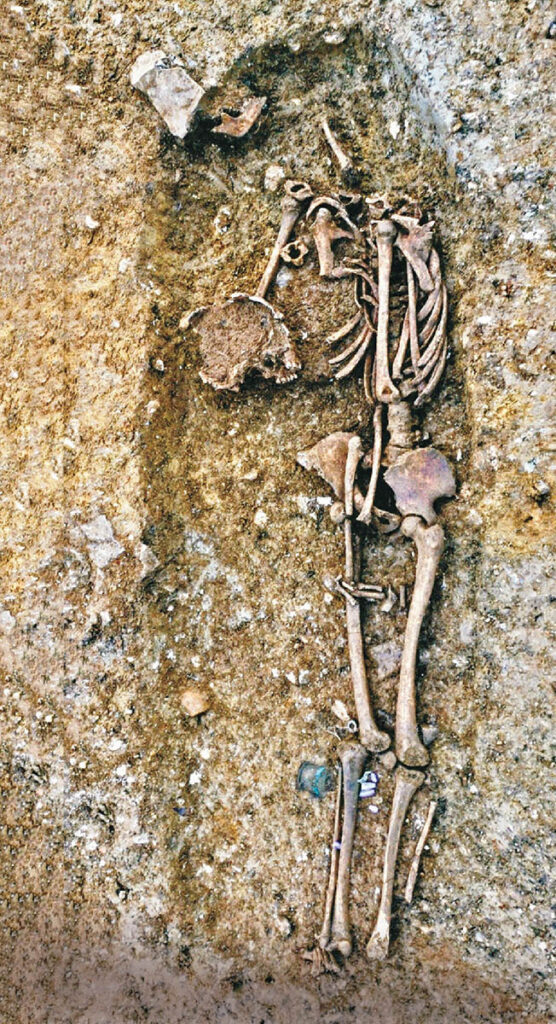
Scholars are trying to understand what anxieties drove English villagers in the late seventh century a.d. to exhume and attack the decaying body of a teenage girl buried on the grounds of a nunnery near the present-day town of Ely. Archaeologists found that her legs had been broken and her head removed. An amulet bag in the girl’s grave contained amethyst beads, copper-alloy rings, and a small metal capsule that held religious relics. At this time, many English people had converted to Christianity, while some held on to pagan beliefs. Among pagans, women were ritual specialists, and nuns became spiritual leaders to Christians.“Women were powerful,” Blair says. “Therefore, women were frightening.”
Neutralizing the dangerous dead was grim business. Fearful mobs in uncertain times often found outsider groups to condemn and terrorize. “Killing the dead is better than killing the living,” says Blair. “If you’re going to persecute someone, it’s much better to persecute people who are already dead.”
Further Reading
Vampire-Proofing Your Village
Why were two bodies in a medieval Bulgarian graveyard impaled with sharp metal implements?
Searching for the Witches’ Tower
Archaeologists hunt for evidence of a seventeenth-century English family accused of witchcraft
Top 10 Discoveries of 2016: Salem’s Lost Gallows
Finding where the infamous witch trials reached their grim conclusion
Killing the Dead: Vampire Epidemics from Mesopotamia to the New World by John Blair
An archaeologist investigates history’s great and gory vampire panics