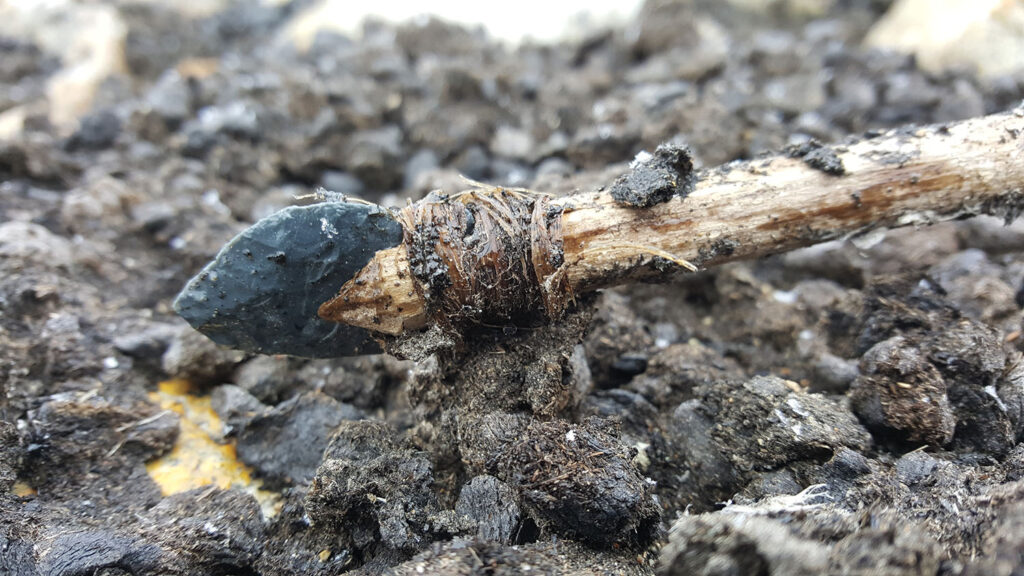
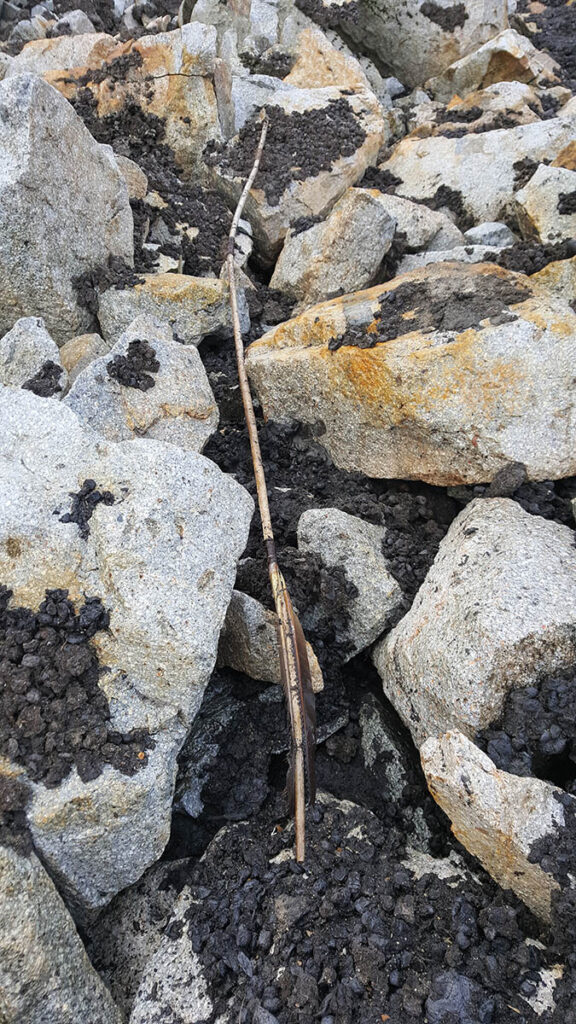
Prehistoric hunters in western North America are known to have employed weapons ranging from javelins and spears to devices capable of firing projectiles at much greater velocity, such as bows and atlatls, throwing sticks used to hurl darts. When exactly these more powerful weapons were adopted has been a matter of debate. Archaeologist Briggs Buchanan of the University of Tulsa may have an answer. He employed a method called optimal linear estimation, which uses radiocarbon-dated examples of a given type of implement to estimate when that implement first appeared.
Buchanan utilized radiocarbon dates of known atlatls and darts to estimate that these weapons were first wielded in the region around 10,000 years ago. This counters the long-standing assumption that hunters who were part of the Clovis culture, which arose around 13,000 years ago, used atlatls to hunt fearsome prey such as mammoths, mastodons, and bison. “The wisdom was that with an atlatl you can hunt from a distance,” says Buchanan. “The spear and the javelin require closer and more dangerous hunting.”
By looking at radiocarbon dates of bows and arrows, Buchanan estimated that these weapons appeared around 1,400 years ago. “The real surprise wasn’t the date, but that it was the same date across the whole region,” he says. “It doesn’t matter if you were in northern Mexico or the Northwest Territories.” Buchanan found that while bows completely supplanted atlatls in most areas, in the northernmost reaches of Canada atlatls continued to be used alongside bows for at least another millennium. This fits a pattern observed in far northern areas around the world, where resources are scarce and hunters maintain a range of weapons to ensure they can kill enough prey to feed and clothe their people.