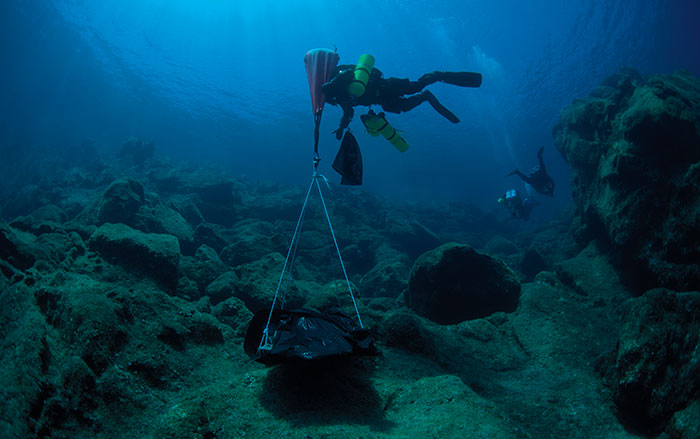


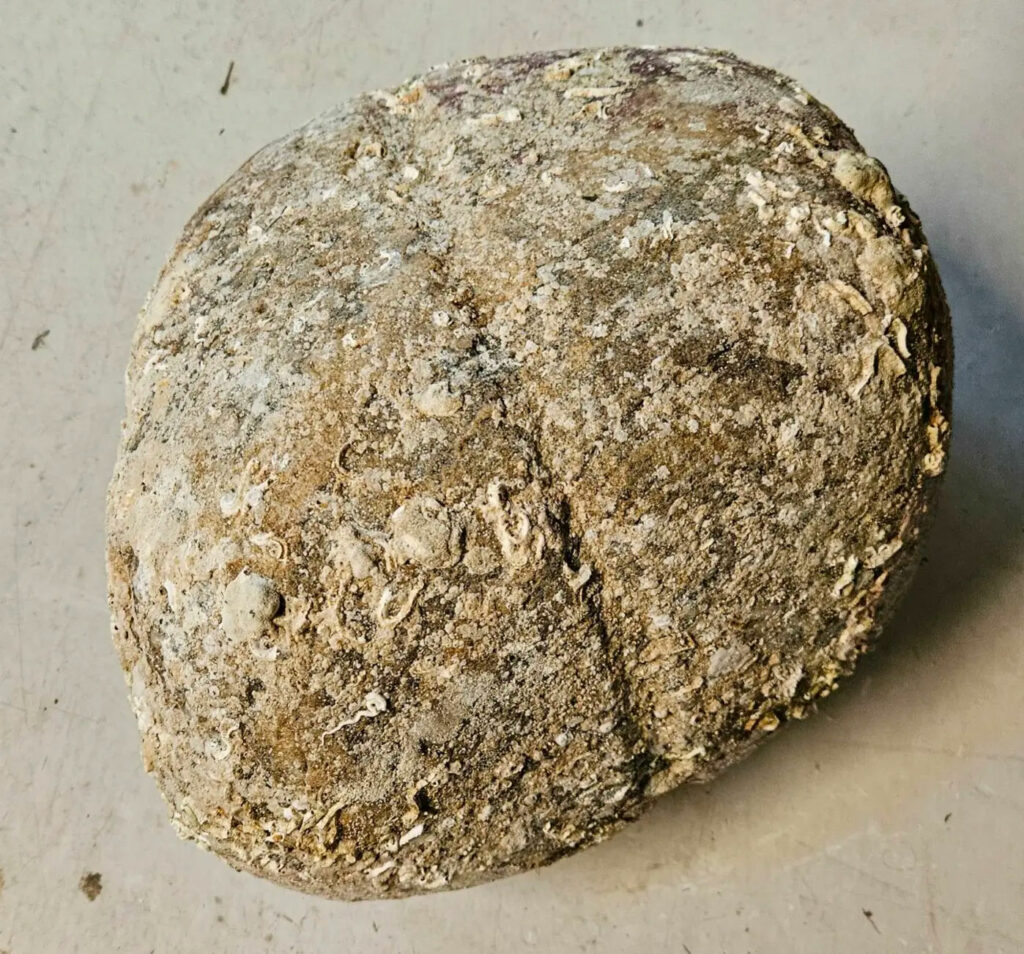
STAVANGER, NORWAY—Science Norway reports that a stone with a groove running all the way around it was discovered near an islet off the coast of western Norway that is the site of Hespriniholmen, a greenstone quarry estimated to be between 5,000 and 9,000 years old. Greenstone was used to make axes that have been unearthed in western and eastern Norway. Arild Skjæveland Vivås of the Stavanger Maritime Museum said that the team of researchers found the stone, which weighs more than 60 pounds, on an underwater pile of quarry waste. They fastened a rope around the groove and pulled it up to the surface. “It seemed very well balanced,” Vivås said. “I’m absolutely convinced that this served as an anchor,” added Leif Inge Åstveit of the University Museum of Bergen. The researchers explained that weather conditions at Hespriniholmen are harsh, and that the islet could have been visited only when there was little wind. “People came here to fish, hunt mammals, and perhaps collect eggs on the islet,” Vivås said. “And then they discovered this source of greenstone. The fact that someone figured out they could quarry stone from an islet located far out at sea is quite extraordinary. They kept coming back for hundreds of generations,” he explained. To read about Roman stone anchors recovered from England’s River Wear, go to “Anchors Aweigh.”