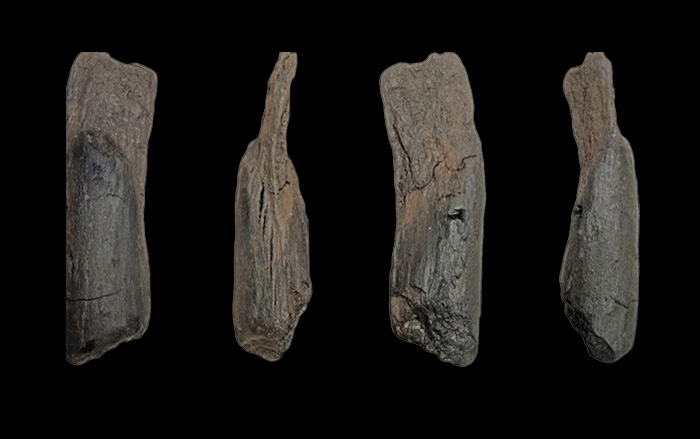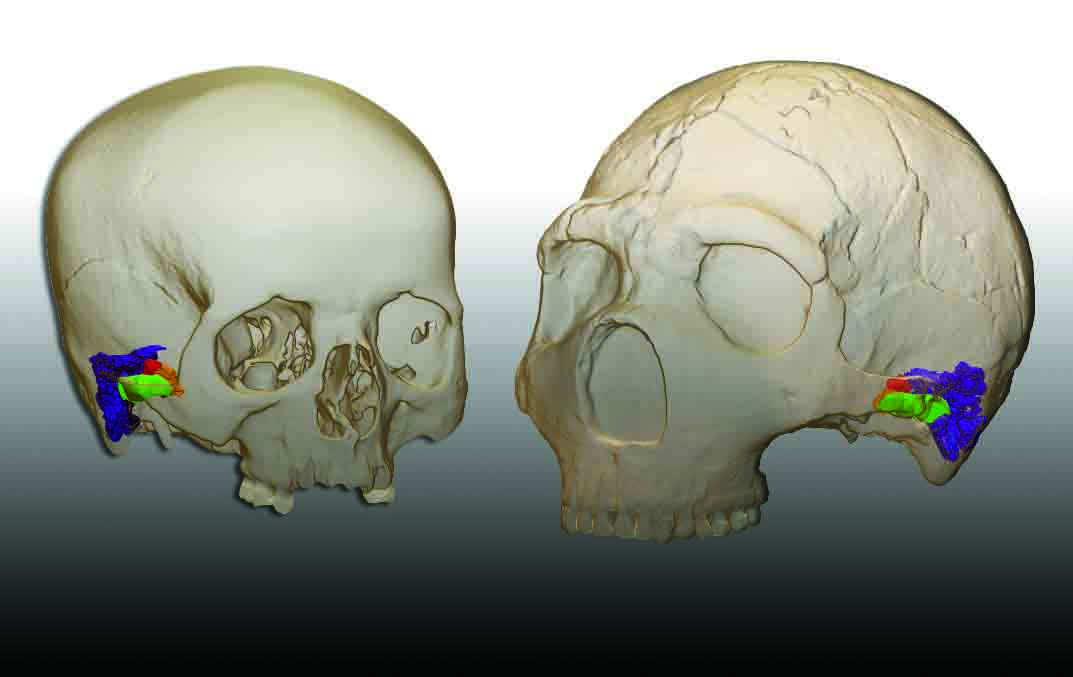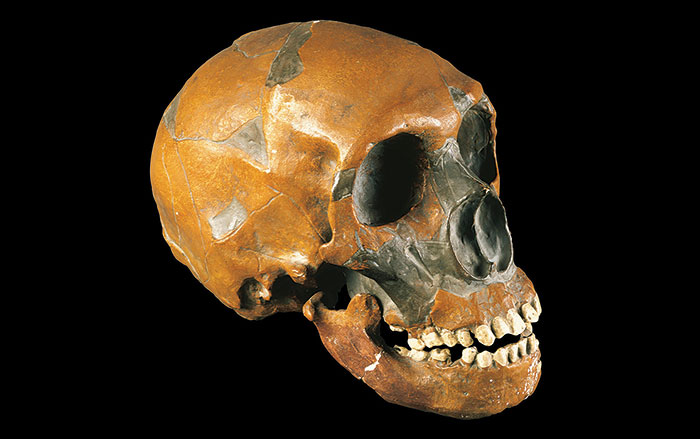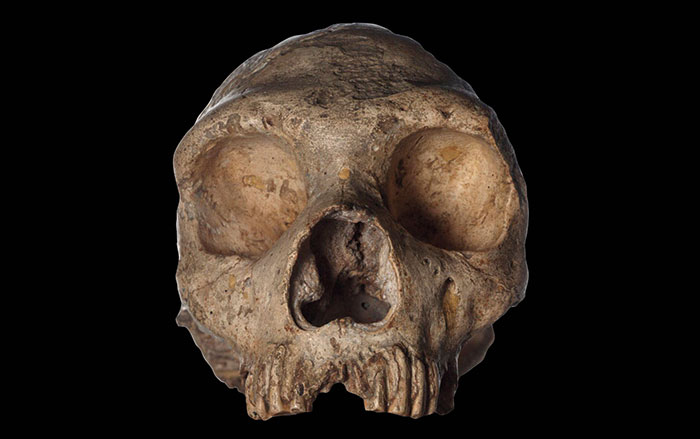

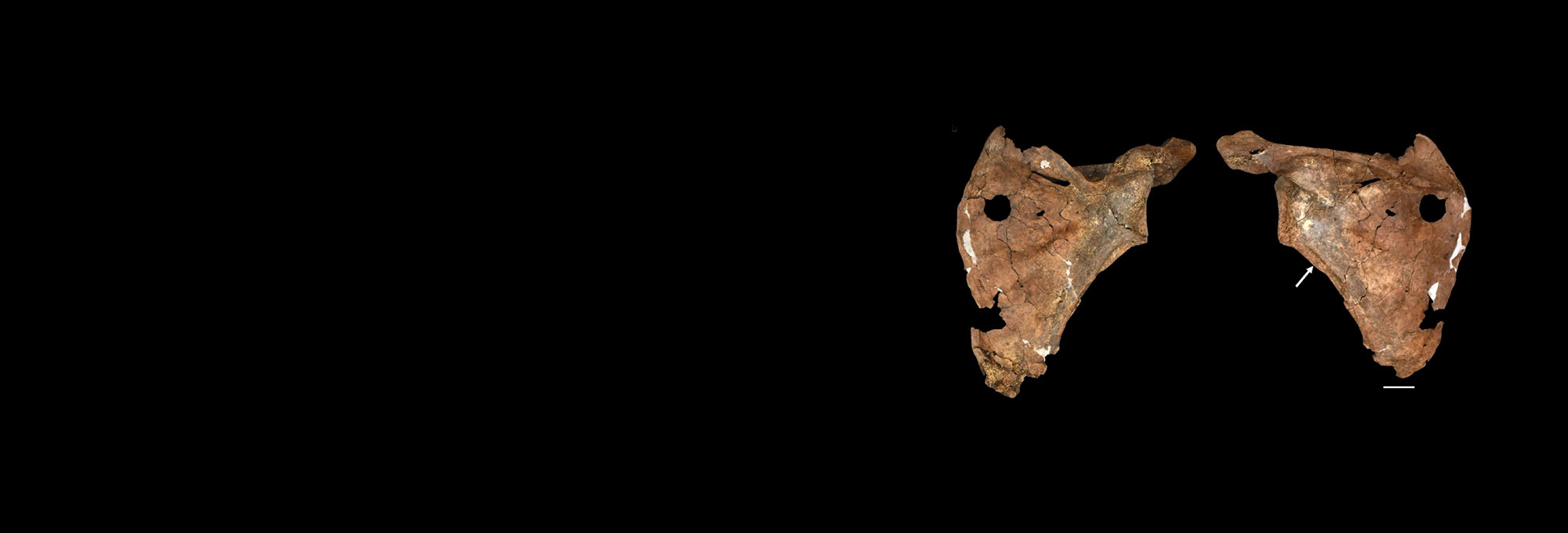
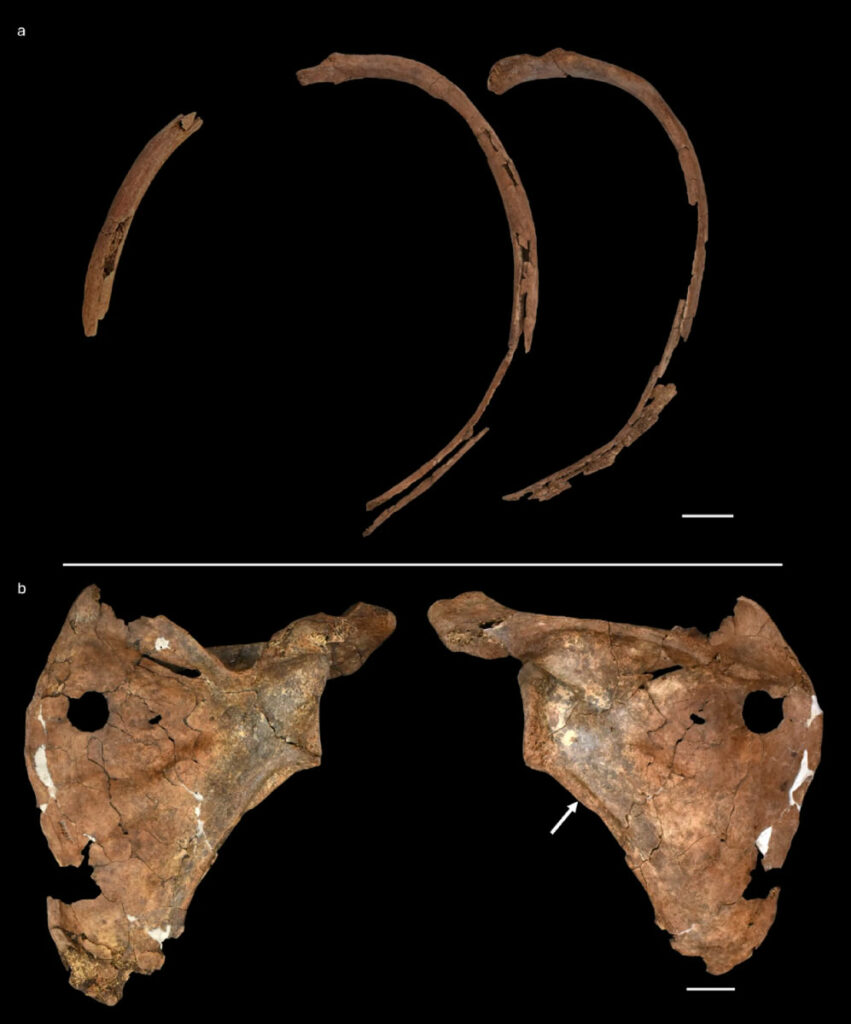
CAMBRIDGE, ENGLAND—Haaretz reports that Emma Pomeroy of the University of Cambridge and her colleagues examined the remains of Shanidar A, a Neanderthal of about 45 years of age who was buried in Iraqi Kurdistan’s Shanidar Cave some 75,000 years ago. The researchers suggest that the individual had been killed when a weapon, likely a sharpened stick, was forced into his chest from the front, passed through a lung, and punched a hole in his left shoulder blade. Similar holes have been identified in fossilized animal bones. About a year before his death, this individual had also suffered facial injuries, including a shattered front tooth. An earlier study determined that another individual known as Shanidar 3, who lived about 50,000 years ago, died after an injury to the ribs. Yet he also suffered from a degenerative disorder of the foot that would have required long-term care. “I think we have to see the same complexity in Neanderthals that we see in people today,” Pomeroy said. “Some are violent, some care,” she explained. “We have contrasting stereotypes about hunter-gatherers—one where they are at one with nature, the other that life was nasty, brutish, and short. But the story is more complex than that,” she concluded. Read the original scholarly article about this research in Scientific Reports. For more on Neanderthal remains from Shanidar Cave, go to “Z Marks the Spot.”