
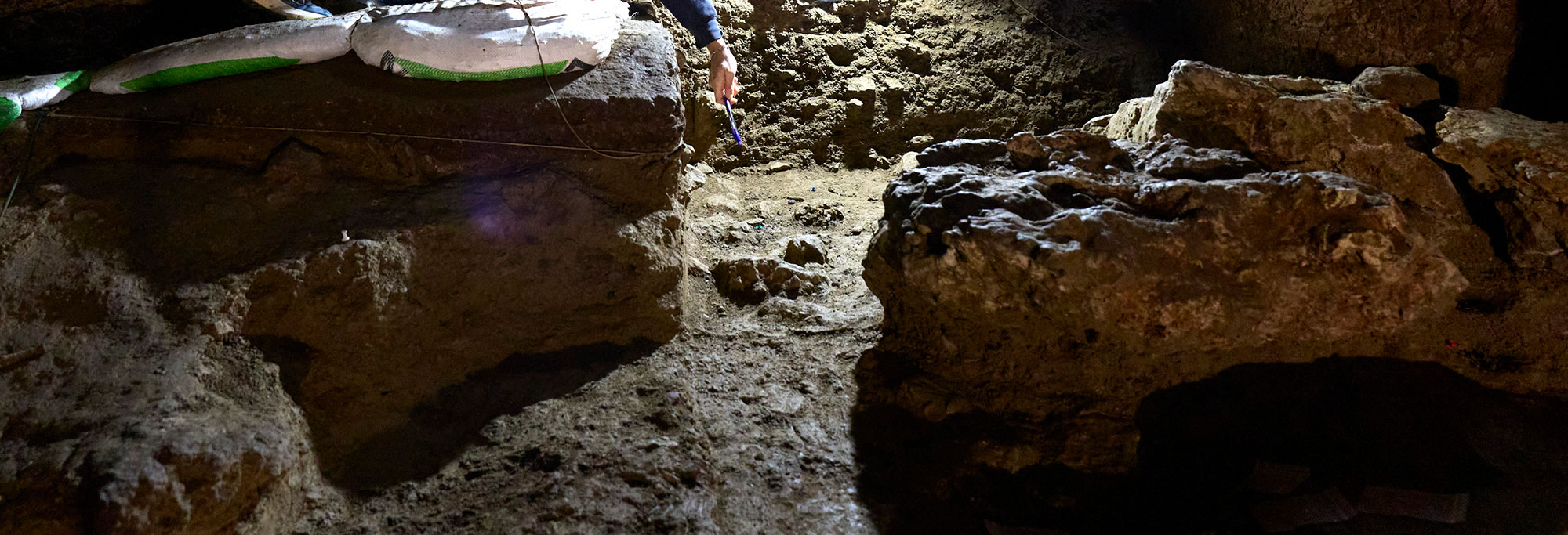
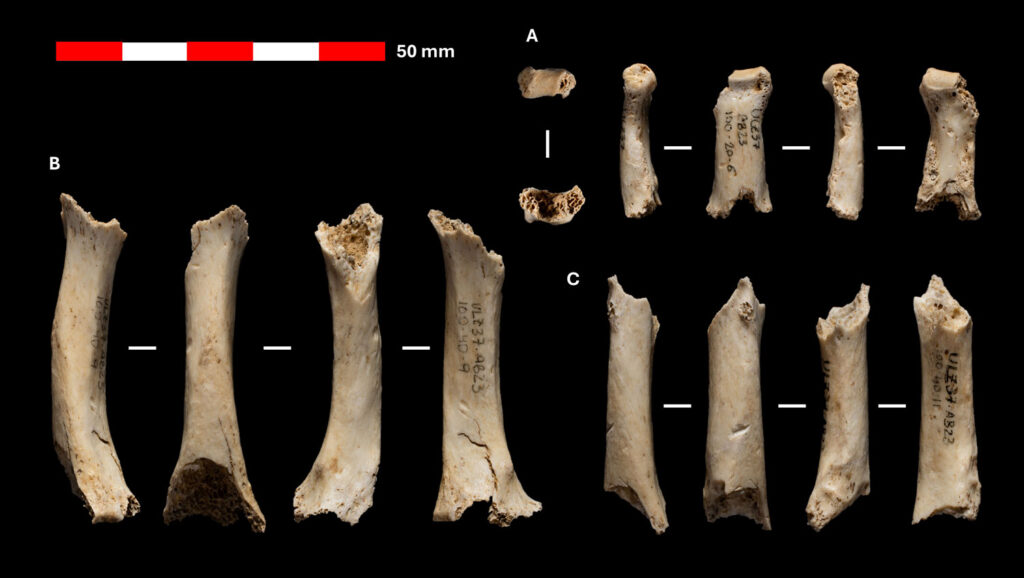
NAVARRE, SPAIN—Well-preserved Neanderthal hand bones containing collagen have been recovered from northern Spain’s Abauntz Cave, according to an IFL Science report. The bones have been radiocarbon dated to 46,000 years ago. “The cave’s location is important,” said Andión Arteaga of the University of Warsaw and the Catalan Institute of Human Paleoecology and Social Evolution, and Mikel Arlegi of the Musée de l’Homme. “Abauntz lies along a natural corridor connecting both sides of the Pyrenees. [This makes] it a particularly interesting site for investigating how these late Neanderthal populations moved across the region and how different groups may have interacted,” the researchers explained. Preliminary genetic analysis of a sample of the bones shows that they belonged to a male Neanderthal. Marks on the remains indicate that they may have been gnawed on by a small carnivore after death. Additional analysis of the Neanderthal genome is expected to provide more information about Europe’s last Neanderthal populations. “We know that different Neanderthal lineages may have coexisted in Europe,” the researchers said. “The remains from Abauntz could therefore help us better understand the diversity of Neanderthal populations during this late phase of their history.” For more on Neanderthals in Spain, go to “Neanderthal Hearing.”