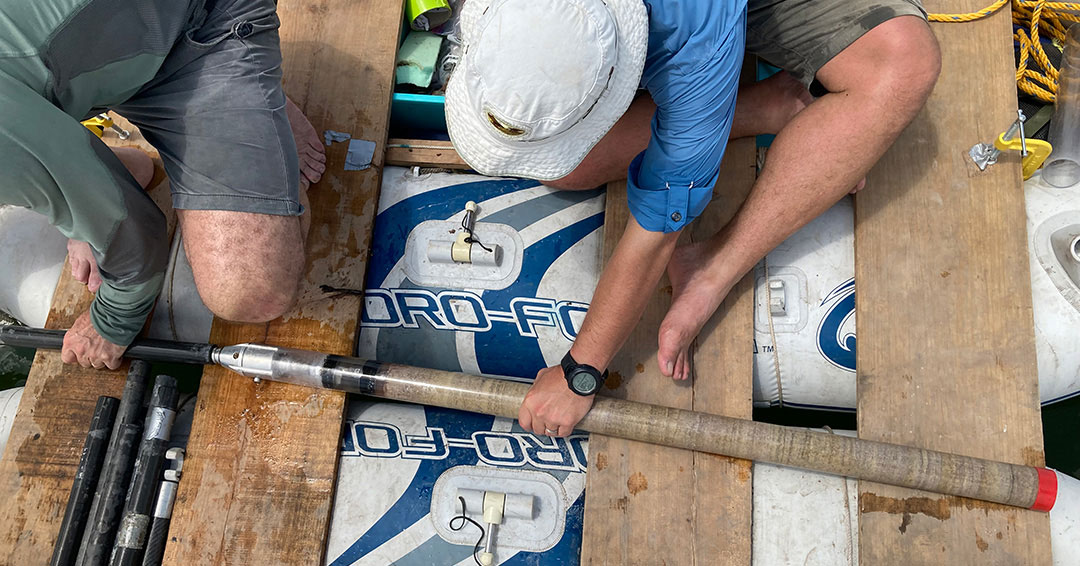
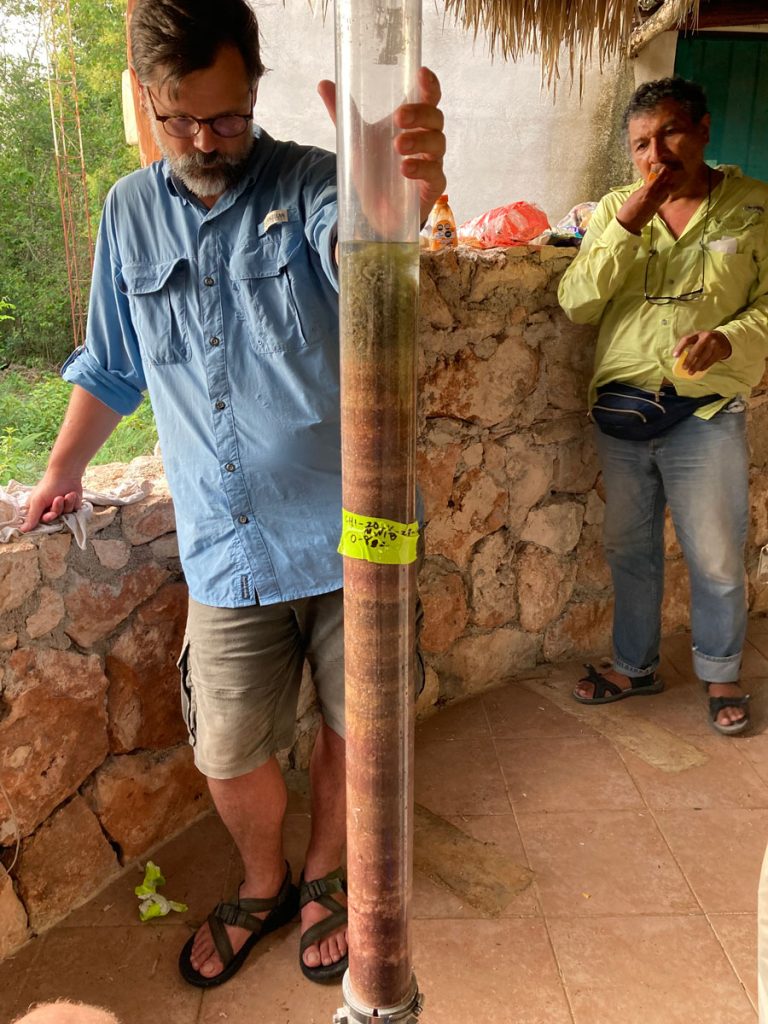
AUBURN, ALABAMA—Reuters reports that mercury contamination has been identified at additional Maya sites. The Maya used the red pigment cinnabar, which contains mercury, in ceremonies and funerary rites, and to paint murals and decorate temples. A previous study confirmed mercury contamination at the Maya site of Tikal in Guatemala. Now, Matt Waters of Auburn University and Savanna Wooten of the Jones Center at Ichauway have identified mercury in core samples taken from lake beds at the sites of Coba and Xcach, which are located on Mexico’s Yucatán Peninsula. The study found a mercury spike at Coba beginning in A.D. 250 that lasted about 150 years. At Xcach, a spike in mercury occurred between A.D. 125 and 200, with a second spike around 250. A third peak occurred between A.D. 535 and 820, around the end of the Maya Classic period and the collapse of some Maya cities. “Our study shows that modern toxicology and pollution regulations were far exceeded at the most toxic levels for centuries around Coba and Xcach,” Waters said. “Furthermore, we measured multiple biological markers in the sediments for bacteria, algae, cyanobacteria, shelled organisms, and insect midges, which all decreased or vanished in the lakes, meaning the mercury had made its way into multiple levels of the food chain,” he added. This suggests that residents of these sites may have been exposed to mercury by consuming contaminated water and fish. Read the original scholarly article about this research in Science Advances. To read about a very rare liquid form of mercury found beneath a pyramid in Teotihuacan, go to “Mythological Mercury Pool,” one of ARCHAEOLOGY’s Top 10 Discoveries of 2015.