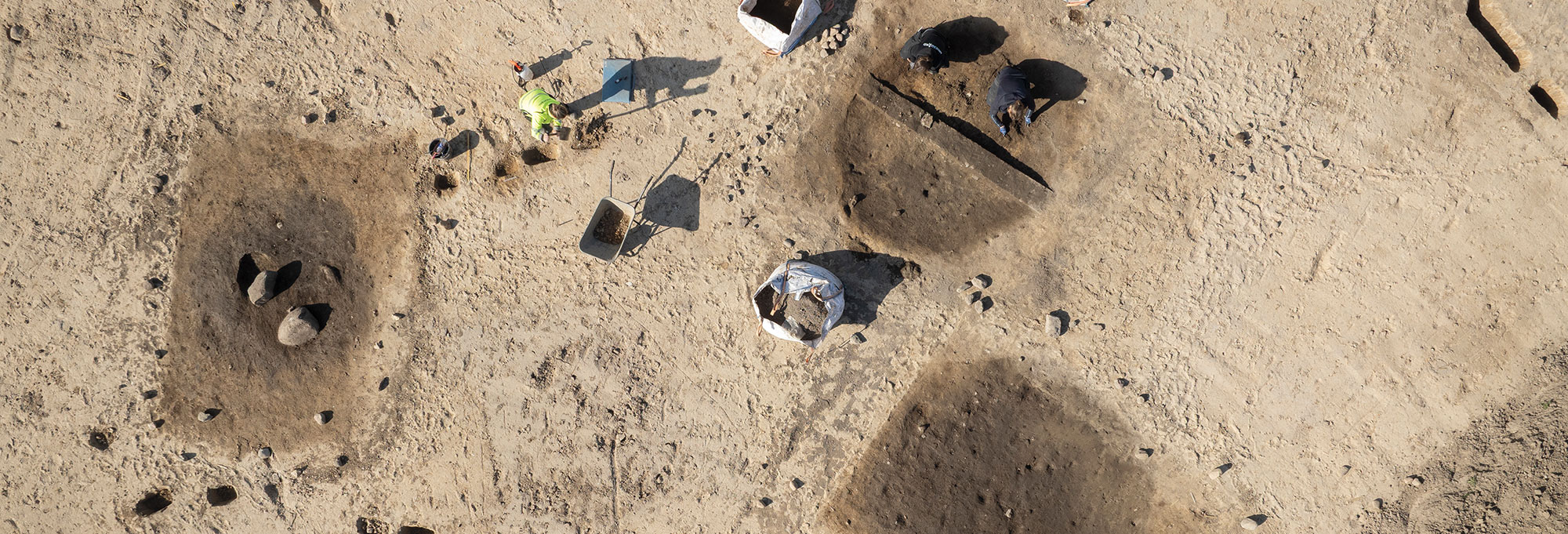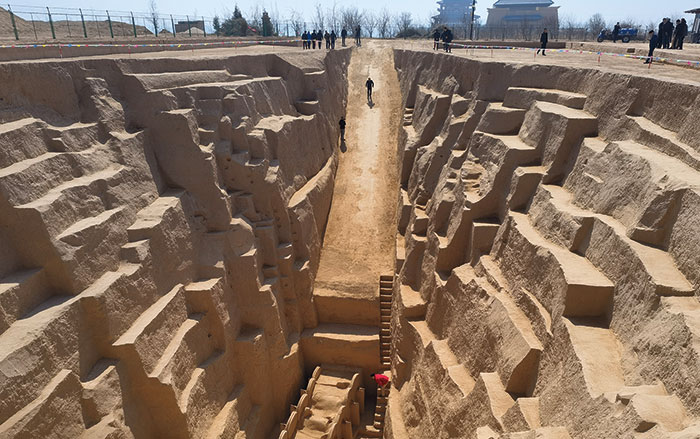

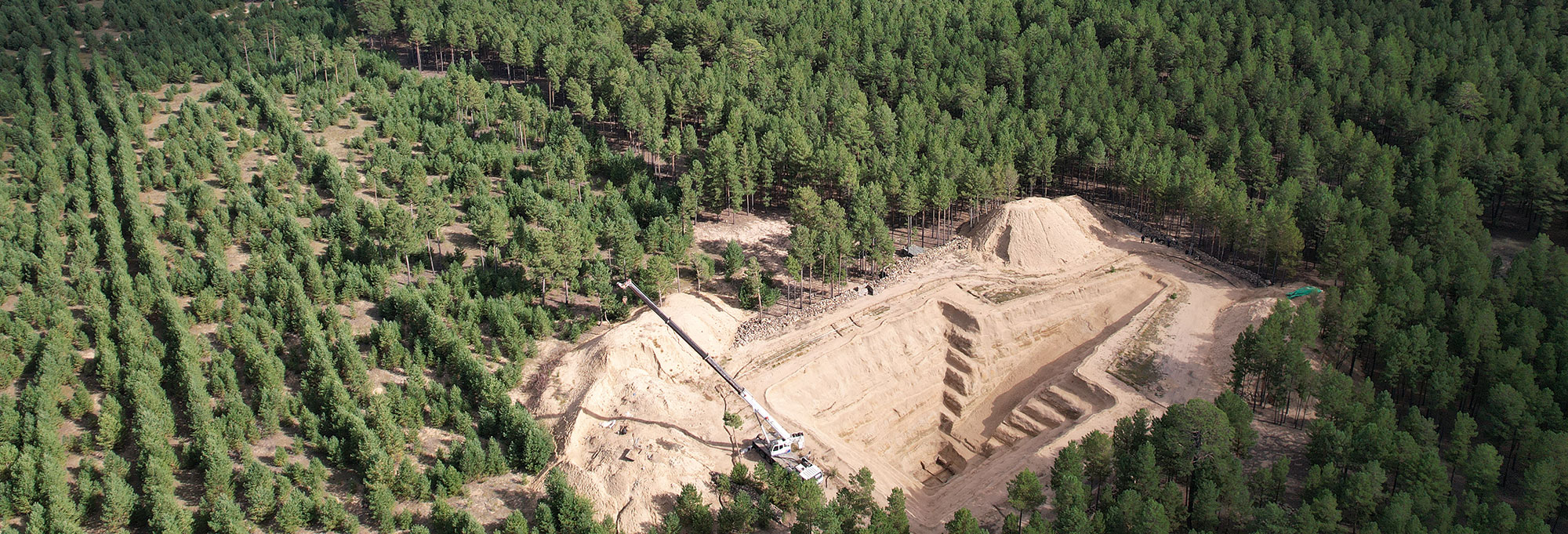
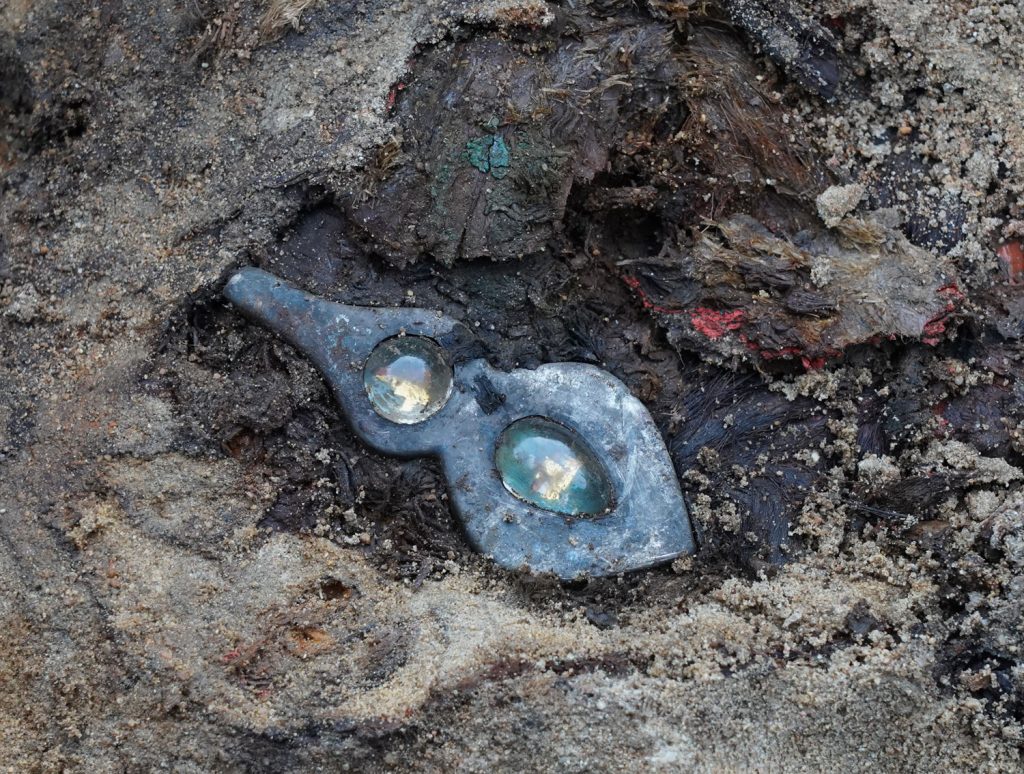
SEOUL, SOUTH KOREA—Artifacts discovered in a monumental tomb in the Duurlig Nars cemetery in eastern Mongolia suggest that the nomadic people of the Xiongnu Empire had trade contact with people from Rome and the Korean Peninsula, La Brújula Verde reports. Researchers from the National Museum of Korea, the Mongolian Academy of Sciences, and the National Museum of Mongolia found that the 240-foot-long tomb featured a small burial chamber inside two nested wooden structures. A lacquer-coated carriage was placed above the central burial. The tomb was then been covered with nine layers of stacked stones measuring more than 45 feet deep. A transparent glass vessel with a handle recovered from the tomb is thought to have originated in the Roman Empire. Chemical analysis of the glass could help scientists confirm where the vessel was made. Fifteen jade objects placed in the wooden coffin in the tomb resemble ceremonial disks often found in burials from China’s Han Dynasty, but have irregular shapes and detailed decorations. The differences between these jade objects and those unearthed in China could reflect how the people of Xiongnu adapted Chinese customs. A silver, gourd-shaped pendant with a piece of rock crystal set in its center, similar to those found in ancient tombs in what is now North Korea, would have been used to adorn a horse harness. A round gold ornament decorated with red and blue materials set beneath transparent crystal was found next to the silver ornament. It is said to be the first of its type recovered from a Xiongnu tomb. To read about two other lavish Xiongnu burials unearthed in north-central Mongolia, go to “Tomb of the Silver Dragons,” one of ARCHAEOLOGY’s Top 10 Discoveries of 2019.