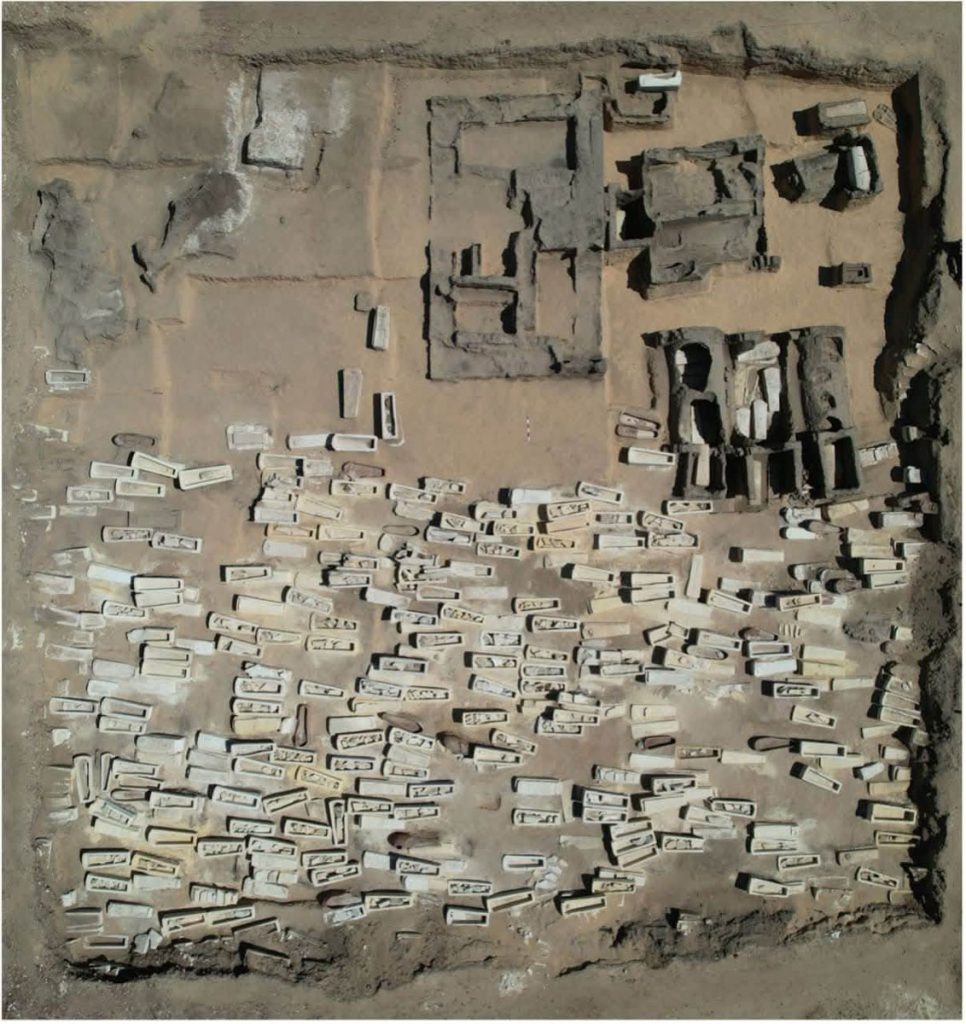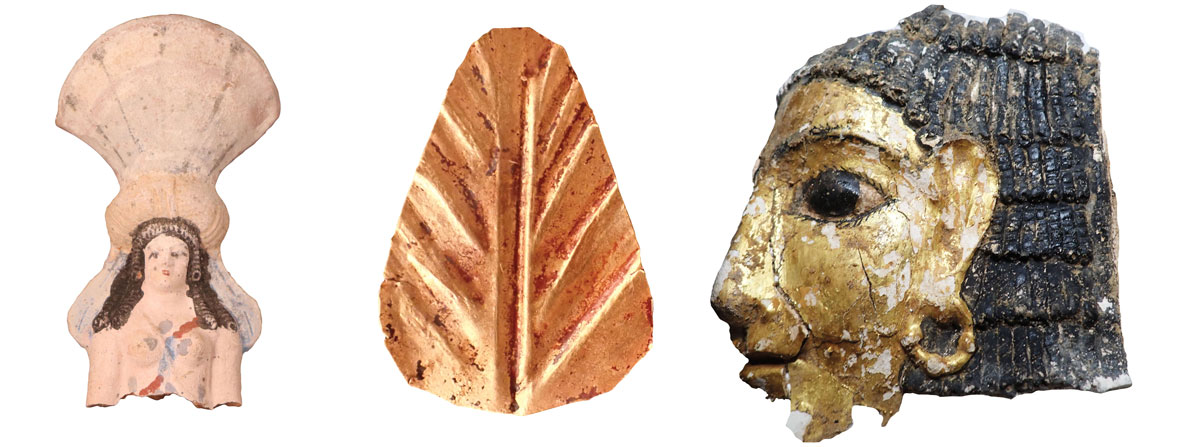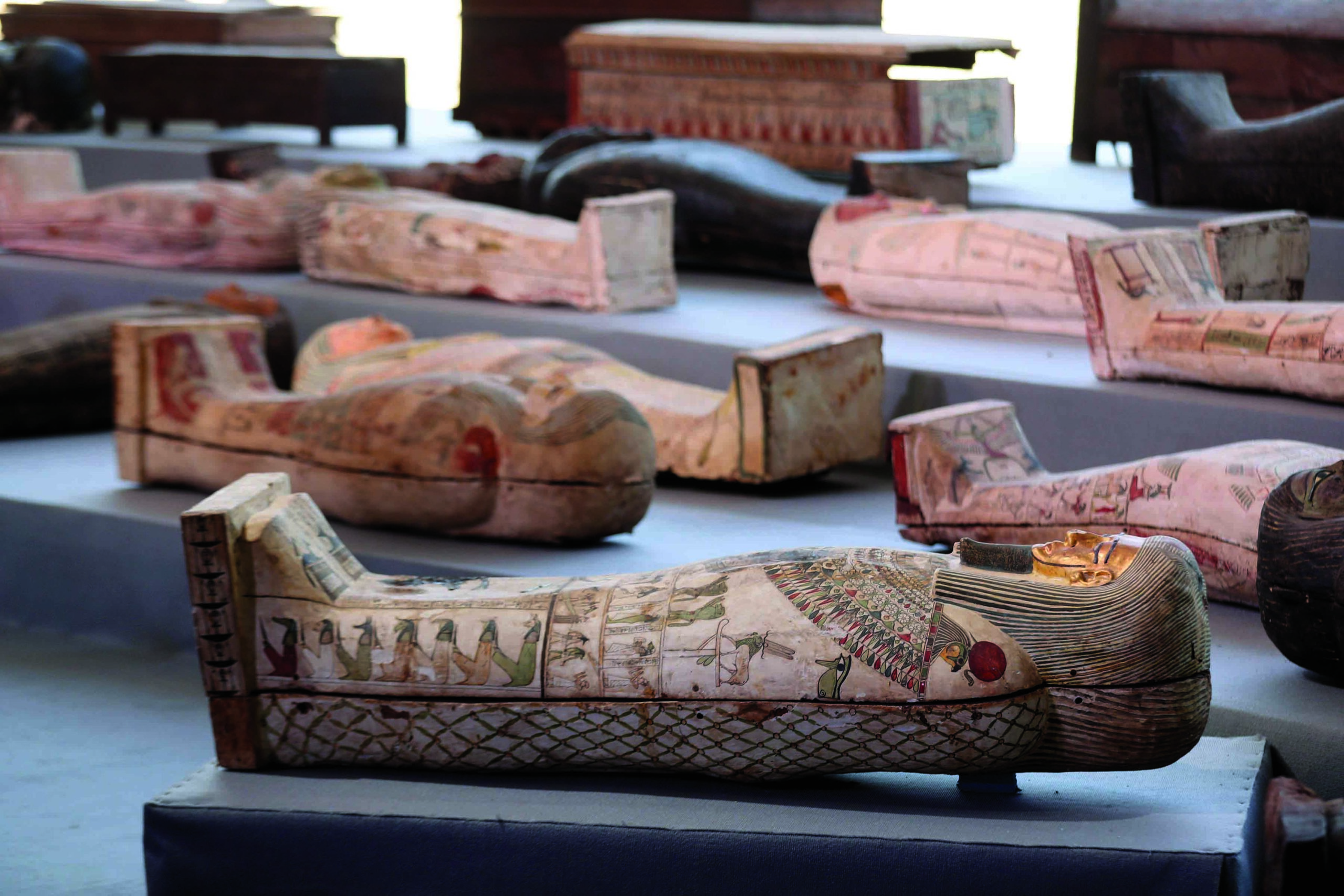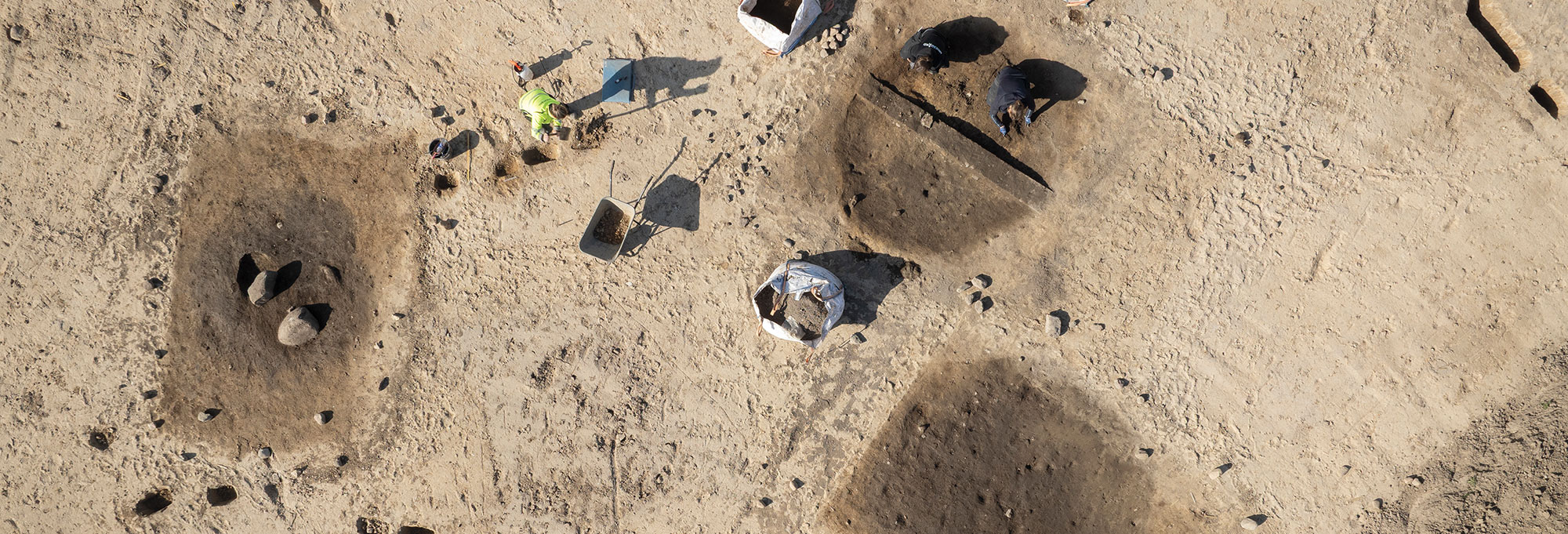

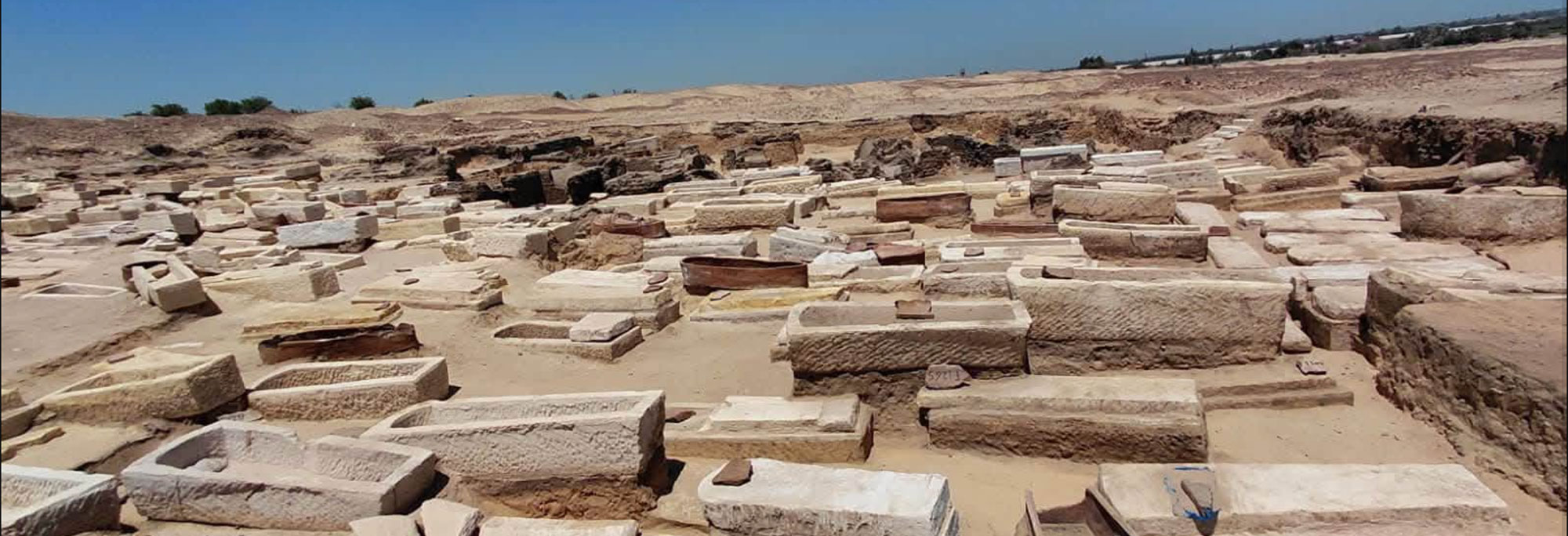
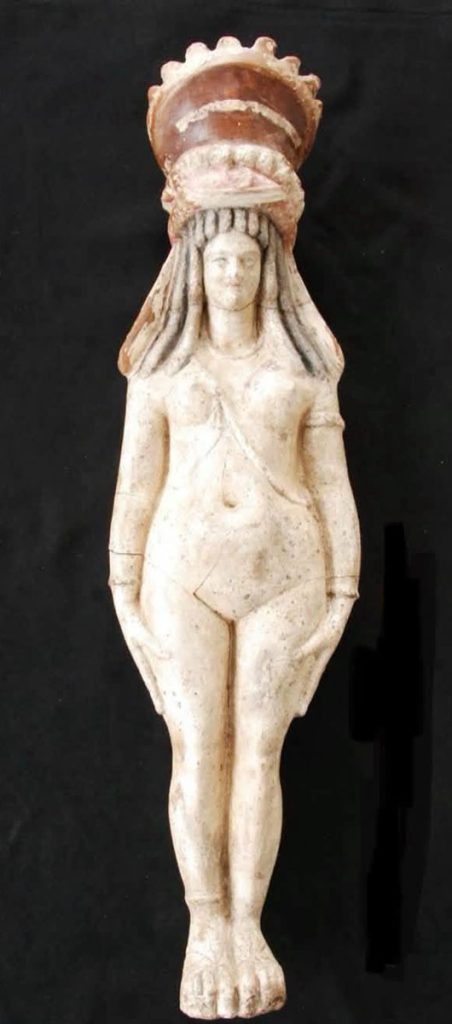
MENOUFIYA GOVERNORATE, EGYPT—Ahram Online reports that a cemetery has been discovered within the ancient city of Teranothis at northern Egypt’s Tell Atrib Abu Bello archaeological site. The city was located near an entrance to the Wadi El-Natrun, a source of the mineral natron that was used in the mummification process. The burials have been dated to the Late Period (712–332 B.C.) and the Ptolemaic era (304–30 B.C.), while the tombs range from stone, pottery, and wooden coffins to vaulted structures made of mudbrick. “The discovery is the first of its kind at the site in terms of the large number of burials and coffins found in an open burial courtyard,” said Hisham el-Leithy of Egypt’s Supreme Council of Antiquities. Many of the burials had been looted in antiquity, but examination of the coffins revealed traces of embalming materials and resins, as well as painted cartonnage and plaster. Gold tongue amulets; an earring; a gold necklace pendant; gold sheets; scarabs; faience ushabti figurines; small sphinx figurines; statues of the falcon god Horus; two falcon burials; and terracotta figurines of the goddess Isis were also recovered. To read about Isis statuettes and gold tongues unearthed in Ptolemaic burials in the ancient city of Oxyrhynchus, go to “Speaking in Golden Tongues.”