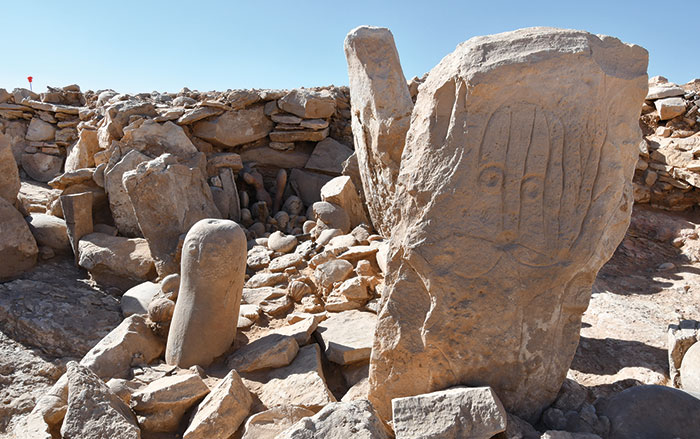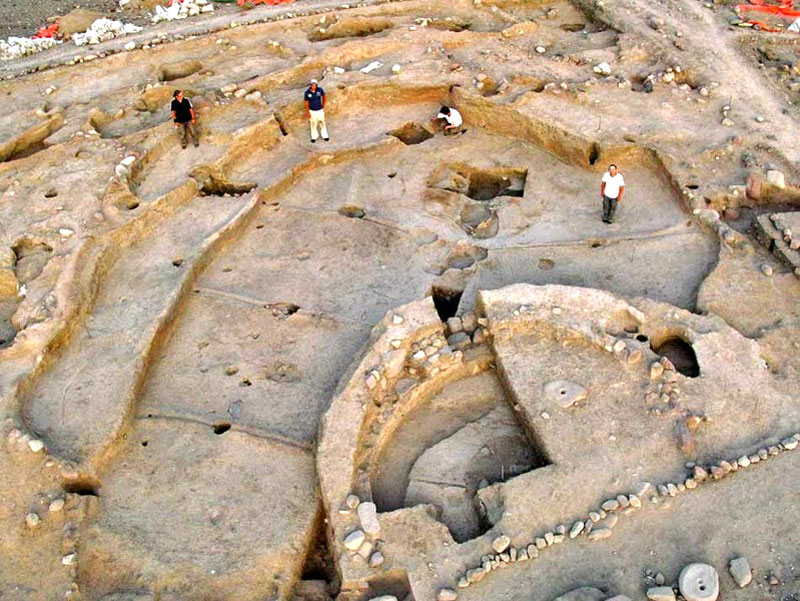
The discovery of the remains of a 4,500-square-foot structure at the south Jordanian site of Wadi Faynan is helping redefine the purpose of architecture at the point in history when roving bands of hunter-gatherers transitioned to sedentary societies. Rather than characterizing early Neolithic settlements dating to nearly 12,000 years ago as residential clusters tied to the advent of agriculture, structures such as the tower at Jericho on the West Bank and Göbekli Tepe in southern Turkey suggest an initial stage of settlement where people coalesced around communal activities and rituals.
Add to that list the oval-shaped building at Wadi Faynan, known simply as O75. It dates to 11,700 years ago and, according to Bill Finlayson, director of the Council for British Research in the Levant, who led its excavation, "it appears to have been built by digging a pit and then lining the walls with a very strong mud mixture." A floor was constructed from mud plaster and surrounded by two tiers of benches, three feet deep and one-and-a-half feet high, recalling an amphitheater. Postholes indicate that a roof covered a section of the structure.
Some finds, including mortars for grinding found in raised platforms at the structure's center, suggest people of the time might have used the building as a venue to collectively process plants, such as barley and pistachio. O75 may have additionally offered a space for communal gatherings. "It could have been a locale where small groups of people were aggregating on a periodic basis," says A. Nigel Goring-Morris, a prehistoric archaeologist at the Hebrew University of Jerusalem who was not involved in the excavation.