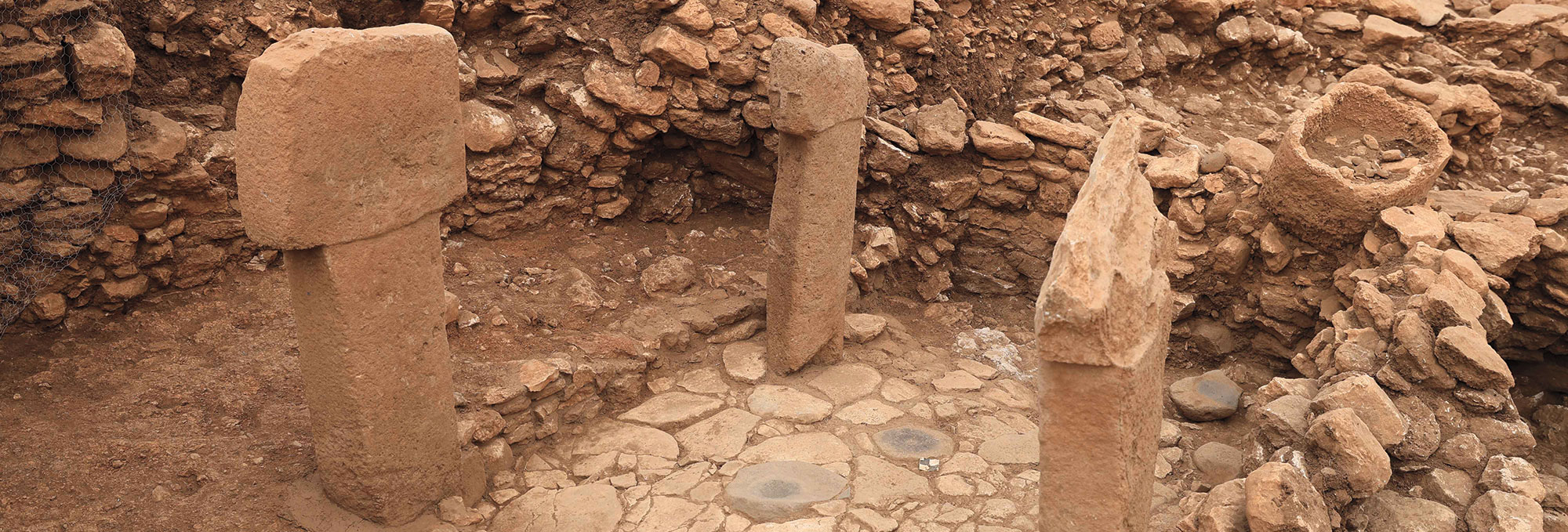
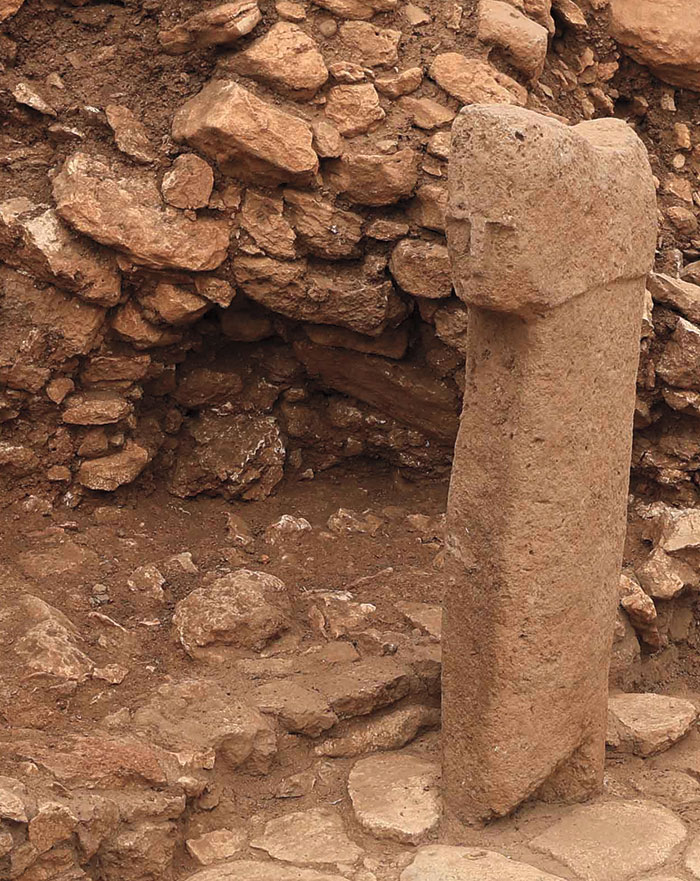
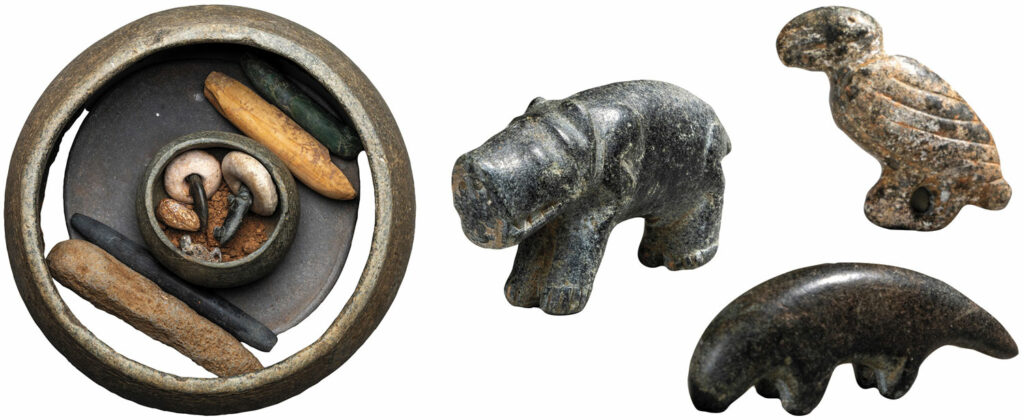
Since the first stone structures were unearthed at Karahantepe just six years ago, the site has continued to change the story of the people who lived in southeastern Anatolia in the Pre-Pottery Neolithic period (ca. 12,000 to 10,200 years ago). This year was no exception, thanks to a pair of unique discoveries. The first is a stone monument known as a T-pillar that includes a carved human face. The second is a collection of artifacts that archaeologist Necmi Karul of Istanbul University believes represents the world’s oldest three-dimensional narrative. Both finds provide entirely new insights into how the region’s Neolithic people envisioned themselves, as well as rich evidence of symbolic thought, which is scant in the archaeological record of this period.
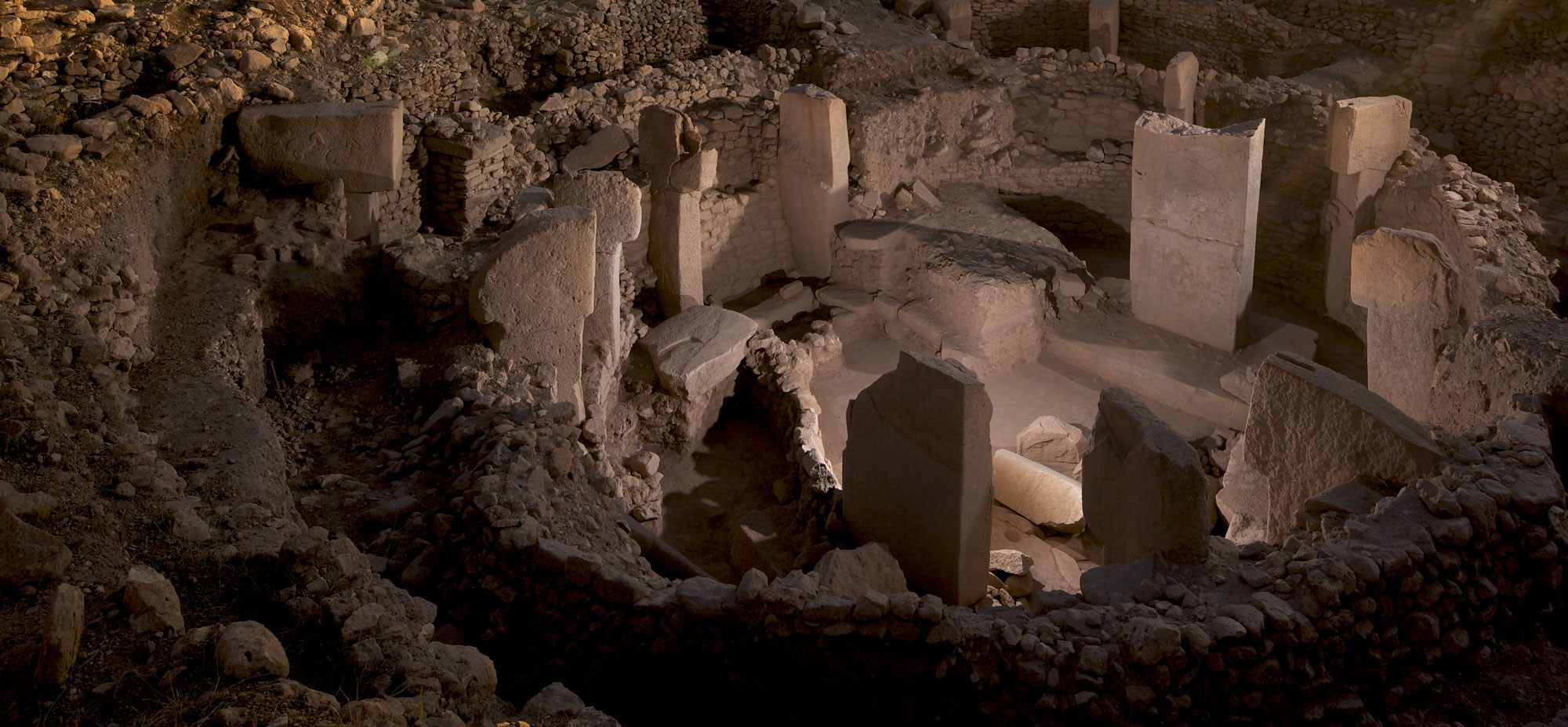
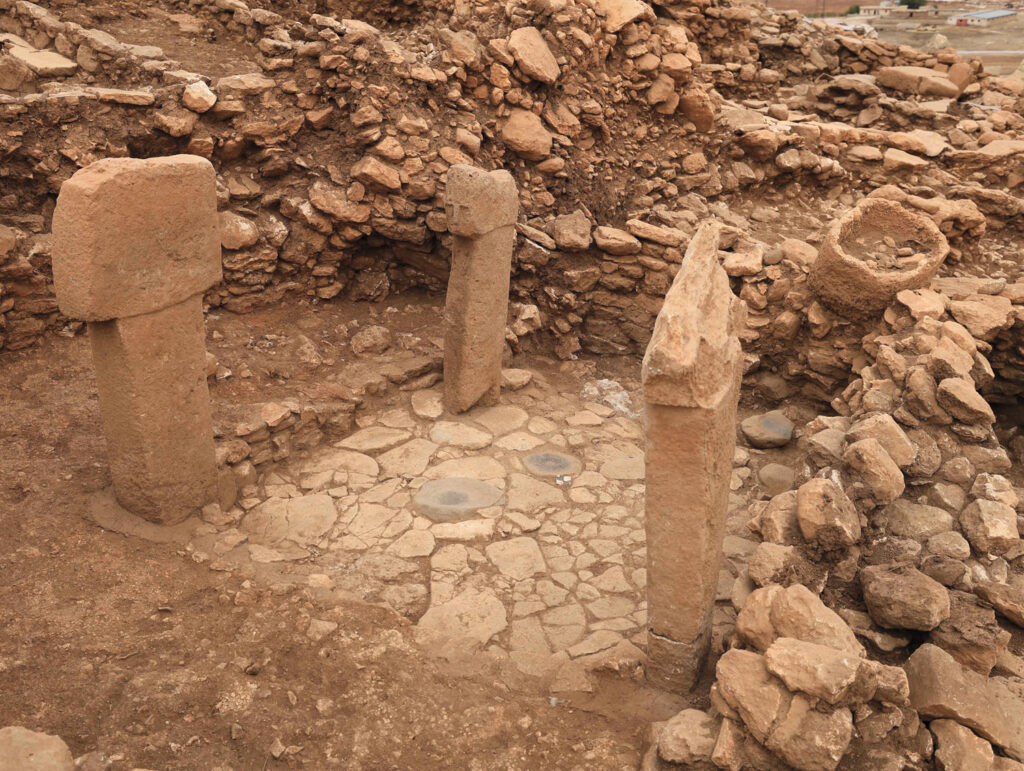
T-pillars have been unearthed at multiple sites in the region and have long been thought to represent human figures. Until now, however, none had been found with a three-dimensional face. The newly discovered 4.4-foot-tall pillar carved from bedrock dates to the ninth millennium b.c. and was found with three other T-pillars in a domestic space. “The discovery of a face at the top of the pillar supports the view that they symbolized humans,” says Karul.
In a deliberately buried and abandoned building elsewhere at the site, archaeologists unearthed a bottomless stone bowl inside which was a stone plate, stone batons, and a small bowl containing a set of stone figurines representing a wild boar, a vulture, and a fox. These animals, Karul says, played a leading role in the stories of Neolithic people. The head of each 1.3-inch-tall figurine was encircled by a limestone ring, and Karul believes they were put in the bowl in a symbolic sequence. “The fact that the figurines were placed side by side and that each of their heads was inserted into a separate stone ring can be interpreted as different animals sharing the same fate, or witnessing the same event,” he says. “Some structures were treated like mortal beings that were born, lived, and died, so finding this composition buried inside a building is likely related to the process of abandonment. What’s truly remarkable here is the success of Neolithic people in conveying their emotions and messages.”