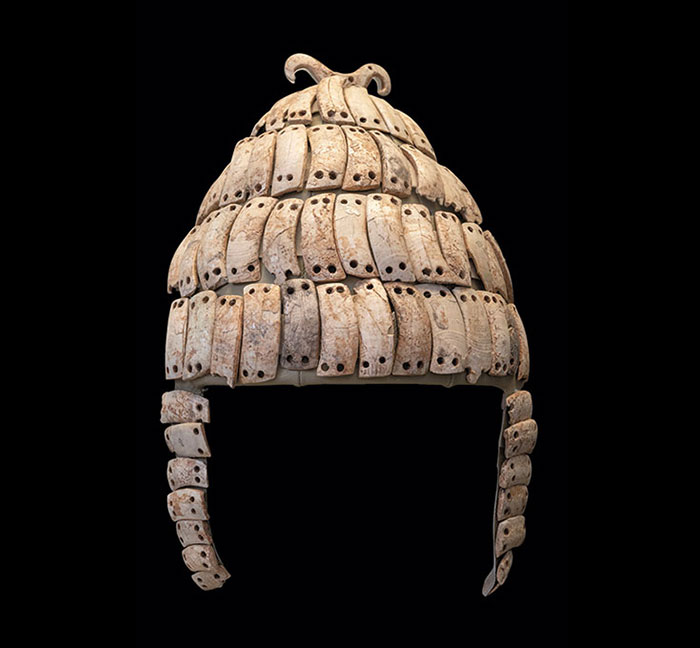
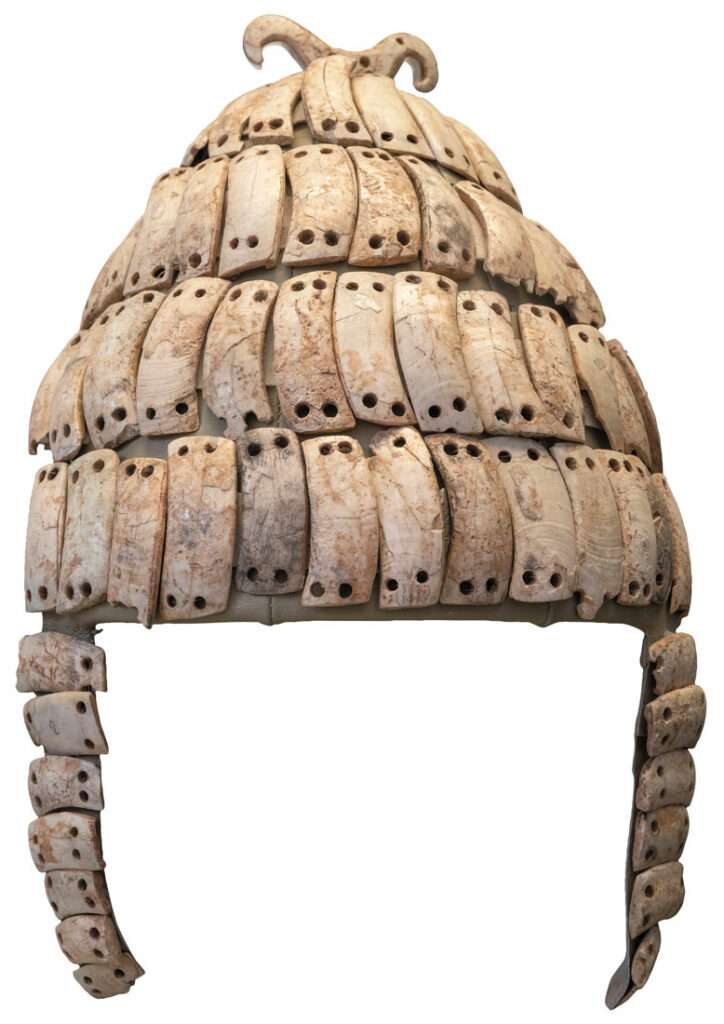
The heroes of the Iliad are consumed with honoring the fallen dead with proper burials. Indeed, the poem ends with the long-delayed burial of the Trojan hero Hector and describes in great detail the funeral games held to celebrate Achilles’ companion Patroclus. In 1981, archaeologists excavating the site of Lefkandi on the Greek island of Euboea unearthed the tenth-century b.c. tomb of an Iron Age prince that closely parallels the Iliad’s description of Patroclus’ burial mound. The discovery suggested that the funerary practices related by Homer inspired rites honoring Greek heroes who died at least 200 years after the earliest versions of the poem were performed. Recently, New York University archaeologist Antonis Kotsonas studied grave goods from another rich tomb dating to around 1100 b.c. that was excavated some 50 years ago in Knossos, on the island of Crete. He found that weapons and armor buried in the tomb closely resemble those of a Cretan hero named Meriones celebrated in the Iliad. The Knossos grave goods include a boar-tusk helmet of a type common in the Late Bronze Age that had gone out of fashion by the time of the burial. The man’s grave also contained arrowheads and what was likely a quiver. In the Iliad, Meriones is described as a skilled archer, a rarity among the Greek warriors at Troy, who preferred close combat with spears and swords. In book 10 of the epic, Odysseus conducts a nighttime raid across Trojan lines. Before the mission begins, Meriones gives his bow and quiver to Odysseus and places a boar-tusk helmet on the hero’s head, the only time such a helmet is mentioned in either epic.
Scholars have suggested that book 10, which describes a surreptitious raid instead of a heroic battle, is an oddity in the narrative, and might have originally been part of an earlier tale. “We know the Homeric poems were brought together from older stories from different parts of the Greek world to create these masterpieces,” says Kotsonas. He notes that a phrase Homer uses to describe Meriones—“peer of the man-slaying war god”—is linguistically antiquated compared with the language Homer typically uses. The hero’s name itself might be derived from the Bronze Age Near Eastern term maryannu, meaning elite charioteer, a word no longer in use by the Iron Age. Kotsonas suggests poems about a famed archer named Meriones may have circulated on Crete before the tales of the Iliad were first recited. “It’s possible this man’s kin orchestrated a funeral that promoted the association of the deceased with the poetic persona of Meriones,” he says. Or, perhaps, suggests Kotsonas, the man buried at Knossos was a renowned figure in his lifetime whose deeds would later find their way into the Iliad. “He might have been a prominent warrior who distinguished himself by his military prowess,” he says. “Perhaps he inspired stories that could have been performed at his funeral that immortalized this distinguished individual and that later filtered into the Homeric epic.”