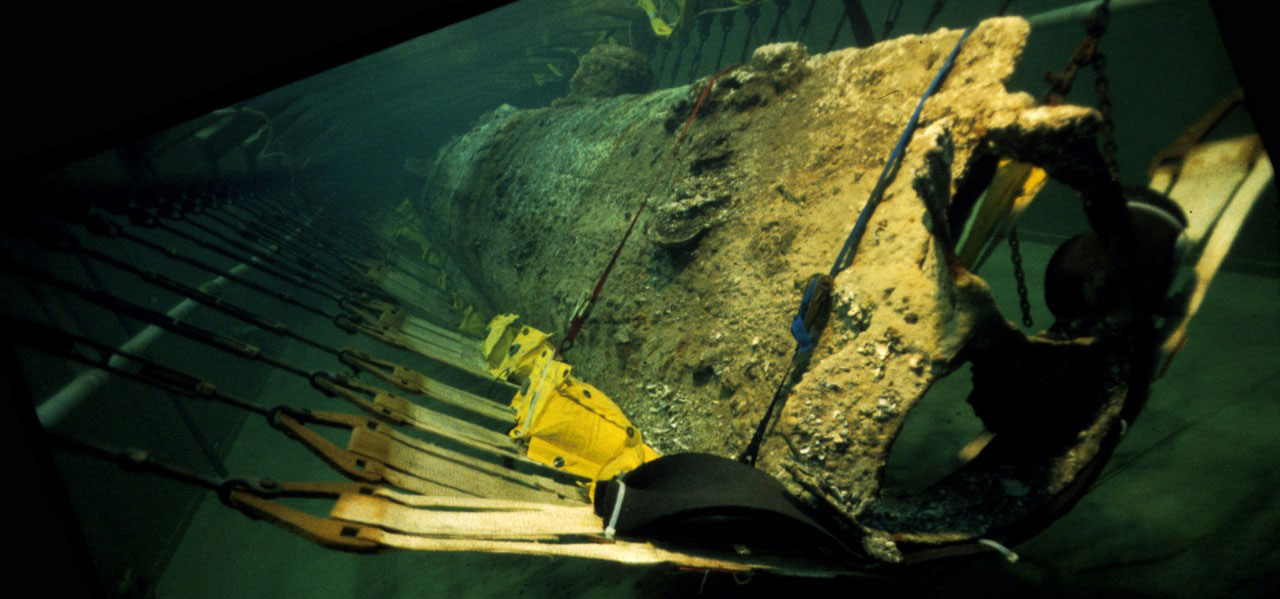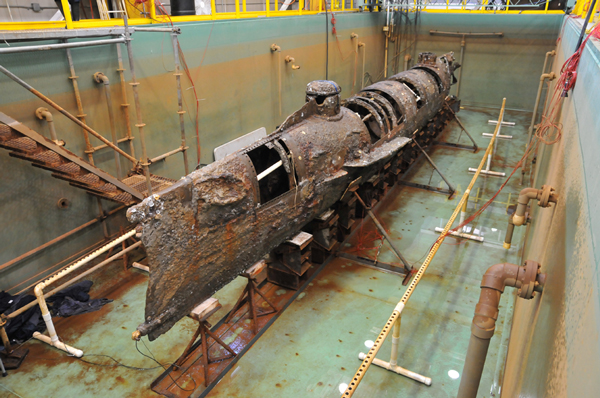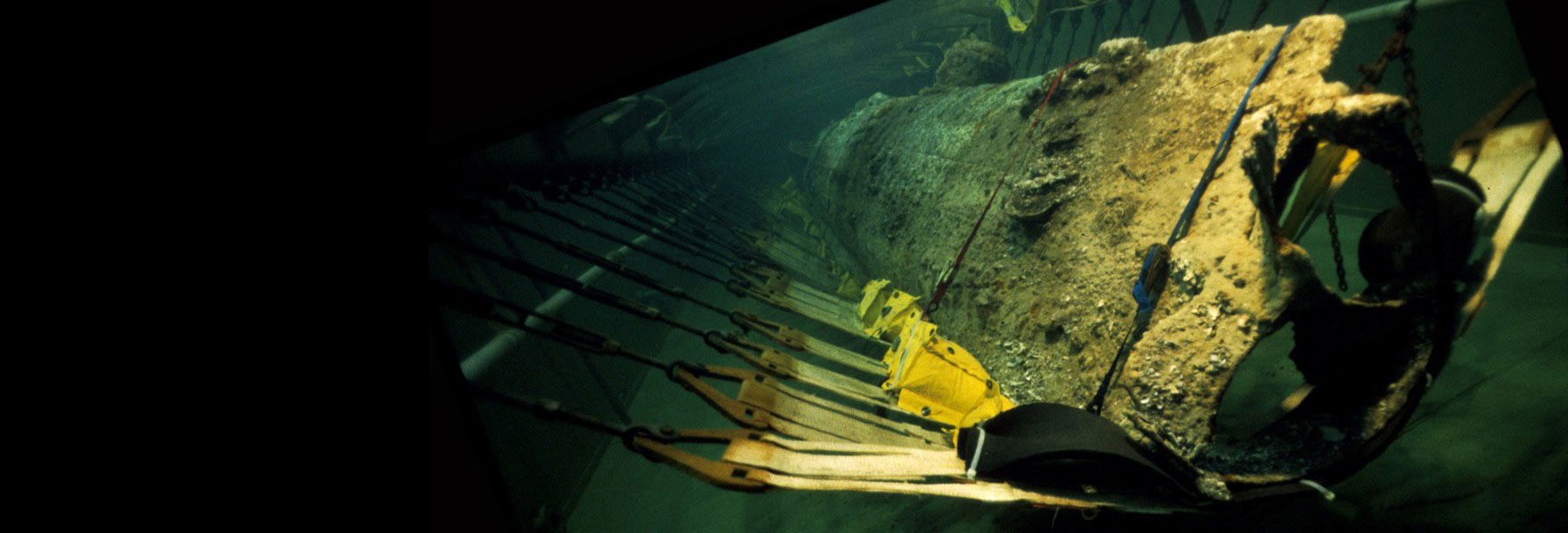
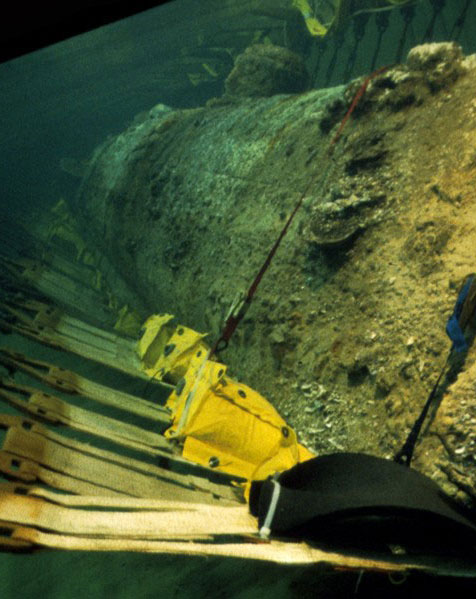
Two lost warships from the U.S. Civil War were the subjects of long-standing searches because of their historic status to Americans. Monitor was built in a 100-day rush to counter the threat of the Confederate ironclad Virginia (constructed from remnants of USS Merrimac). They met in combat off Hampton Roads, Virginia, in March 1862. The battle heralded the end of naval combat between wooden ships. With its low hull and rotating turret, Monitor was an engineering triumph, albeit one with flaws that became apparent nine months later, when it foundered off the coast of Cape Hatteras, North Carolina, taking 16 of its crew with it. The tiny “cheesebox on a raft” was not forgotten, however, and searches by dedicated volunteers finally rediscovered the vessel in 1973, 240 feet down. Hunley, one of several submarines built by each side during the Civil War, gained fame on February 17, 1864, when it attacked USS Housatonic in the harbor of Charleston, South Carolina, and became the first submarine to sink another vessel in combat. Decades of searches culminated in its rediscovery in 1995. Monitor, designated the first National Marine Sanctuary in the United States, was surveyed and test-excavated before a congressionally directed effort by the National Oceanic and Atmospheric Administration and the U.S. Navy raised its propeller, engine, and armored turret. Now housed in the USS Monitor Center at the Mariners’ Museum in Newport News, Virginia, Monitor’s machinery and turret are undergoing conservation and analysis, while the rest of the wreck remains 17 miles offshore in the sanctuary. Hunley, excavated and raised in 2000 after analysis by the National Park Service’s Submerged Resources Center and the South Carolina Institute of Archaeology and Anthropology, has also been the subject of intense study and conservation, at the Warren L. Lasch Conservation Center outside of Charleston. Undocumented aspects of each vessel’s construction, damage from battle and sinking, and life on board came to light. Hunley, for example, was shown to be an incredibly sophisticated craft, not a crude instrument of war fashioned from boiler iron, as some historians had suggested. Remains of crew members were found in both ships. Forensic work has revealed details about them and, in the case of the Hunley crew, suggests that these men may have died when they brought their craft to settle on the bottom, perhaps for a rest after the crew hand-cranked their sub into battle, only to succumb to foul air.