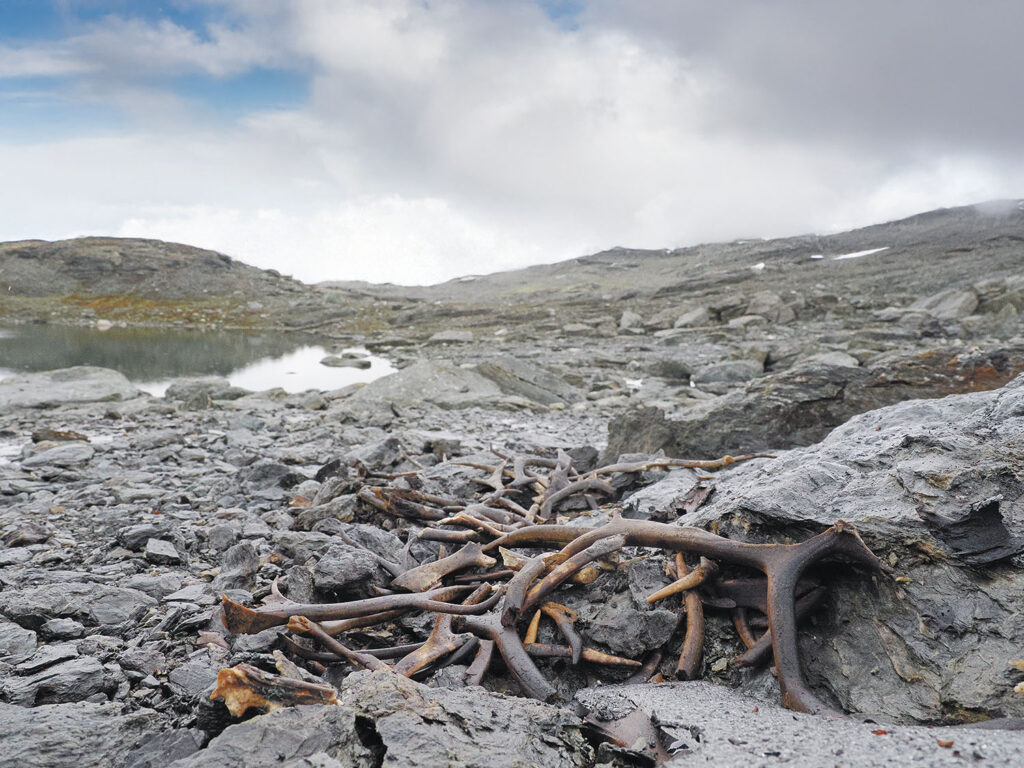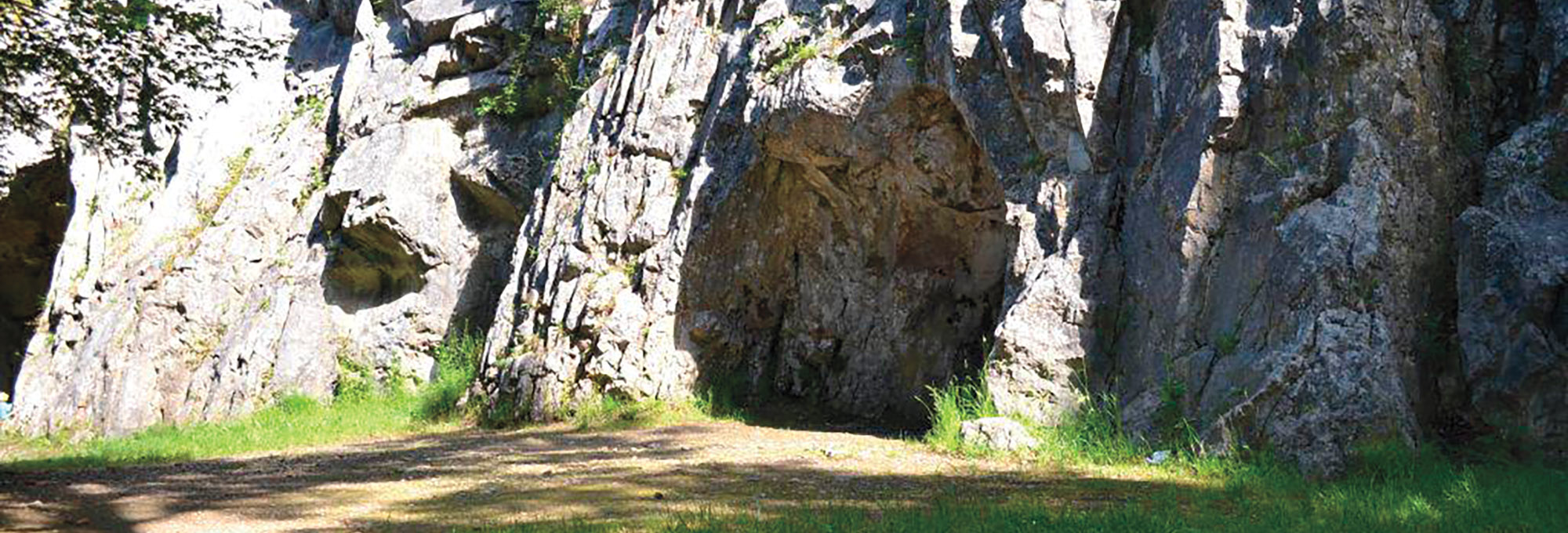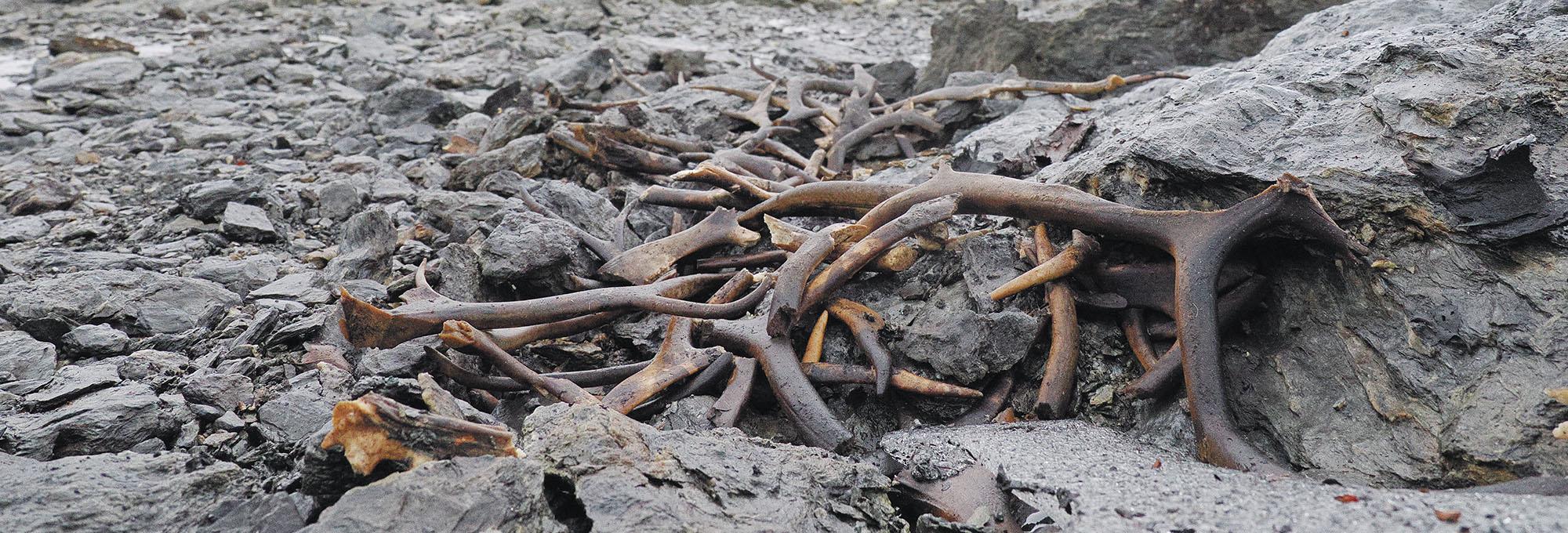
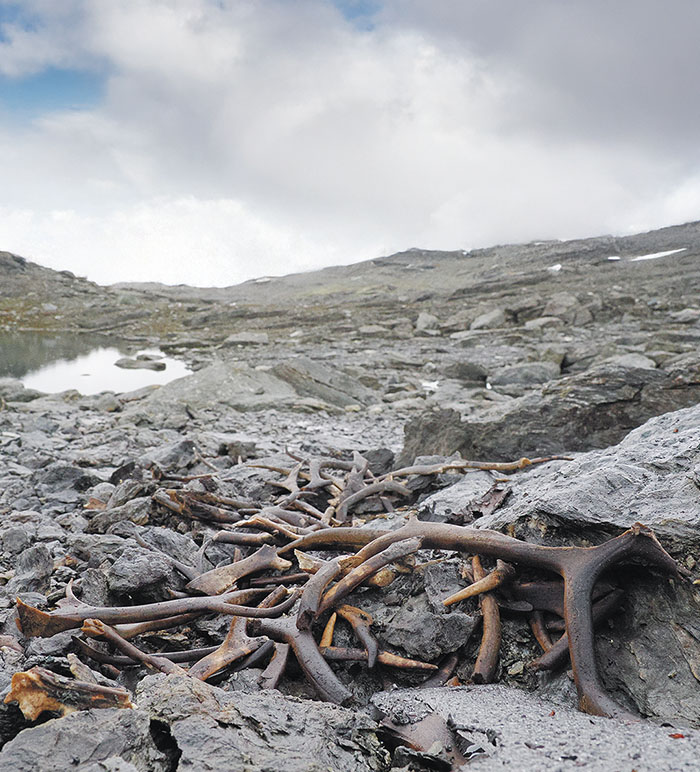

Melting ice has revealed a reindeer trapping system 4,600 feet above sea level in the mountains of western Norway’s Vestland County. The system was made of log fences arranged so that reindeer could be driven into a pen and easily slaughtered. Nearby, archaeologists discovered a cache of antlers from hundreds of reindeer that had been roughly chopped off. According to archaeologist Leif Inge Åstveit of the University Museum of Bergen, hunters likely kept the antlers of bulls while discarding those of calves and cows.
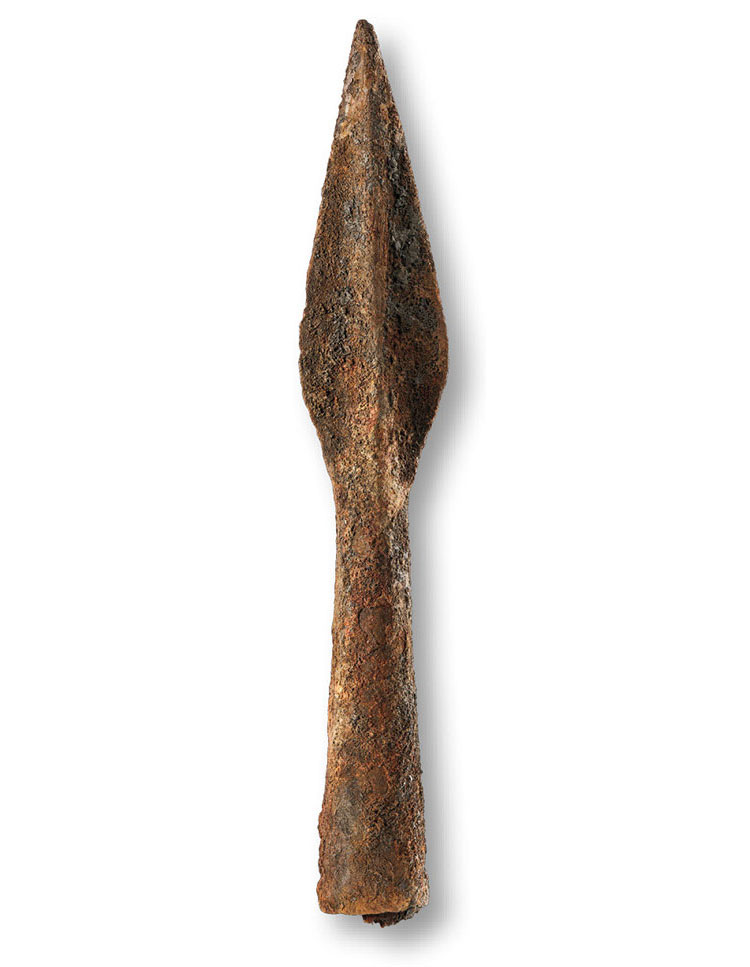
Iron spearheads as well as wooden bows and arrows found at the site may have been used to kill trapped reindeer. To researchers’ surprise, an intricately carved oar was unearthed amid the log fencing. Åstveit notes that the implement is made of pine, a very hard wood, and may have been used to dig holes to construct the trap. “You wouldn’t imagine that one of Europe’s best-preserved boat components from this period is a nicely decorated oar found at a trapping facility 4,600 feet above sea level,” he says.
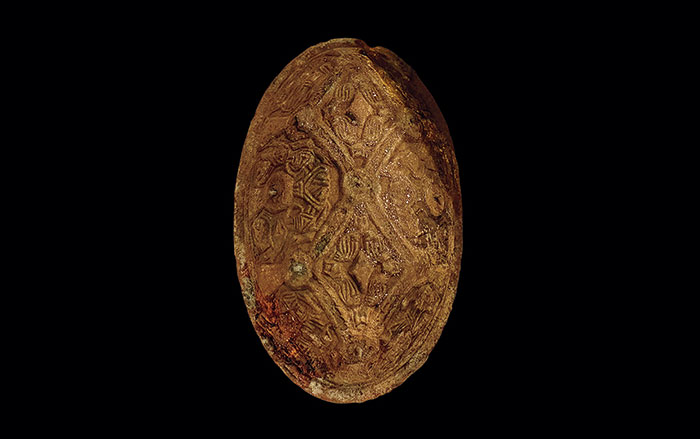
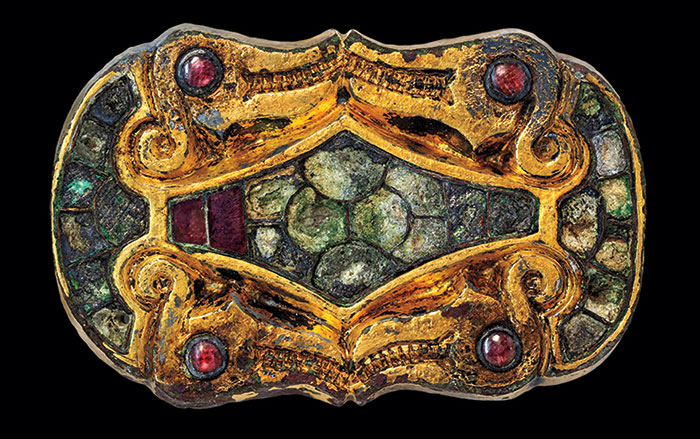
Based on radiocarbon dating of an antler, the oar, and two samples of wood fencing, the trapping system was likely built around a.d. 500. At the time, the tree line was 1,300 feet down the mountain, so the project would have required lugging heavy logs up steep slopes. Åstveit believes antlers and fur collected from reindeer were valuable commodities used to trade for coveted goods such as Roman glass and to make ornaments such as an ax-shaped antler brooch found at the site. With the onset of a period of extreme cold later in the sixth century a.d., the trapping system was likely made inaccessible by ice—until it was exposed by recent warming.