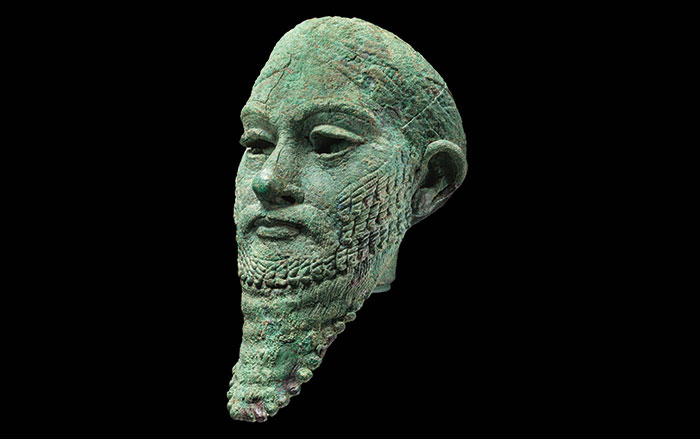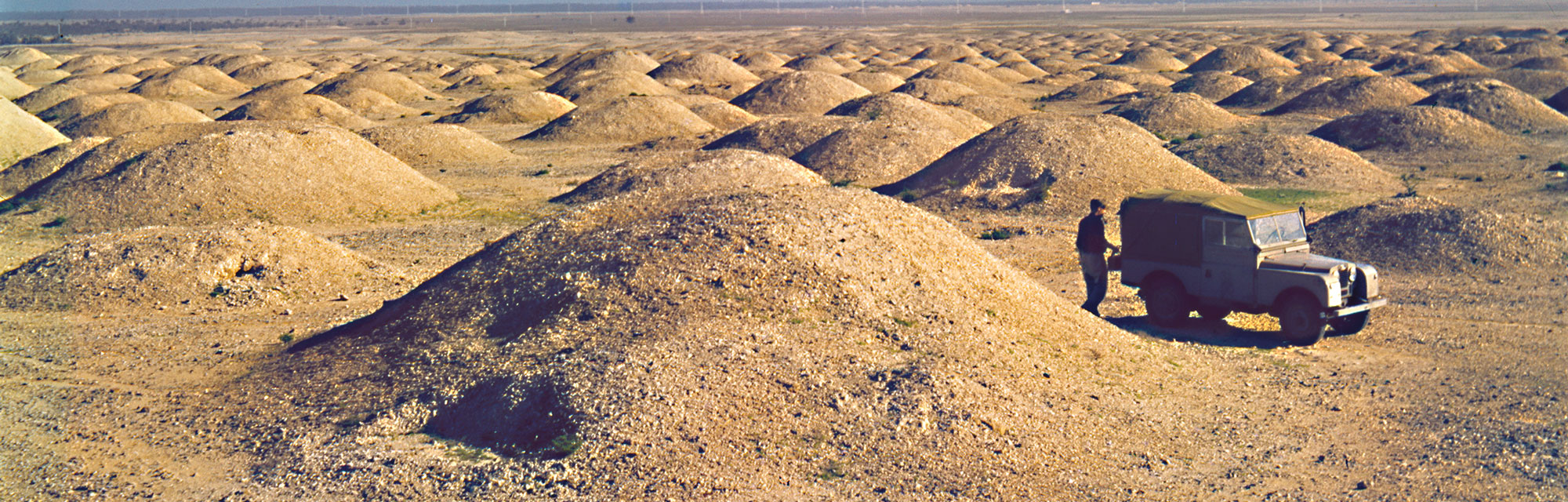
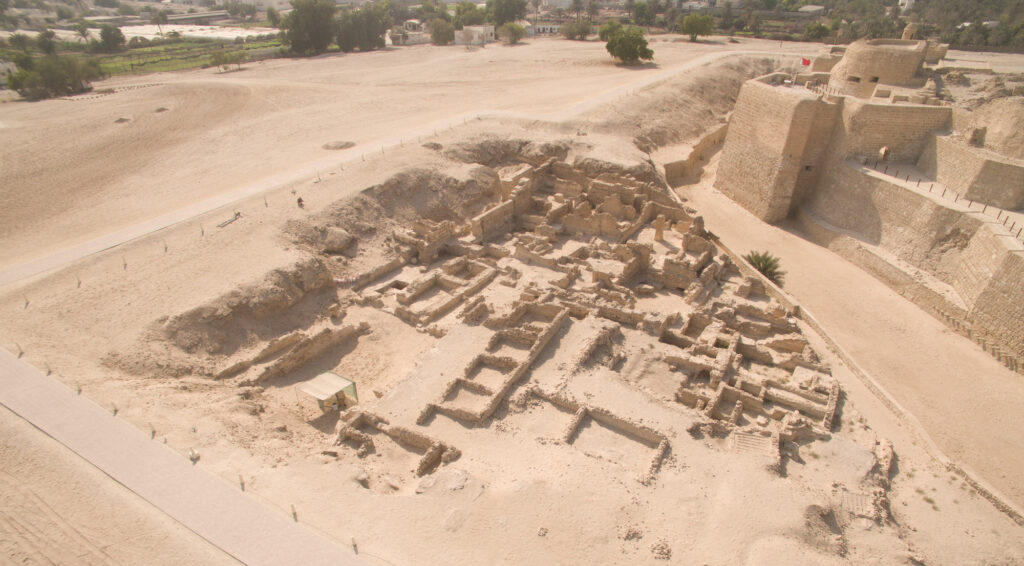
Some of the earliest texts from Mesopotamia describe a paradise called Dilmun. These accounts, written in the late fourth millennium b.c., tell of a place far off in the middle of the sea where fresh water flows from the ground, where people live free of sickness and threats from wild animals, and never grow old. The mythical hero Gilgamesh was said to have traveled to Dilmun as part of his quest for eternal life and to have met a survivor of the great flood who had been granted immortality by the gods. From early on, Dilmun was also associated with sources of copper, a material coveted by the Mesopotamians to make bronze for their tools and artworks. By the mid-third millennium b.c., it’s clear from Mesopotamian texts that this version of Dilmun, a society of merchants who purveyed valuable goods, actually existed. In a triumphant inscription, the world’s first emperor, Sargon (reigned ca. 2340–2285 b.c.), founder of the Akkadian Empire, boasts that he has forged trade relations with Dilmun as well as two other far-off lands, Magan and Meluhha, and made their ships dock at Agade, his capital city, in present-day northern Iraq. Over the next few centuries, Dilmun would assume an increasingly important role in trade with Mesopotamia.