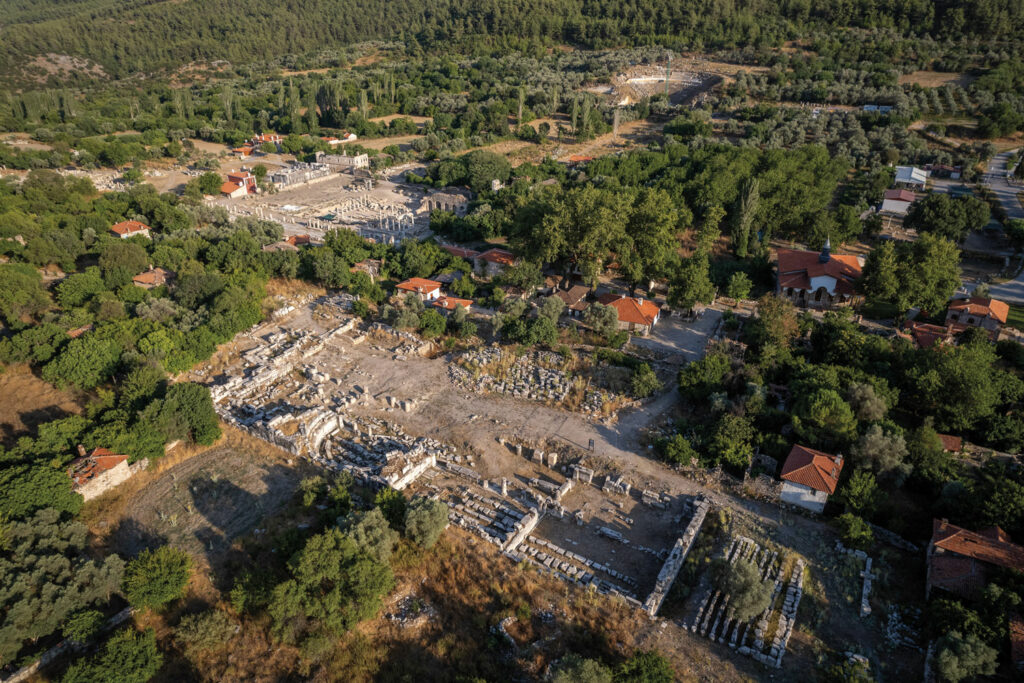
As early as the second century b.c., residents of the city of Stratonicea in western Anatolia honored their patron goddess Hecate, a deity of magic and transitions, with the annual Festival of the Key. This celebration, which was unique to Stratonicea, began with a six-mile-long procession in which a key was carried to the city from a temple dedicated to Hecate in the neighboring town of Lagina. This is the only known temple devoted solely to the goddess. The procession then returned to Lagina through pine forests and past spring-fed reservoirs. Afterward, onlookers from Stratonicea and nearby villages streamed through a monumental arched gateway into the sanctuary for a day of music, prayers, and sacrifices of cattle or sheep on a marble altar in front of the temple. Spectators sat on steps to watch the festivities and partake in an abundant feast. Small groups of worshippers were admitted to the temple’s interior to place bunches of grapes or libations of wine in a subterranean pit as an offering to Hecate. “Her priesthood is one of the most important in the city,” says art historian Amanda Herring of Loyola Marymount University. “The richest, most elite families are part of her cult, and her rituals are part of their calendar.”