One of WWII's most infamous legacies is that it is the only war to have involved nuclear weapons. At the time, the U.S. had only four reactors capable of reprocessing spent nuclear fuel to extract weapons-grade plutonium. Three of them were at a site in Hanford, Washington, that supplied plutonium for the first nuclear weapon test, called Trinity, in July 1945, and for the bomb dropped on Nagasaki the next month. Nuclear weapon stockpiling continued at Hanford until after the Cold War ended in the late 1980s/early 1990s—by that point the town was home to decades worth of buried nuclear waste. Since then, environmental cleanup has been the primary activity at Hanford.
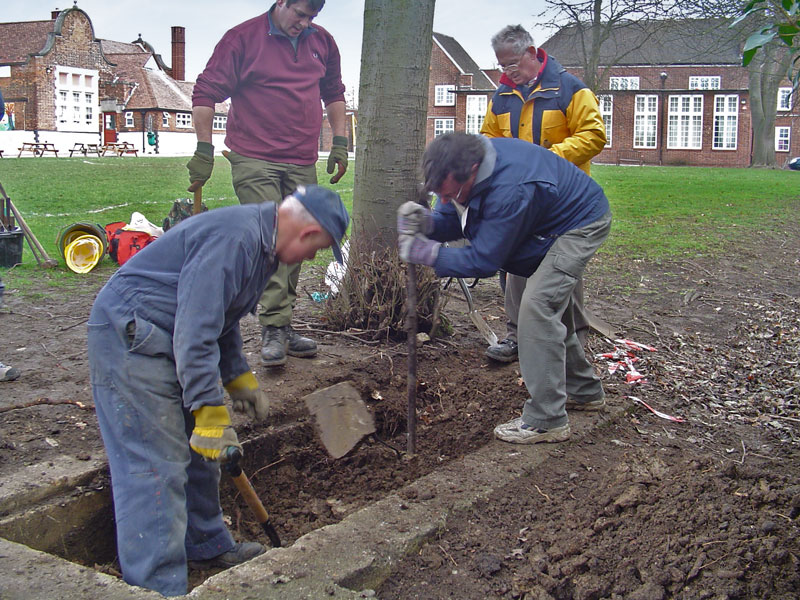
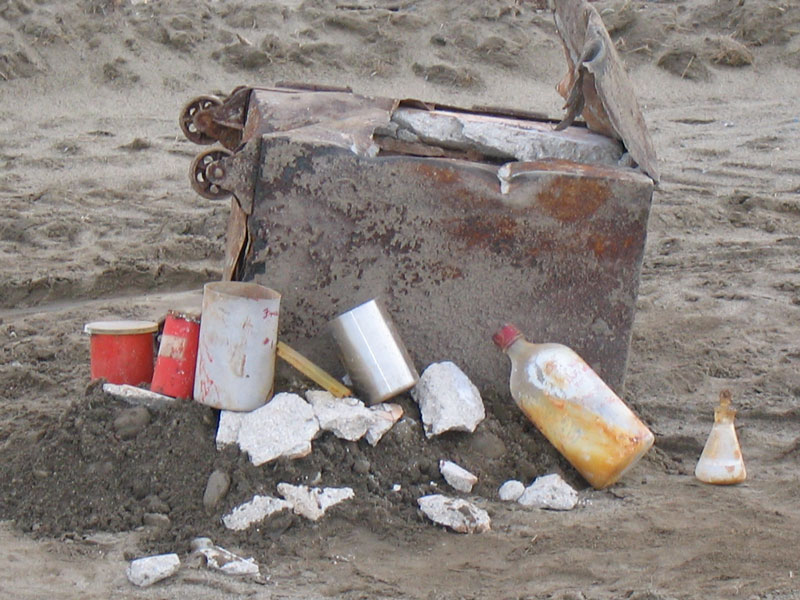
In 2004, cleanup crews found a rusted safe in a trench. In it was a one-gallon glass bottle containing a slurry that included a few milligrams of plutonium. It would turn out that the contents of the bottle found at Hanford included the second oldest sample of man-made plutonium. (The oldest was made at the University of California, Berkeley, in 1940.)
Markings on the bottle indicated that it had gone through a separation process that had not been used after 1955. On-site analysis of the radioactive material also hinted that the plutonium was produced during Hanford's early years. Due to the possibility of historical significance, a sample was sent to the Pacific Northwest National Laboratory for analysis by Jon Schwantes.
Over time, plutonium decays into the uranium it was made from. By examining the ratio of plutonium to uranium in the mixture—part of a process he calls "nuclear archaeology"—Schwantes was able to conclude the sample was roughly 62 years old. Interestingly, however, study of those same ratios pointed to the sample coming from a reactor that burned far less fuel than the three reactors at Hanford in the early 1940s.
By following a document trail, Schwantes was able to determine that the plutonium was part of a trial run for a prototype Hanford reactor. The test, held on December 9, 1944, was to ensure the reactor could separate weapons-grade plutonium from spent nuclear waste sent over from Oak Ridge National Laboratory in Tennessee.
"The purpose for Oak Ridge to send Hanford the slugs from their reactor was not to add to the weapons stockpile, which, at the time, was zero for plutonium," explains Schwantes, adding that the bomb dropped on Hiroshima was uranium-based. "It was to test the new reprocessing facility."