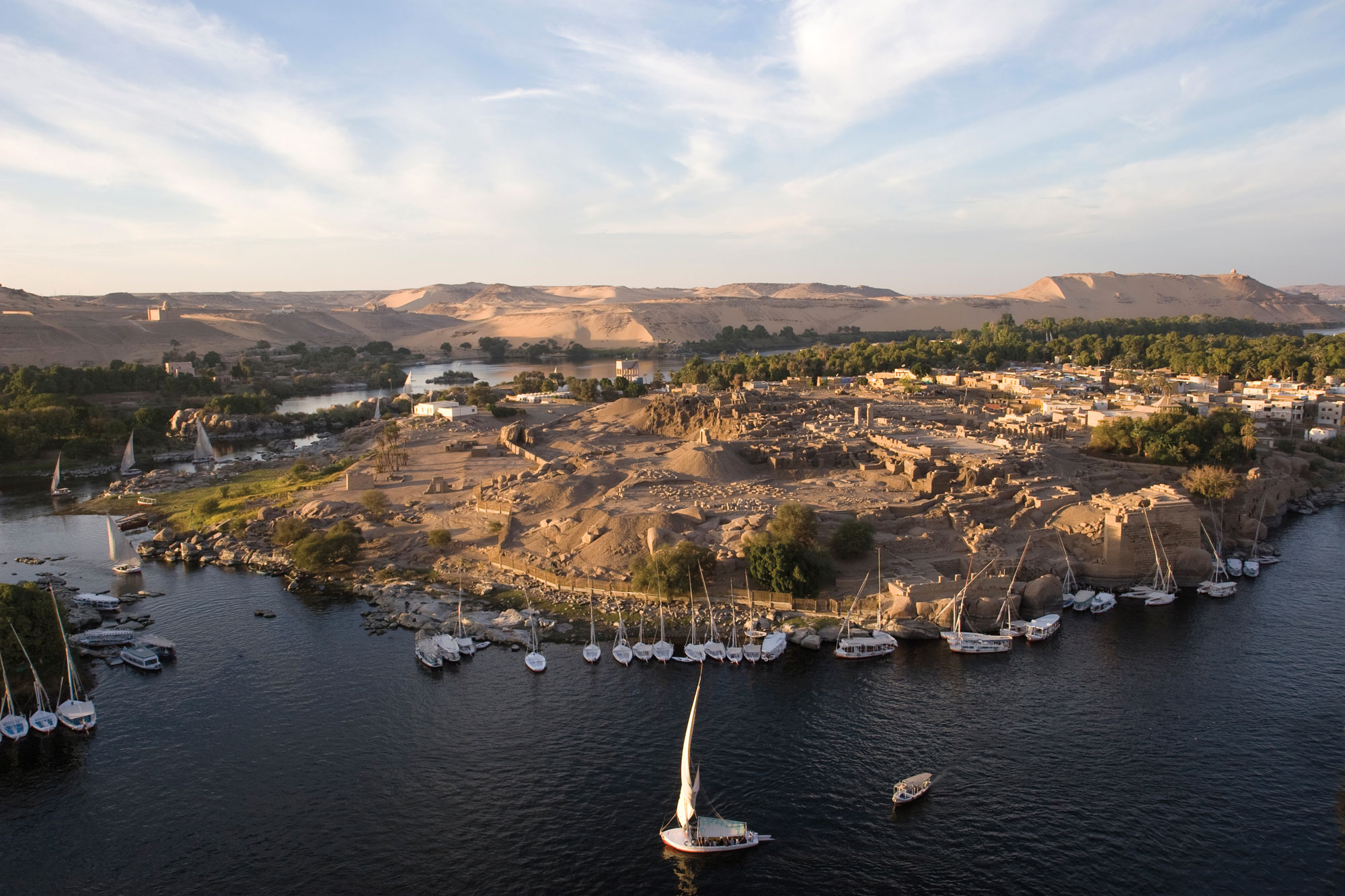
As the Nile flows north out of Sudan into Upper, or southern, Egypt, it passes a small island that was a crossroads of exchange between Africa and the Middle East for thousands of years. Such great quantities of ivory were traded on the island that the ancient Egyptians called it Yeb, which means elephant. This legacy is the source of the name the Greeks gave it in the late fourth century b.c.—Elephantine. The island, which measures just a mile long and 1,300 feet across at its widest point, served a key role in Egypt’s defense throughout its history and was home to border fortresses that monitored traffic on the river. By the late nineteenth century, when the British occupied Egypt, Elephantine had begun to attract European tourists and British officials involved in building the Aswan Low Dam. Archaeologists were aware of the island, but at a time when many were more interested in pursuing treasure than scientific knowledge, it received less attention than Luxor, Thebes, and other sites where dozens of tombs and temples were uncovered.