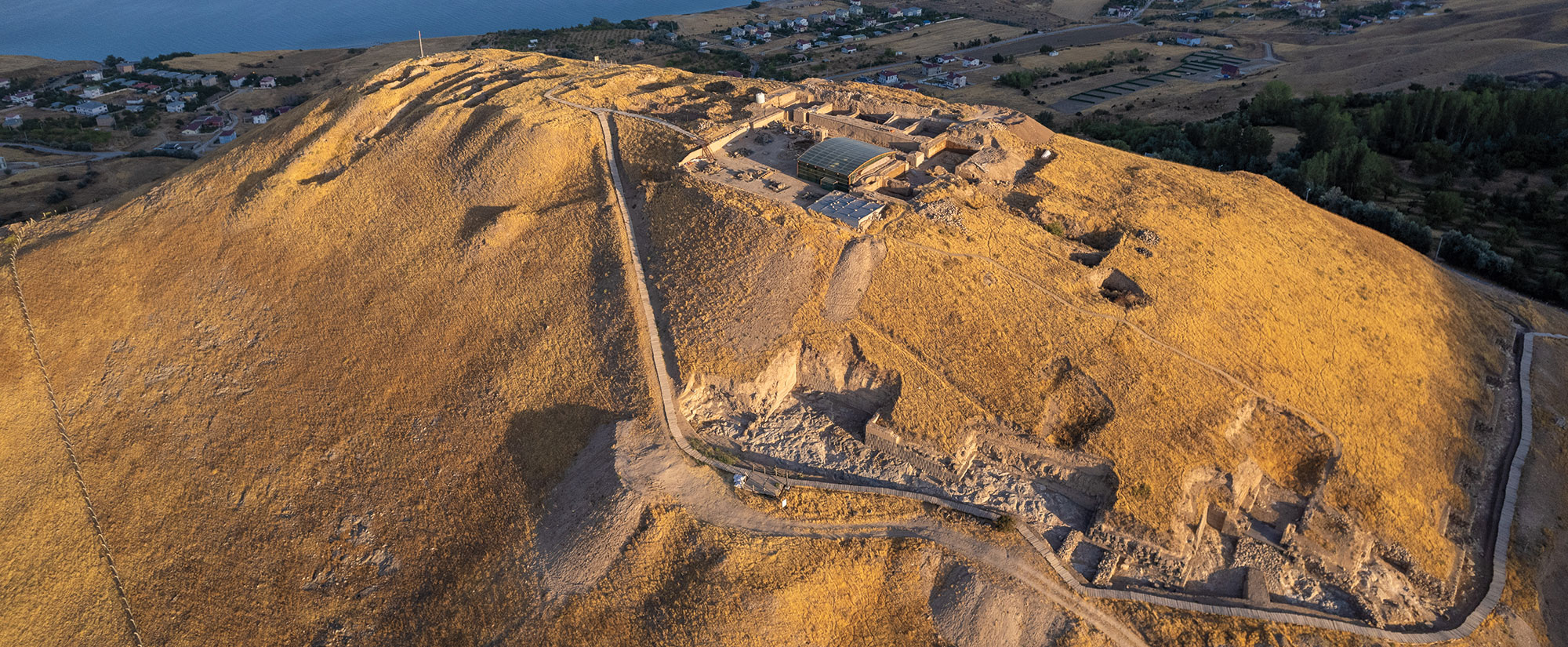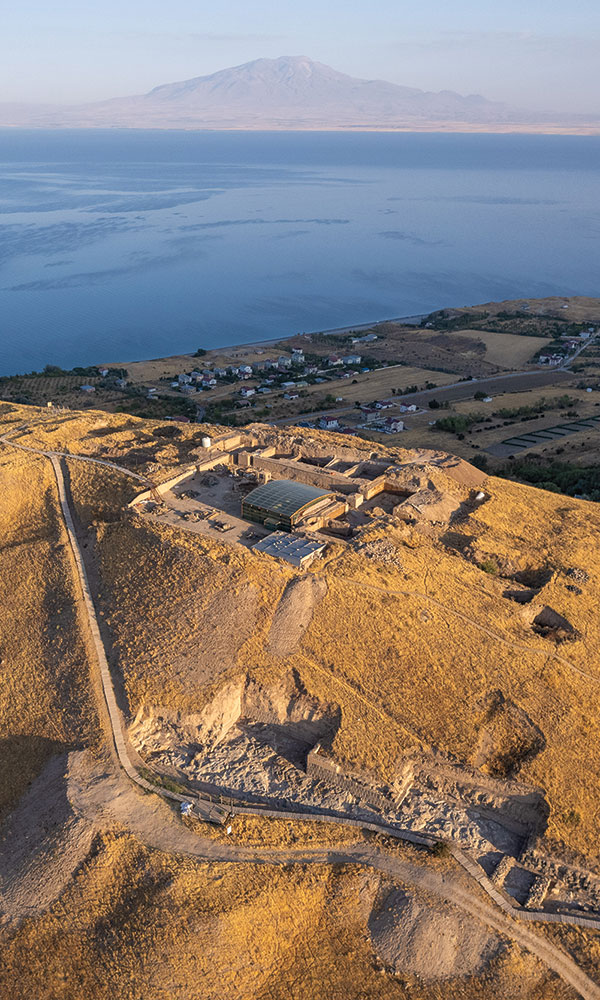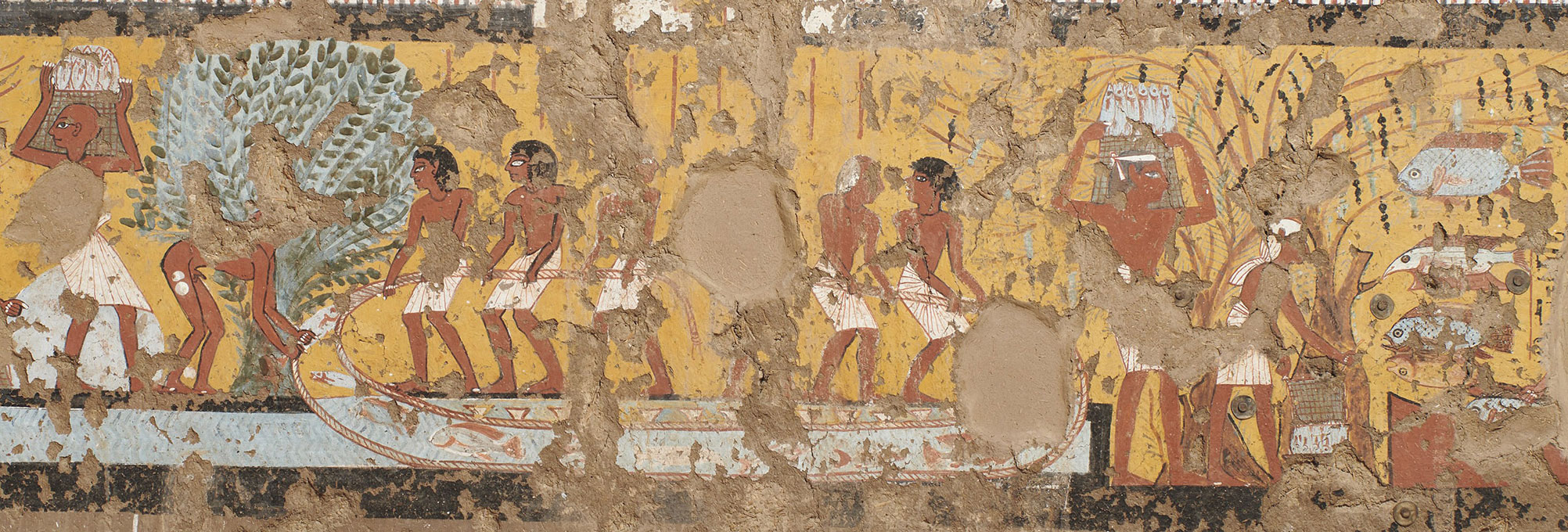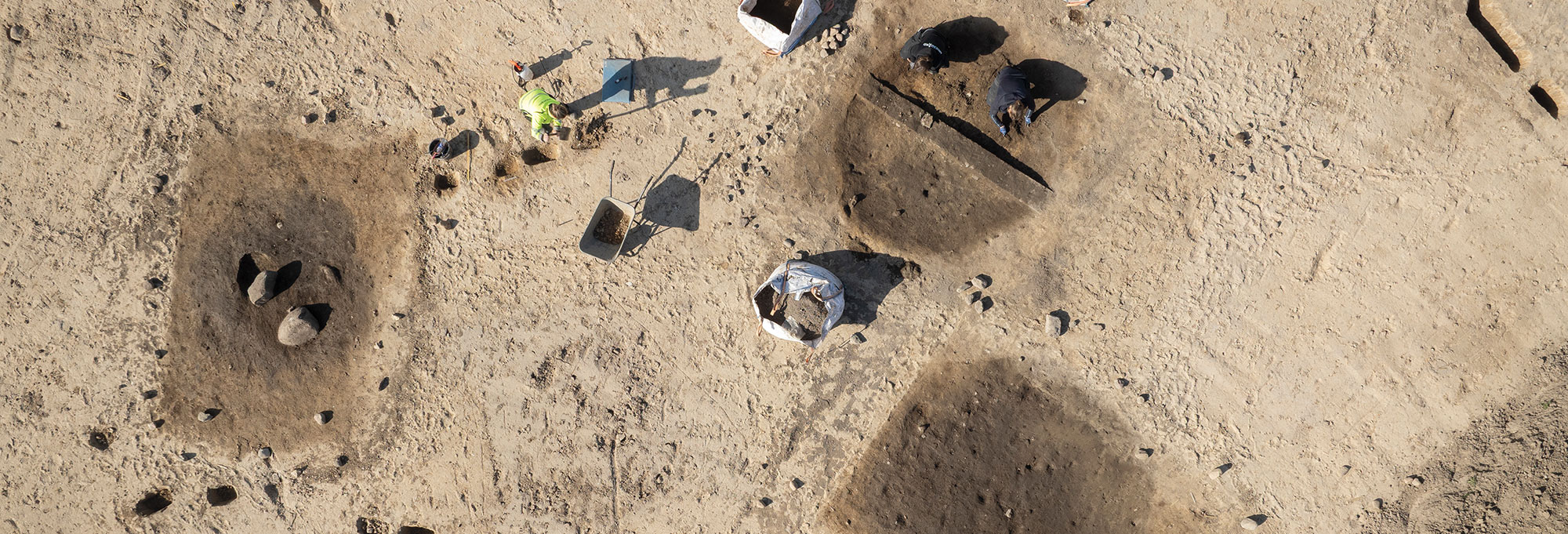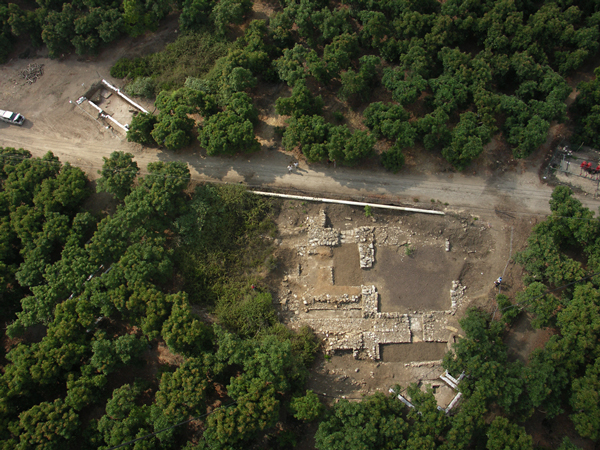
The Canaanites, who lived in ancient Israel during the second millennium B.C., were a sophisticated people who interacted with and were influenced by many cultures of the ancient Near East. Recent excavations at Tel Kabri, in the Western Galilee region of Israel, suggest that they were also influenced by mainland Greek and Aegean island cultures. Archaeologists Eric Cline of George Washington University and Assaf Yasur-Landau of the University of Haifa are excavating the remains of a palace that has floor and wall frescoes possibly painted by artists from Crete or the Cyclades. Aegean-style frescoes from the Middle Bronze Age (ca. 2000-1550 B.C.) have been found in Syria, Turkey, and Egypt, but they remain rare outside of Greece and have been discovered in Israel only at Kabri.
The site and archaeology
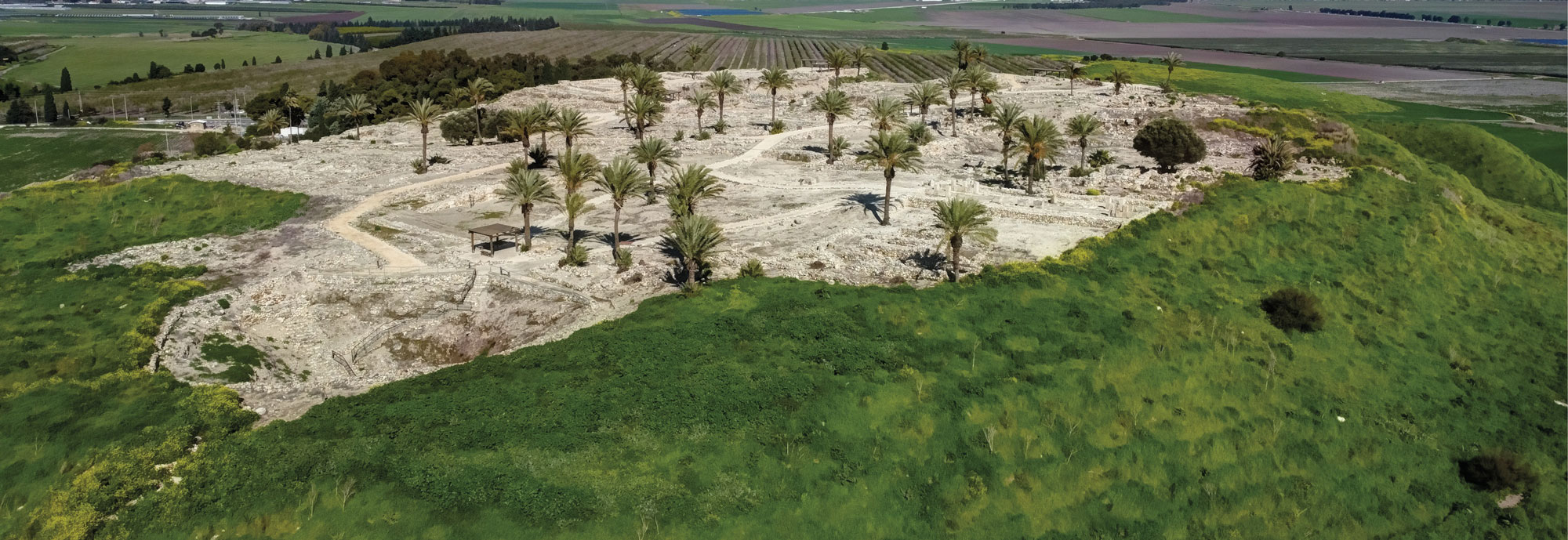
Tel Kabri was the center of a Canaanite community during the Middle Bronze Age. The site includes the remains of massive fortifications, residential architecture, and a large palace, in which the floors and walls were decorated in a distinctly Aegean style during the mid-sixteenth century B.C. Previous excavations there uncovered around 2,000 fresco fragments that resemble work from the Greek island of Santorini. Cline, Yasur-Landau, and their team have recovered more pieces of painted plaster, some in a rich blue typical of Aegean art and never before seen in Israel. The site is located within a kibbutz (Kibbutz Kabri). If you plan to visit, you should contact Eric Cline (ehcline@email.gwu.edu) or Assaf Yasur-Landau (assafyasur@hotmail .com), so they can call ahead to get you access and possibly even a tour.
While you are there
The city of Akko, former capital of the Crusader Kingdom of Jerusalem, is just 10 minutes from Tel Kabri. In addition to wonderful restaurants and hotels, the ancient city features a Hospitalier castle, a Templar tunnel, and a museum sited in the largest prison from the British Mandate. Nearby are the resort town of Nahariya and also Rosh Hanikra, known for its spectacular white chalk cliffs and grottoes.