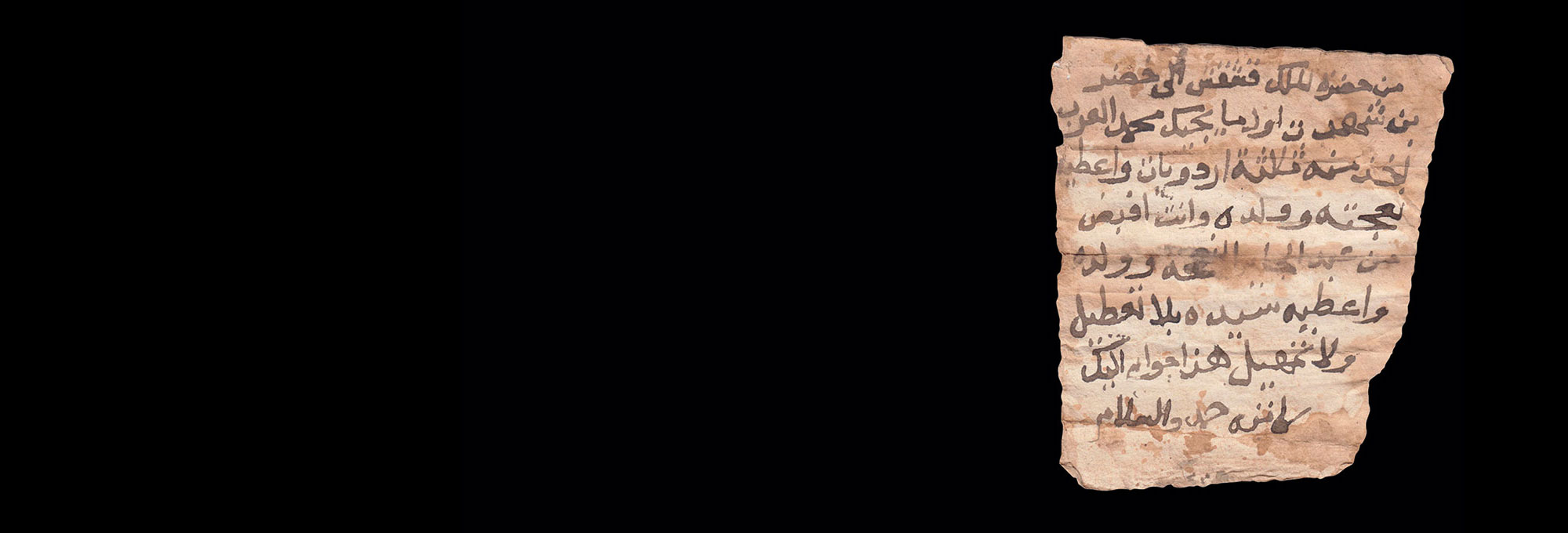
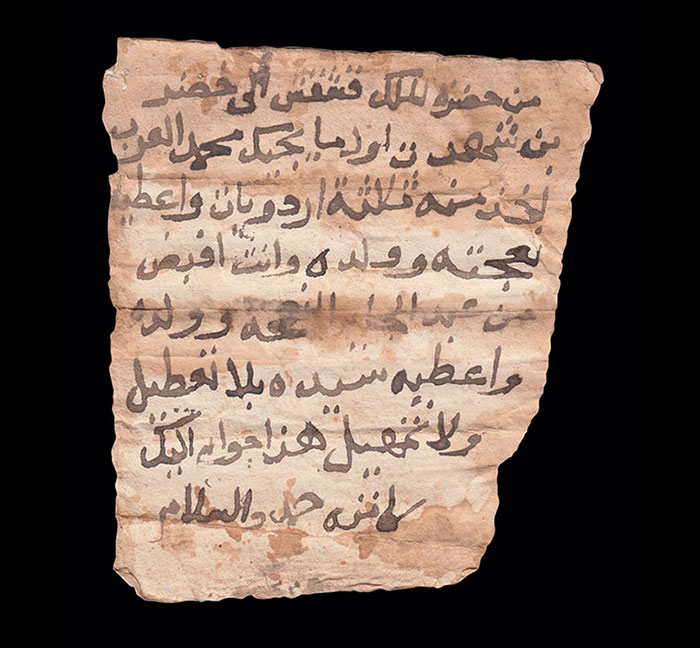
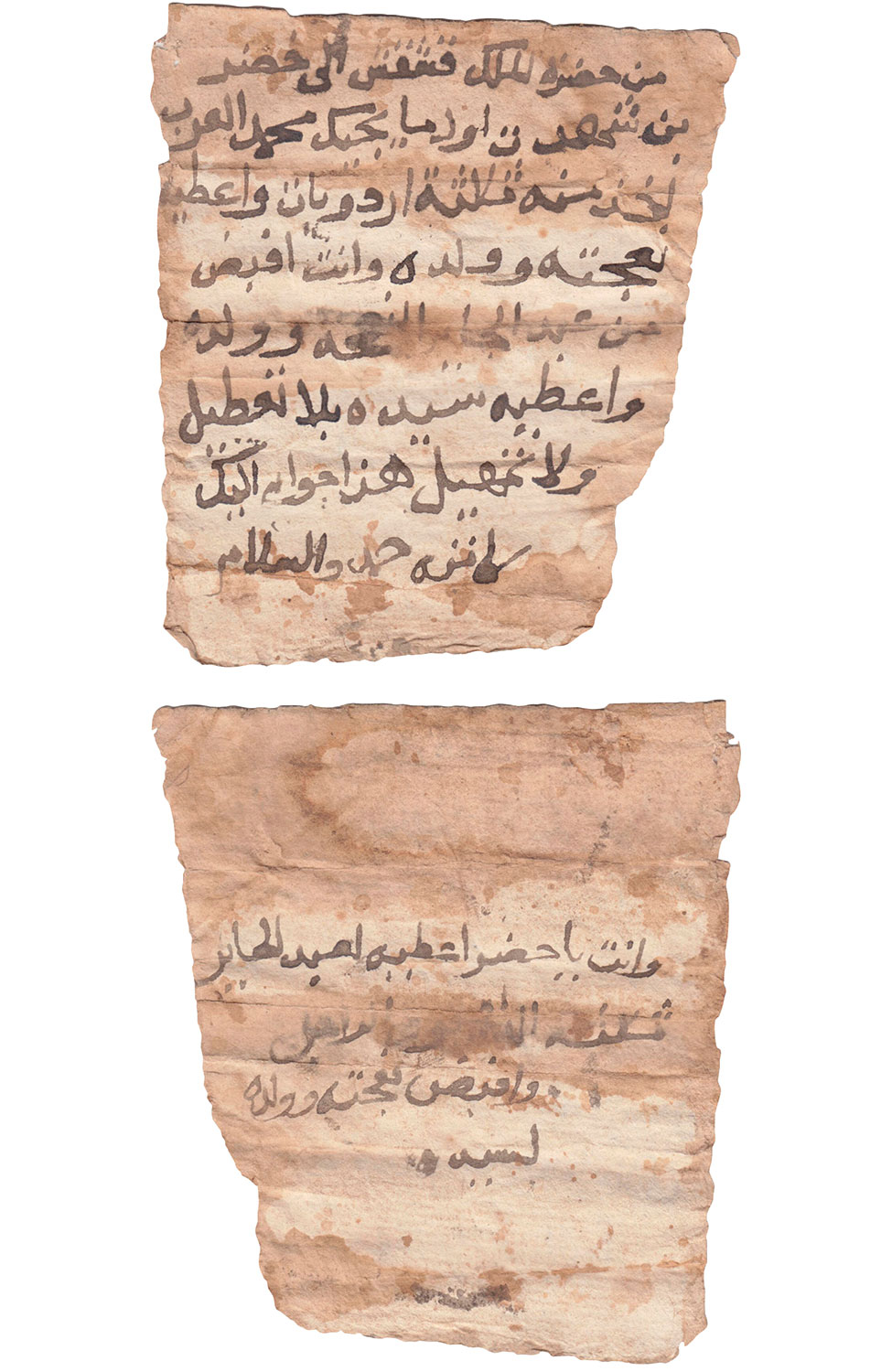
What is it?
Letter
Material
Paper
Culture
Nubian
Date
Late 16th or 17th century
Dimensions
4.1 inches by 3.7 inches
Found
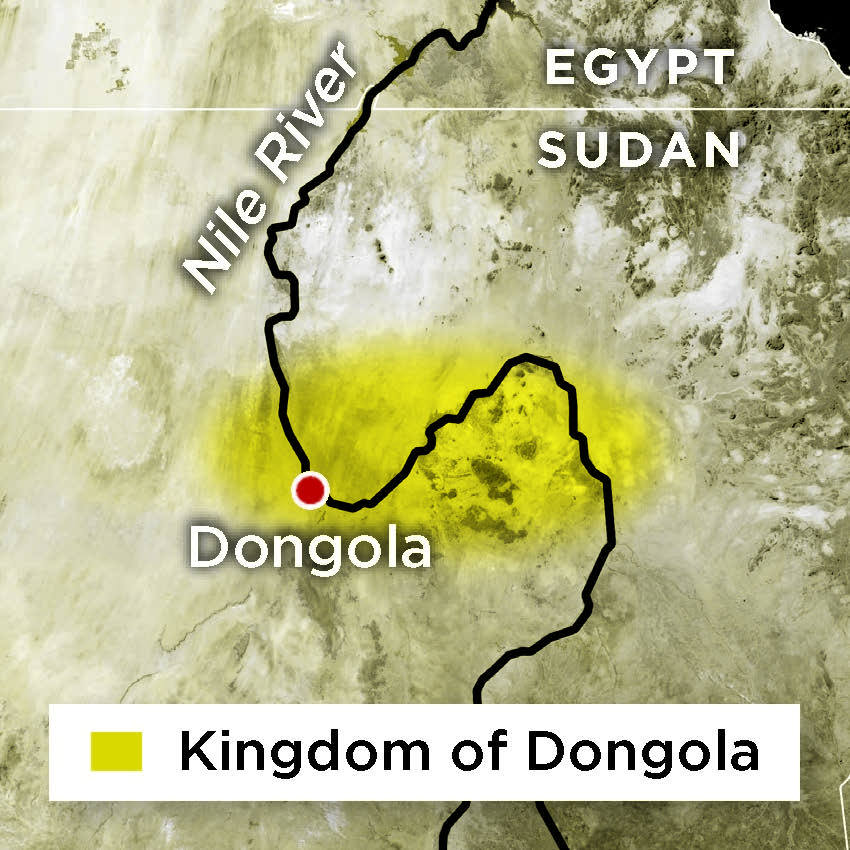
Dongola, Sudan
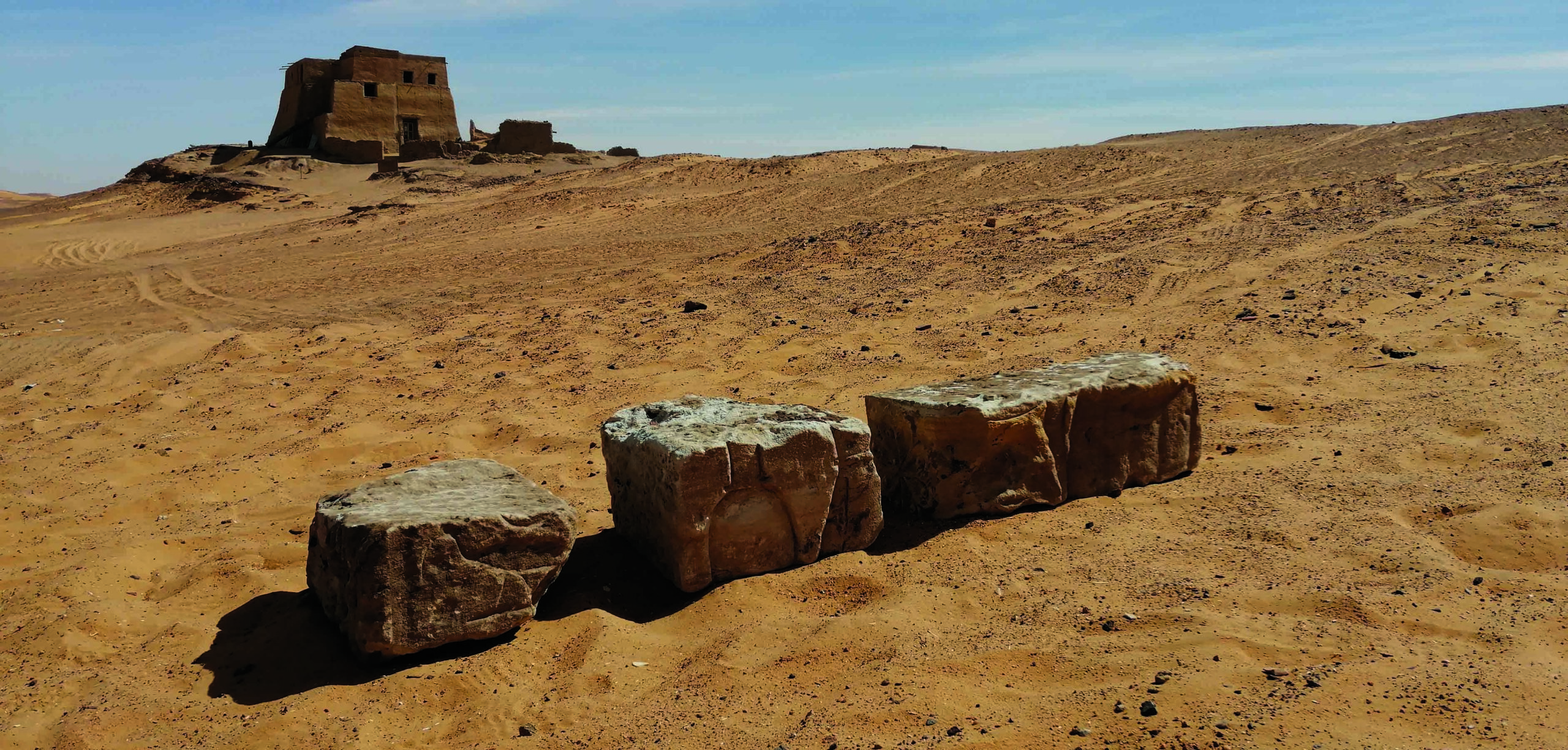
Beginning in the fifth century A.D., the kings of Makuria ruled over part of what is now Sudan from their capital of Dongola. Makuria was one of three medieval Nubian Christian kingdoms, along with Nobatia and Alodia. While relatively little is known about Nobatia and Alodia, Makuria was somewhat better documented by Arab travelers. Toward the end of the kingdom’s nearly 1,000-year history, however, that record goes quiet. “There was a long rupture beginning in the fourteenth century,” says archaeologist Tomasz Barański of the Polish Centre of Mediterranean Archaeology at the University of Warsaw. “These so-called Dark Ages of Sudanese history lasted until around 1700, when several European travelers visited Nubia and described it, including Dongola.” During recent excavations of a wealthy house in the city, archaeologists discovered a letter that has provided definitive evidence of a semilegendary ruler named King Qashqash, as well as a rare glimpse of a lost era in Nubia’s past.
The letter contains an order from Qashqash to transfer livestock, including a ewe and her offspring, as well as pieces of cloth, to an unknown individual. Despite its apparent simplicity, the dispatch offers complex insights into the kingdom’s inner workings. “Any evidence of the socioeconomic activity of a precolonial ruler in Sudan is invaluable,” Barański says. The missive was written in Arabic, reflecting the significant changes that were occurring as descendants of Makuria’s Christians were converting to Islam and beginning to adopt Arabic as their dominant language. “Arabic functioned as a gateway to social advancement within influential circles that included merchants and religious teachers,” says Barański. “Both groups later played a key role in the formation of modern Sudanese identity.”