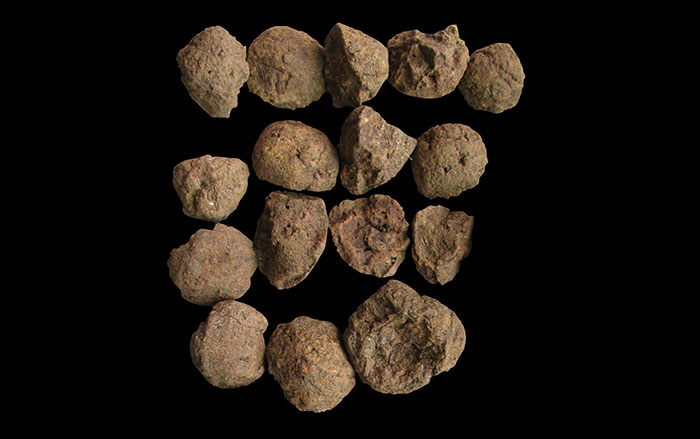

BEIJING, CHINA—An analysis of 5,000-year-old grinding stones suggests that agriculture may have begun in southern China before the arrival of domesticated rice. Huw Barton of the University of Leicester and Xiaoyan Yang of the Chinese Academy of Sciences found that the preserved starch granules represented freshwater chestnuts, lotus root, fern root, and palms. “The presence of at least two, possibly three species of starch producing palms, bananas, and various roots, raises the intriguing possibility that these plants may have been planted nearby the settlement,” said Barton. The presence of palm could explain the slow transition to rice as a staple food in the region.

China’s First Farmers
News May 17, 2013
Recommended Articles
Off the Grid November/December 2026
San Agustín, Colombia
Archaeologists are finally deciphering the mystery megaliths of a vanished Andean people
Letter from Cape Canaveral November/December 2026
Dawn of the Space Age
Archaeologists have made surprising discoveries spanning 3,000 years at the birthplace of American space exploration
Features November/December 2026
Kingdom of Fortresses
How diverse and far-flung Iron Age chiefdoms united to challenge the Assyrian Empire
Features November/December 2026
A Tomb of One’s Own
Life behind the scenes in Egypt’s Valley of the Kings
-
Features March/April 2013
Pirates of the Original Panama Canal
Searching for the remains of Captain Henry Morgan's raid on Panama City
(Courtesy Captain Morgan Rum Co.) -
Features March/April 2013
A Soldier's Story
The battle that changed European history, told through the lens of a young man’s remains
(Courtesy Dominique Bosquet) -
Letter From Cambodia March/April 2013
The Battle Over Preah Vihear
A territorial dispute involving a 1,100-year-old Khmer temple on the Thai-Cambodian border turns violent
(Masuru Goto) -
Artifacts March/April 2013
Pottery Cooking Balls
Scientific analyses and experimental ARCHAEOLOGY determine that mysterious, 1,000-year-old balls of clay found at Yucatán site were used in cooking
(Courtesy Bolonchen Regional Archaeological Project)