PARIS, FRANCE—Chemical analysis with x-ray fluorescence spectroscopy of entire Phoenician ivory carvings has shown that they were once decorated with colorful pigments and some were even decorated with gold. Ina Reiche of the Laboratory of Molecular & Structural Archaeology in Paris and her colleagues at the Louvre detected traces of metals on the reliefs, which were carved in Syria in the eighth century B.C., but are now housed in the Baden State Museum in Karlsruhe, Germany. This suggests that copper-based Egyptian blue and iron-based hematite were applied to the artworks, since such metals are not normally found in ivory, nor in the soil where these sculptures had been buried. “Knowledge of an object’s original appearance can help us understand why it was so visually powerful to ancient viewers,” commented Benjamin W. Porter of the University of California, Berekley.
Phoenicians Added Color to Their Ivory Carvings
News May 24, 2013
Recommended Articles
Off the Grid January/February 2026
Prophetstown, Indiana
Letter from France January/February 2026
Neolithic Cultural Revolution
How farmers came together to build Europe’s most grandiose funerary monuments some 7,000 years ago
Features January/February 2026
The Cost of Doing Business
Piecing together the Roman empire’s longest known inscription—a peculiarly precise inventory of prices
Features January/February 2026
The Birds of Amarna
An Egyptian princess seeks sanctuary in her private palace
-
Features March/April 2013
Pirates of the Original Panama Canal
Searching for the remains of Captain Henry Morgan's raid on Panama City
(Courtesy Captain Morgan Rum Co.) -
Features March/April 2013
A Soldier's Story
The battle that changed European history, told through the lens of a young man’s remains
(Courtesy Dominique Bosquet) -
Letter From Cambodia March/April 2013
The Battle Over Preah Vihear
A territorial dispute involving a 1,100-year-old Khmer temple on the Thai-Cambodian border turns violent
(Masuru Goto) -
Artifacts March/April 2013
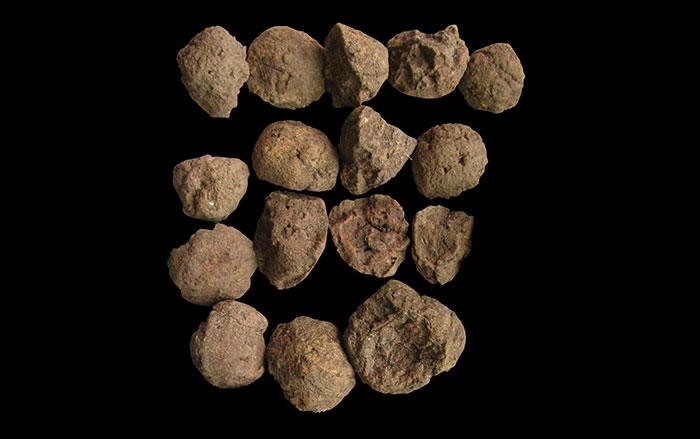
Pottery Cooking Balls
Scientific analyses and experimental ARCHAEOLOGY determine that mysterious, 1,000-year-old balls of clay found at Yucatán site were used in cooking
(Courtesy Bolonchen Regional Archaeological Project)