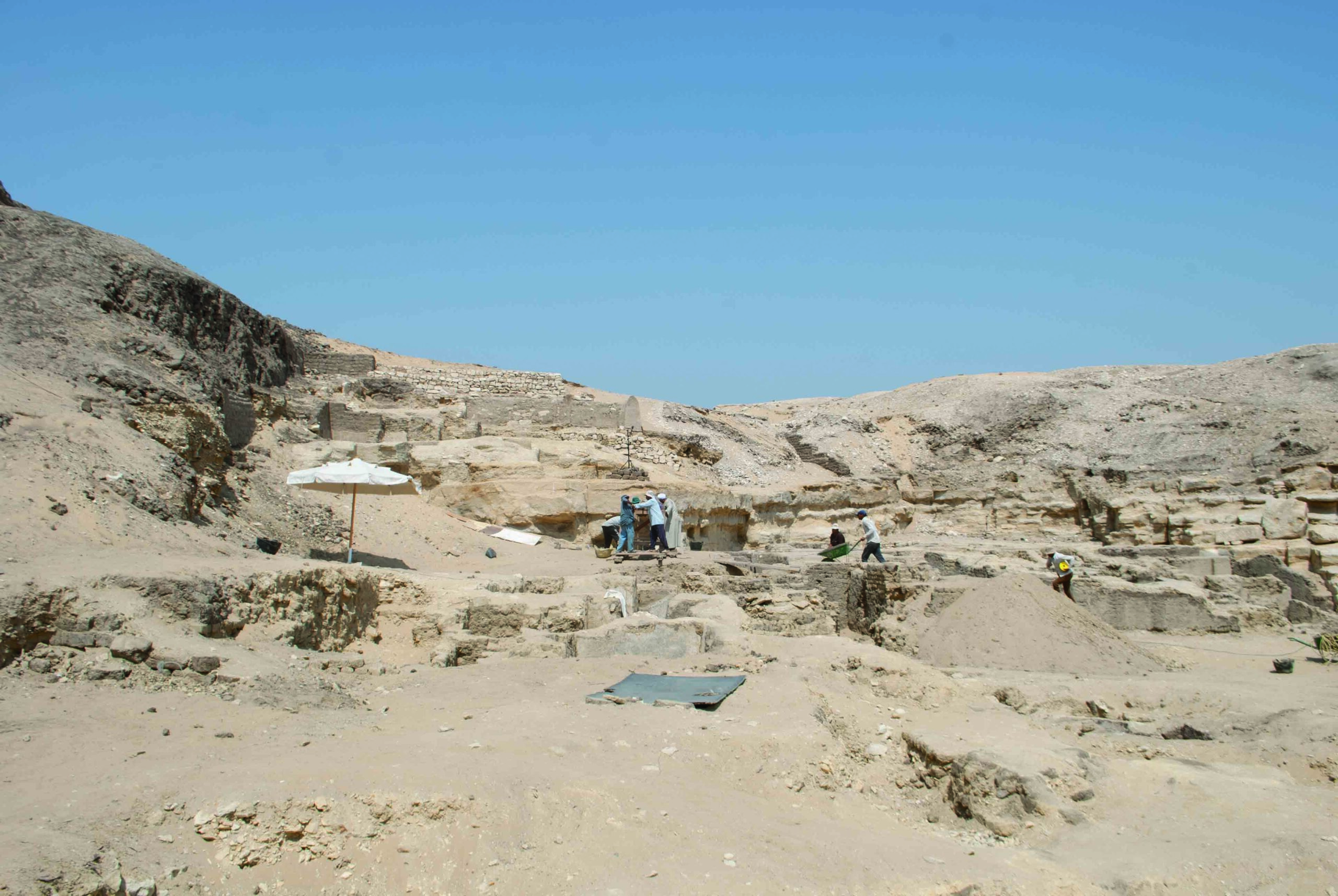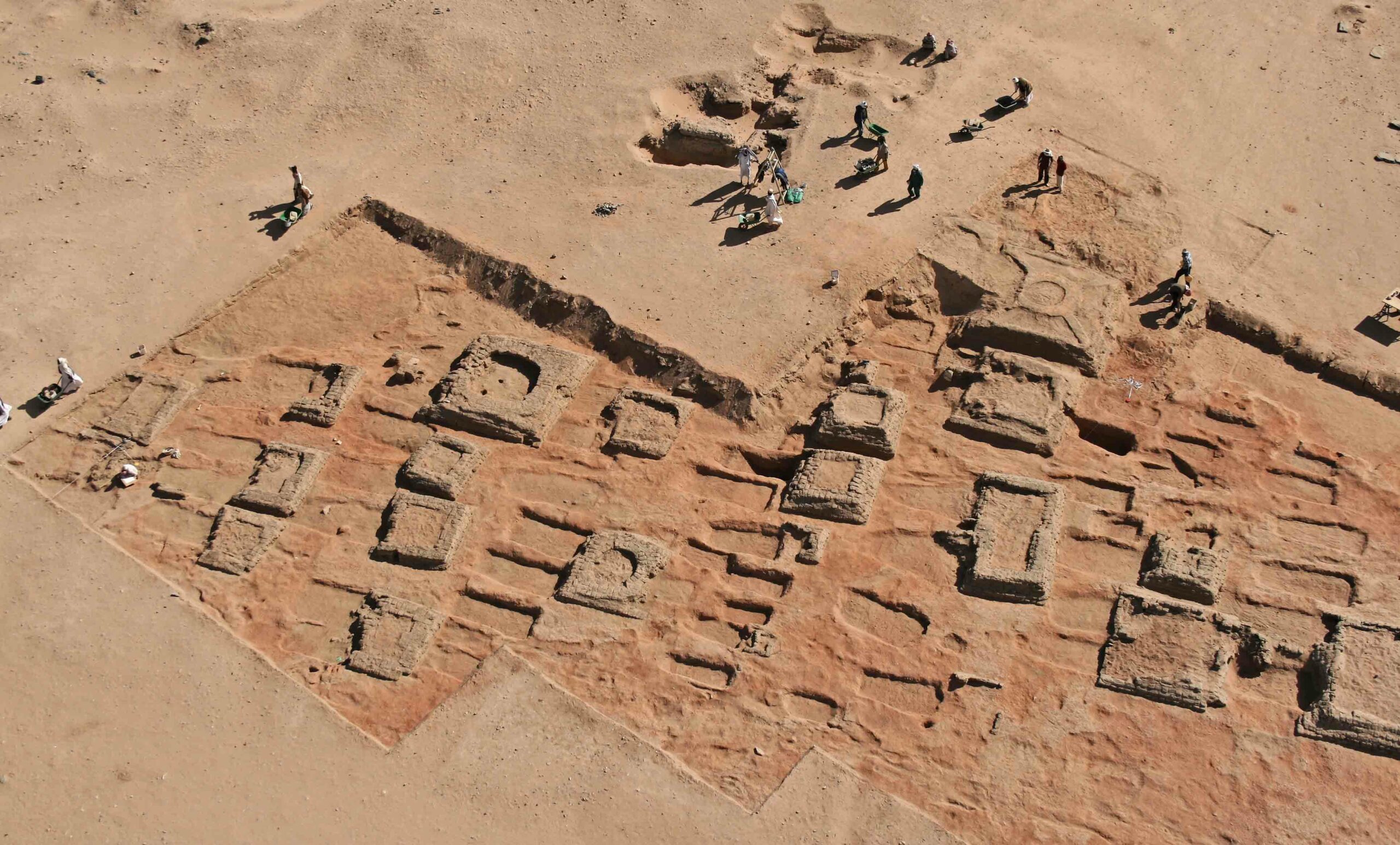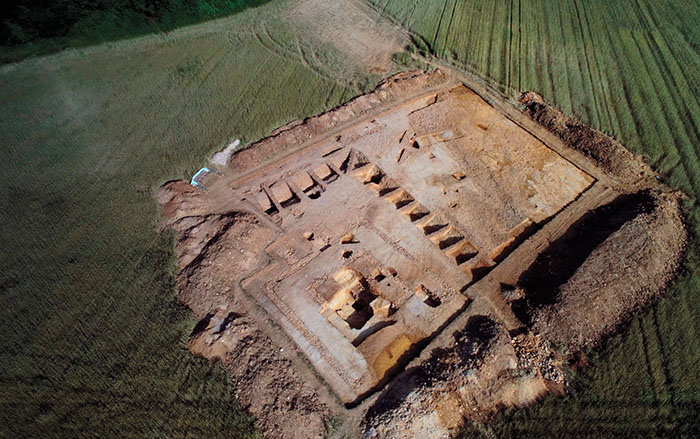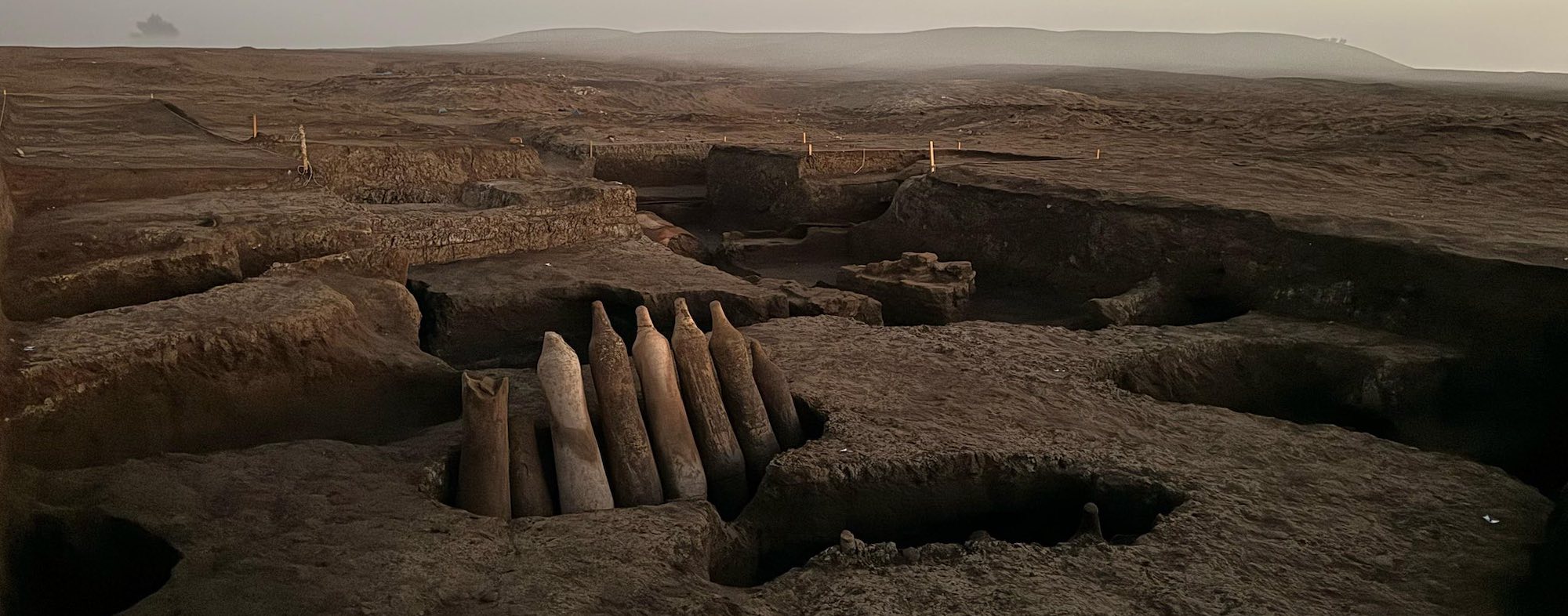
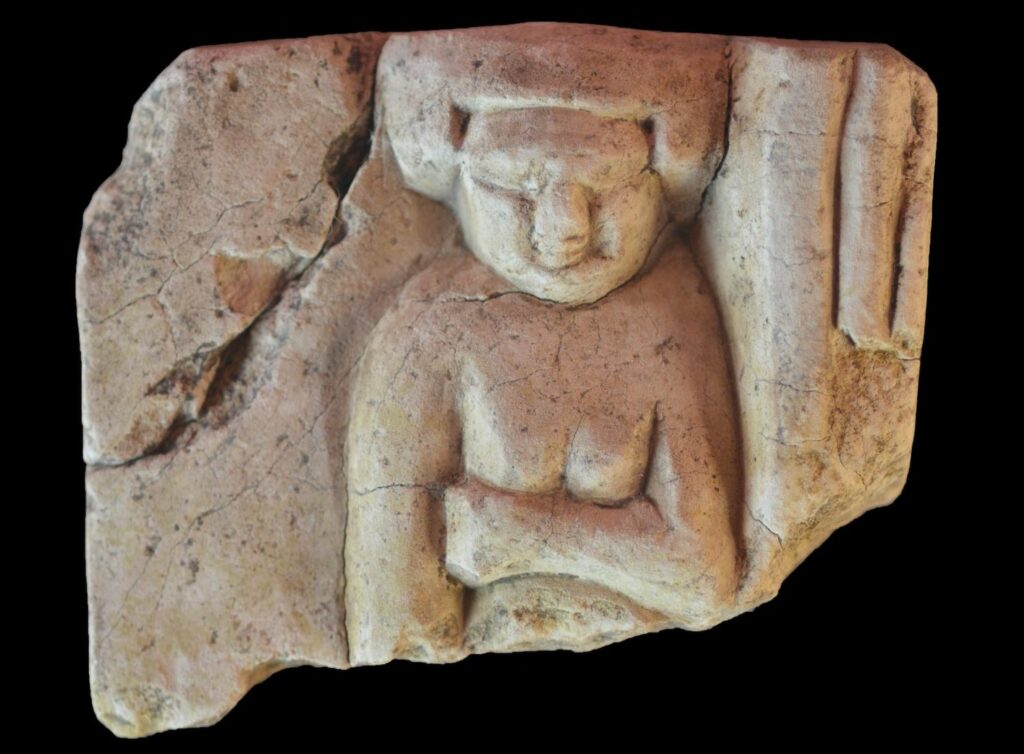
CAIRO, EGYPT—According to an Ahram Online report, excavations at connected sites in northern Egypt’s western Nile Delta have uncovered an industrial area at Kom Wasit that was in use as early as the fifth century B.C., and part of a Roman-era necropolis at the site of Kom al-Ahmar. Mohamed Abdel Badi of the Egyptian Antiquities Sector of the Supreme Council of Antiquities said that a large building divided into at least six rooms was unearthed in the industrial area. More than 9,000 fish bones found in two of these rooms show that they were used to process and salt fish. Metal and stone tools, faience amulets, and limestone statues are thought to have been made in the other rooms in the building. In the necropolis, the researchers uncovered the remains of 23 people, some of whom had been buried in pottery coffins, and the remains of children interred in large amphoras. Christina Mondin of the University of Padua said that initial review of the skeletal remains suggests that these people did not suffer from serious diseases or trauma. The bones will be further analyzed for additional information regarding diet, age, sex, and health at the time of death. To read about the Great Revolt in northern Egypt, go to "In the Time of the Rosetta Stone."